
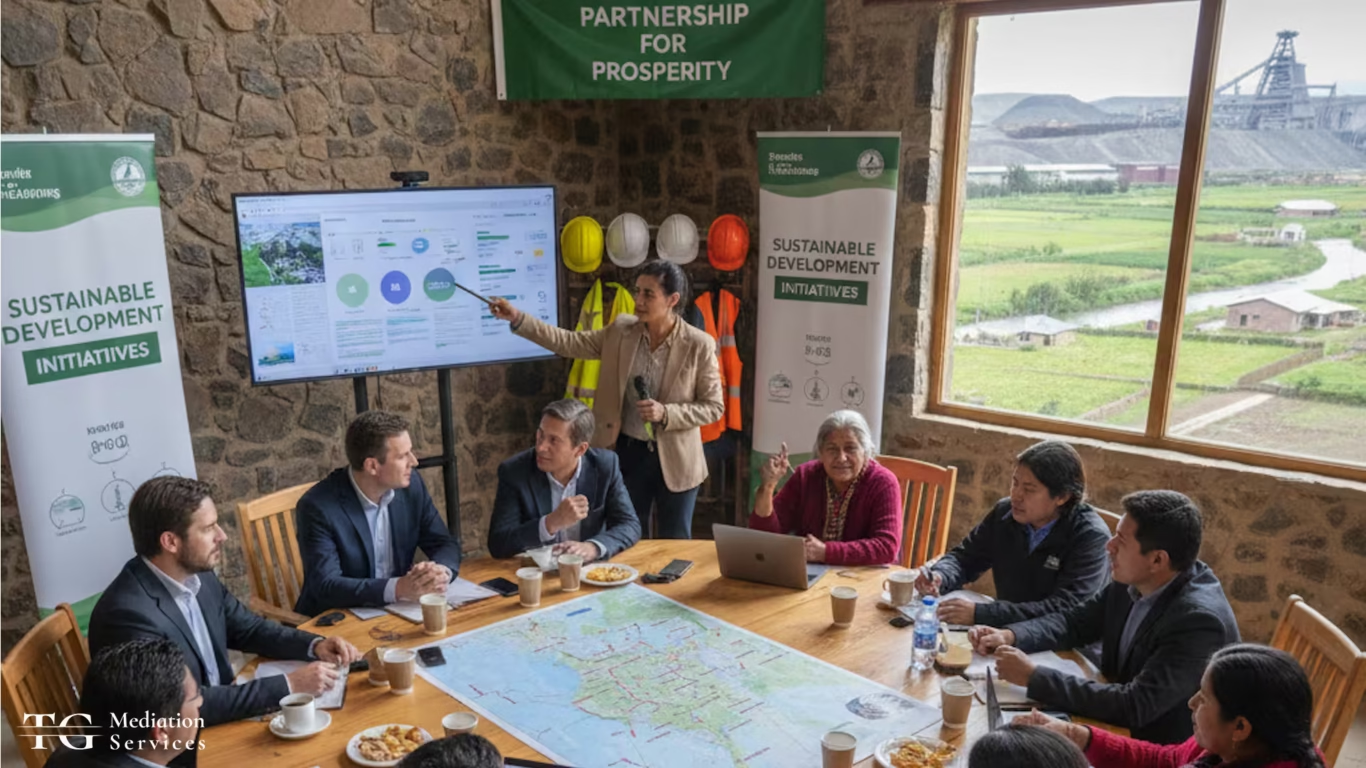
Six interconnected community relations trends in mining are reshaping how extractive companies engage with affected communities in 2026. From the shift toward value creation over mitigation, to technology-enabled engagement, tightening ESG requirements, critical minerals pressure, inclusive stakeholder strategies, and data-driven conflict prevention, these trends are not marginal adjustments. They represent a fundamental evolution in how mining companies must operate to secure consent, maintain social license, and build relationships that sustain operations across decades of change.
The companies succeeding in their community engagements are those that have recognized this shift. Community relations is no longer a peripheral compliance function. It is a core business function whose performance directly determines project viability, operational continuity, and investor confidence. Deloitte’s Tracking the Trends 2026 report underscores this, noting that mining companies must redefine how they create and share value as communities call for greater contributions to local well-being.
This analysis covers each trend in detail, examines what it means operationally for practitioners and organizations, and outlines the strategic responses that industry leaders are already implementing. Whether you are a mining executive making investment decisions, a CR professional designing engagement strategies, or an investor assessing operational resilience, understanding these trends is essential to evaluating the future viability of mining assets.
Trend 1: Community Relations Is Moving from Mitigation to Value Creation
The first major trend reflects a fundamental reorientation in how mining companies view community relations. Traditional approaches treated community relations as a cost center, a risk to be managed, a box to be checked. The goal was to prevent conflict, gain consent, and minimize disruption. These remain important, but they are no longer the primary driver of strategy.
Leading mining operators are increasingly viewing community relations as a value creation function. The question has shifted from “How do we prevent community opposition?” to “How do we create shared value that makes mining a genuine development opportunity for communities?” This shift has profound implications for how CR resources are deployed, what competencies are prioritized, and how success is measured.
What This Means Operationally
In practical terms, this trend manifests in several ways. Mining companies are now conducting systematic studies of community development priorities and designing benefit packages around those priorities rather than around standard mining industry templates. Instead of offering fixed employment quotas or standard community development contributions, leading operators are working with communities to identify what would actually improve their livelihoods and development outcomes, whether that is agricultural productivity support, skills training, market access for community products, or business development services.
Community relations budgets are increasingly justified based on evidence of developmental impact and community economic benefit. This requires more rigorous measurement, tracking of economic outcomes for community members, and willingness to adjust programs based on what is actually working. It also requires longer time horizons. Quick-impact, headline-grabbing community projects are being replaced by systematic, multi-year programs designed to create durable livelihood transformation.
Industry Insight: The Shift Toward Community-Centric Development
Companies that have reframed community relations as economic development are seeing stronger community support, lower conflict incidence, and greater operational stability. The cost is higher upfront investment in understanding community economic systems and willingness to tailor approaches to local context.
However, this investment is proving to be a cost-saving measure when measured against the full economic cost of dealing with community conflict, operational disruptions, and remediation of damaged relationships. ICMM data shows members invested $1.6 billion in community and social programs in 2025 alone, a 2.6% increase year-on-year, reflecting the industry’s growing commitment to value creation over compliance-driven spending.
Skills and Competencies Required
This trend is driving significant changes in what CR professionals need to know. Traditional mining CR roles emphasized stakeholder management, conflict resolution, and compliance. These skills remain essential. But successful practitioners in 2026 increasingly need expertise in economic development, value chain analysis, small business development, agricultural productivity, skills development program design, and impact measurement. For a deeper look at the qualities that distinguish effective practitioners, see Born or Trained? The 7 Core Qualities of Exceptional Mediators.
Mining companies are recruiting CR professionals with development economics backgrounds, not just mining or corporate communications backgrounds. Some are bringing in experienced community development practitioners from international NGOs. The profile of the effective CR professional is broadening significantly.
Trend 2: Technology-Enabled Community Engagement Is Becoming Standard Practice
The second major trend reflects the increasing use of technology to improve the quality, accessibility, and measurability of community engagement. This does not mean replacing face-to-face engagement with digital platforms. It means using technology to enhance and extend engagement that remains fundamentally rooted in direct community interaction.
Mining companies are deploying digital platforms for community feedback collection, grievance management, impact monitoring, and communication in ways that were not standard practice five years ago. Mobile-based feedback systems allow community members to provide input without needing to attend physical meetings. Digital grievance tracking systems provide transparency about complaint status and resolution. Community-administered impact monitoring systems collect data about changes in community economic circumstances.
Where Technology Is Adding Most Value
The most significant value-add from technology in community relations is not in the engagement itself but in the tracking and transparency that follows engagement. Communities increasingly expect to know what happens to the feedback they provide, whether grievances are being addressed, and how community benefit programs are performing. Technology enables the tracking and reporting that makes this transparency real.
Mobile-based payment systems for community benefit distributions, direct to beneficiary accounts, are reducing leakage and dispute over benefit allocation. Digital records of community meetings, decisions, and agreements are reducing disputes about what was actually agreed and providing the documentation communities need to hold companies accountable. For more on how to track the metrics that matter, see Social Performance Indicators: Tracking Relationship Quality in Mining Operations.
Advanced data analytics on community engagement data is allowing companies to identify patterns of unmet need, unaddressed grievances, or geographic areas where community relations are deteriorating, enabling intervention before small issues become major conflicts.
Practitioner Alert: The Digital Divide in Community Engagement
While technology is becoming standard, the digital divide remains real. Some communities have strong connectivity and digital literacy. Others do not. The most effective technology-enabled engagement approaches in mining contexts are hybrid models that use technology where it adds value but maintain non-digital engagement pathways for communities or individuals who prefer them.
Technology that requires smartphones or constant internet access in communities where access is limited can actually degrade community relations by creating perceptions of exclusion and distrust. Before deploying any digital platform, conduct a connectivity and literacy baseline assessment. If fewer than 60% of community members can access the platform independently, maintain a parallel non-digital channel as the primary engagement pathway.
Trend 3: ESG Requirements Are Driving Standardization of CR Practice
The third trend is the increasing influence of Environmental, Social, and Governance (ESG) frameworks on community relations practice. ESG requirements from investors, lenders, and asset managers are creating standardized expectations about what community relations should include, how it should be documented, and what metrics should be tracked.
Major global investors are requiring mining companies to demonstrate compliance with ESG standards that include specific community engagement requirements, standards for community benefit agreements, grievance mechanisms, and impact measurement. Lenders are building these requirements into loan covenants. EY’s 2026 risks report highlights that miners who approach license to operate as an opportunity rather than an obligation can build trust that helps win approvals and funding. This pressure is creating standardization across mining operations globally.
The Implications for Regional Practice
For mining companies operating across multiple jurisdictions, this standardization is in some ways a relief. It allows companies to develop standardized frameworks, training programs, and systems that can be applied across operations. However, it also creates tension with local context. ESG requirements developed globally sometimes do not fit the specific cultural, regulatory, and community dynamics of particular African mining contexts.
The companies navigating this most effectively are those that treat ESG frameworks as minimum requirements but invest additional resources in adapting community relations approaches to local context. They maintain standardized metrics and reporting while allowing significant local flexibility in engagement methods, benefit program design, and conflict resolution approaches.
Impact on Smaller Operators
ESG standardization is particularly challenging for mid-tier and smaller mining operators who lack the resources of major global companies. Compliance with ESG requirements adds reporting burden and costs. However, it is also raising the bar for all operators. Communities increasingly expect standardized approaches to grievance resolution, benefit distribution, and engagement that reflect global ESG standards, not just local minimum legal requirements. EY reports that 75% of mining executives are not confident in their ability to resolve labor shortages, including in sustainability and regulatory compliance roles, which compounds this challenge for smaller operators.
Trend 4: Critical Minerals Exploration Is Intensifying Community Relations Pressure
The accelerating global transition to renewable energy and electrification is driving intensified exploration for critical minerals including cobalt, lithium, rare earths, and battery metals. This exploration is increasingly focused on African jurisdictions where critical minerals are concentrated. This trend is creating significant community relations pressure in ways that differ from traditional mining community relations.
Why Critical Minerals Are Different
Critical minerals exploration often moves faster than traditional ore deposits. Exploration timelines are compressed. Approval processes are accelerated. Communities are often given less time to understand and deliberate on exploration projects than they might have in traditional mining contexts. The global urgency around energy transition is creating pressure for rapid decision-making that can undermine the deliberative, consensus-building approaches that are essential for durable community relations.
Additionally, critical minerals exploration sometimes targets areas that lack any history of mining activity. These communities have no prior experience with mining operations, no existing relationships with mining companies, and sometimes active skepticism about mining based on experiences elsewhere in their regions. Building community relations with communities that have never engaged with mining before requires approaches fundamentally different from company-community relationships in established mining regions. For more on the unique conflict dynamics at play across the continent, see The State of Mining-Community Conflicts in Africa: 2026 Analysis.
Regulatory and Investor Attention
Investors and regulators are closely scrutinizing the community relations aspects of critical minerals projects. The narrative around energy transition emphasizes environmental sustainability but can ignore social sustainability. NGOs and civil society organizations are highlighting the community relations risks in critical minerals mining, which is creating regulatory and investor pressure on companies to ensure robust community engagement even as project timelines are compressed. Deloitte’s 2026 outlook identifies critical minerals in national security as a defining trend, noting that progress will depend on cooperation between industry, governments, and communities rather than on competition alone.
Trend 5: Women and Youth Are Becoming Central to Community Relations Strategy
The fifth trend reflects a significant shift in who mining companies recognize as key stakeholders in community relations. Traditional approaches focused heavily on community political leadership and landholders, who were often male and older. Increasingly, mining companies are recognizing that women and youth are not peripheral stakeholders but central to sustainable community relations.
Why This Shift Is Happening
Women’s groups control significant productive resources in many African mining communities, including agricultural land, market access, and household economic decisions. Youth comprise the demographic majority and will carry the relationship between communities and mining companies into the future. Early inclusion of women and youth in mining decisions produces more durable agreements because they reflect the interests of the demographic groups that will live with the consequences for decades.
Additionally, women and youth often have different stakes in mining projects than male political leaders. Women may be more concerned with water access and agricultural impacts. Youth may be more focused on employment opportunities and local business development. Ignoring these interests produces agreements that leadership endorsed but that significant community segments view as inadequate.
Operational Implications
In practical terms, this trend means mining companies are conducting separate engagement with women’s groups and youth associations, not just with formal community leadership. It means developing benefit programs tailored to women’s priorities, including market access for female-led businesses, training in income-generating skills, and safety improvements that specifically address women’s concerns. It means prioritizing youth employment and skills development as core components of community benefit packages. For a deeper discussion on how rights-based approaches connect to inclusive engagement, see Human Rights Mediation in Mining Zones.
Some companies are establishing dedicated women’s committees and youth associations focused on mining issues, with technical and financial support from the company but governance controlled by community members. These groups provide channels for ongoing dialogue and feedback that are more granular than traditional community leadership structures.
Trend-Setter Example: Inclusive Community Representation
Leading mining operators in West Africa are implementing community representation models where women, youth, and landholders each have dedicated representatives in joint monitoring committees and regular company-community dialogue forums. This is not replacing traditional leadership structures but adding to them.
The result is more comprehensive feedback about community experience of mining impacts, earlier identification of emerging grievances, and greater community buy-in to benefit programs because they reflect input from diverse community segments. One operator reported a 40% reduction in unresolved grievances within twelve months of establishing these inclusive structures.
Trend 6: Conflict Prevention Is Becoming More Data-Driven
The final major trend is the increasing use of data analytics and predictive modeling to anticipate and prevent community relations conflicts before they emerge. Mining companies are moving from reactive conflict management toward proactive conflict prevention informed by systematic monitoring of community relations health.
What Data-Driven Conflict Prevention Looks Like
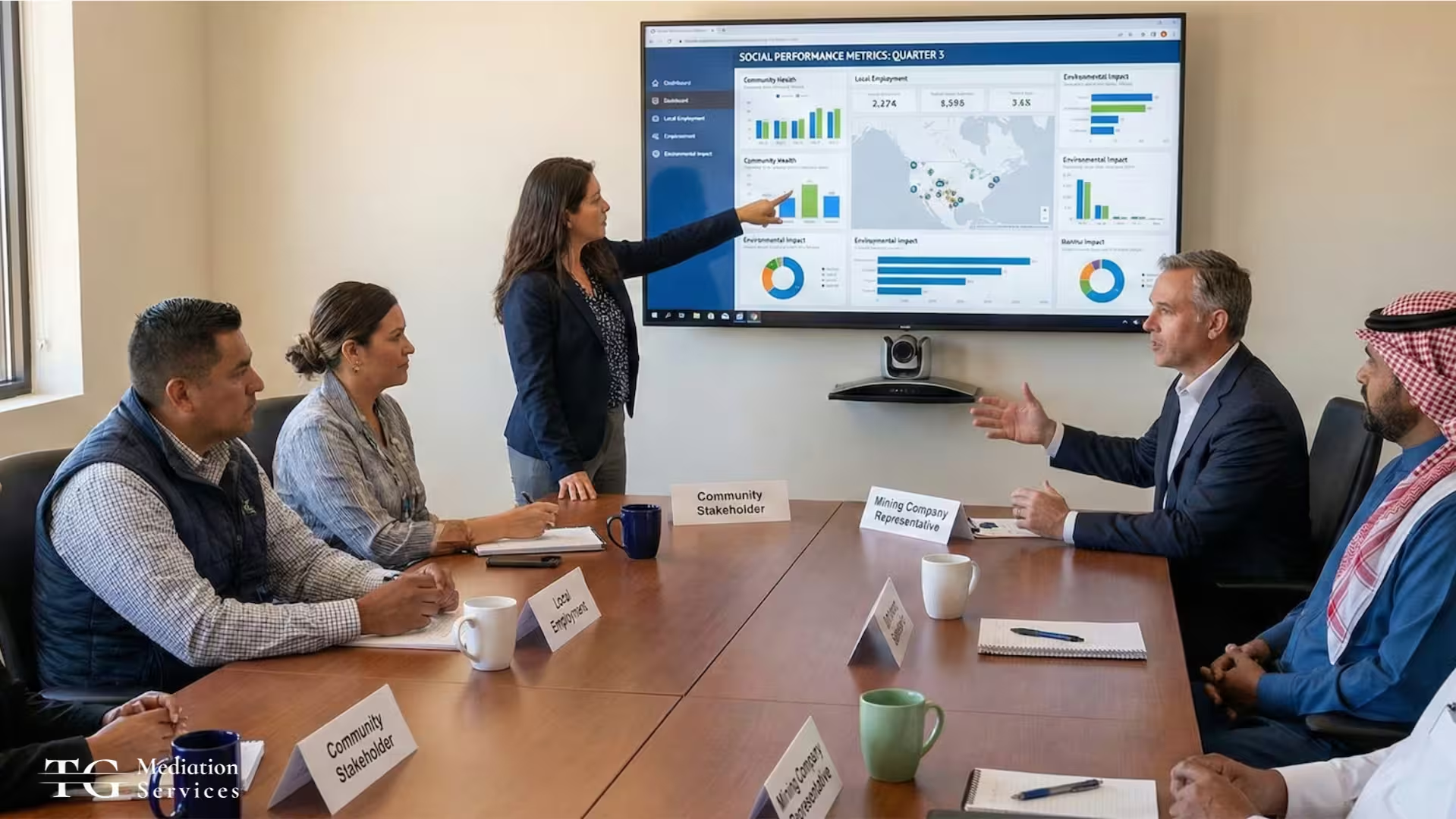
Companies are developing systems that track multiple indicators of community relations health across five key dimensions:
- Grievance patterns: volume trends, average resolution time, repeat complaints on the same issue, and the ratio of grievances resolved to the complainant’s satisfaction versus those closed unresolved.
- Engagement quality: community meeting attendance rates (a drop of more than 20% over two quarters is an early warning signal), participation diversity (are women and youth attending?), and whether community feedback is generating actual changes in company practice.
- Economic indicators: employment rates among community members, local procurement spending as a percentage of total procurement, and community income data from benefit programs.
- Sentiment tracking: qualitative coding of community feedback for positive, neutral, and negative sentiment, with trend analysis over time. Some companies now conduct quarterly sentiment surveys using mobile-based tools.
- External signals: local media coverage, social media mentions, NGO reports, and patterns from earlier operational phases at other company sites that preceded conflict escalation.
Advanced analytics identify combinations of indicators that precede conflict escalation. For example, when grievance resolution times exceed 30 days, meeting attendance drops simultaneously, and negative sentiment rises above 40% of feedback, the probability of a significant community conflict event increases substantially. Early warning systems alert company leadership and CR teams when these thresholds converge, enabling preventive intervention.
Cultural Sensitivity and Data Limitations
This trend also comes with important caveats. Data-driven approaches are powerful but they are not sufficient alone. Community relations remain fundamentally about relationships and understanding. Data analytics can identify that something is wrong but cannot tell you what it is or how to fix it. The most effective companies are using data as an input to more intensive qualitative engagement, not as a replacement for it.
Additionally, the data systems that mining companies deploy need to be transparent to communities. When communities know what data the company is collecting and how it is being used to prevent conflict, it can actually strengthen community relationships. When data collection feels like surveillance, it can undermine trust.
What These Trends Mean for Your Organization
These six trends are interconnected and mutually reinforcing. The shift from mitigation to value creation is only sustainable with technology to track community economic impacts. ESG requirements make value-creation approaches more efficient by establishing reporting standards. Critical minerals pressure is driving companies toward the more sophisticated engagement approaches that value creation requires. Inclusive community engagement is essential for the kind of long-term developmental relationships that create genuine value.
Strategic Implications for Mining Operators
Mining operators need to assess where they stand on each of these trends and make deliberate choices about their positioning. For major multinational operators, this is less about whether to engage with these trends and more about which specific practices and investments are highest priority. For mid-tier operators, it may mean prioritizing one or two areas initially. For junior operators, it may mean building these approaches into operations from the start, which is actually more cost-effective than retrofitting established practices later.
- Evaluate your current CR practice against each trend. Where are you ahead of industry practice? Where are you lagging?
- Invest in capabilities that enable the shift from mitigation to value creation. This starts with understanding community development priorities.
- Implement technology systems that improve engagement quality and transparency, while maintaining non-digital engagement pathways.
- Audit your ESG compliance and identify gaps. Use ESG requirements as a floor, not a ceiling, for practice.
- If you operate in critical minerals, assess whether your timelines and community engagement approaches are adequate for the context.
- Expand your community engagement to explicitly include women and youth, not as afterthoughts but as central stakeholders.
- Develop conflict prevention systems that combine data analytics with qualitative community relationships.
Strategic Implications for Investors and Lenders
If you are an investor or lender assessing mining investments, these trends provide a framework for understanding management quality in community relations and social license risk. Companies that are ahead on these trends have lower community relations risk, greater operational resilience, and higher probability of securing expansion approvals and maintaining social license through project cycles.
Mining companies that continue treating community relations as a compliance function rather than a value-creation function are significantly more likely to encounter community opposition, operational disruptions, and delayed or blocked approvals. This is not theoretical. The data from major project disruptions and delays clearly shows that those caused by community opposition are disproportionately concentrated in companies that have not aligned with these trends.
Strategic Recommendations for Community Relations Practice in 2026
These six trends point toward three overarching strategic directions that should guide community relations practice.
Direction 1: Shift from Contractual Relationships to Developmental Partnerships
The traditional mining company-to-community relationship is essentially contractual. The company provides benefits in exchange for community acceptance of mining. This transactional framing is increasingly inadequate. Communities want relationships where mining companies view them as partners in development, where company success is linked to community prosperity, and where the benefits of mining flow beyond fixed community development budgets into sustainable economic structures.
For practitioners, this means spending less time negotiating community benefit agreements and more time understanding community economic systems, supporting local enterprise development, and building the human and social capital that makes communities less dependent on mining and more capable of economic diversification.
Start here: Commission an independent community economic baseline study before your next benefit agreement negotiation. Map the community’s existing economic activities, income sources, market access constraints, and development priorities. Use this data, rather than corporate assumptions, to design benefit packages. If budget is limited, partner with a local university economics department to conduct the study.
Direction 2: Professionalize Community Relations as a Core Business Function
Community relations cannot continue to be a secondary function staffed with communications generalists. The expertise required to navigate the trends described in this analysis requires professionals who combine deep mining industry knowledge with development expertise, data literacy, cultural competency, and strategic business acumen.
Mining companies need to invest in recruiting, training, and retaining CR professionals. They need to create career pathways where CR positions are stepping stones to senior leadership, not dead-ends. They need to establish communities of practice where CR professionals across operations learn from each other and collectively address industry challenges.
Start here: Audit the job descriptions and reporting lines of your CR team. If your CR manager reports to the communications department rather than to the site general manager or country director, restructure the reporting line. Then benchmark your team’s competencies against the six trends in this article and identify the two or three largest capability gaps.
Direction 3: Build Transparency and Accountability Into Relationships
Communities are increasingly demanding transparency about mining impacts, company performance against commitments, and community economic benefits. This is not a threat to company interests. It is an opportunity. Companies that build transparency into their operations from the beginning actually reduce conflict and grievance escalation.
Transparent community relations means making data available to communities about community impacts, company performance, community economic benefits, and company spending on community programs. It means establishing independent oversight and third-party verification of community claims. It means creating mechanisms for community accountability if community leadership misuses community benefit funds.
Start here: Publish a quarterly community scorecard that reports on three to five metrics your community has identified as most important (for example, grievance resolution time, local hiring numbers, benefit fund disbursements, and environmental monitoring results). Share it in community meetings and post it at a public location. The first publication will be uncomfortable. The third will transform the quality of your community dialogue.
Case Scenario: How These Trends Are Reshaping a Real Mining Operation
Consider a realistic scenario that illustrates how these trends are reshaping actual mining community relations practice. A mid-tier mining company is operating an iron ore mine in a West African country where it has had stable operations for twelve years. The initial community relations work was solid but was designed around traditional approaches: grievance management and delivery of standard community benefit programs.
In 2024–2026, the company recognized that community relations risks were rising even though the mine was operating smoothly. Community feedback through grievance systems was increasingly expressing frustration with limited economic benefit to community members, disappointment with community development projects that did not align with community priorities, and growing skepticism about company transparency. Youth were particularly vocal about lack of employment opportunities beyond low-skilled positions. Women’s groups were frustrated about inadequate attention to water access and agricultural impacts.
The company conducted a comprehensive community relations assessment against the six trends. The assessment revealed significant gaps: a traditional compliance mindset, minimal technology systems, ESG requirements treated as external obligations rather than guides to better practice, minimal women and youth engagement, and reactive rather than proactive conflict prevention.
Over the following eighteen months, the company implemented significant changes. A developmental economics specialist was hired to work with community groups to understand what would actually improve community economic prospects. A community-administered mobile-based feedback system replaced the company-only grievance system. Women’s and youth stakeholder groups were formally established with company facilitation and funding but community governance. A joint company-community data system was created to track community economic indicators and mine impacts.
Benefit programs were completely redesigned around what communities actually wanted rather than what the company thought was appropriate. Market access support for women’s agricultural products replaced generic community development spending. Youth apprenticeship and small business development replaced random employment opportunities. Water supply and agricultural sustainability received major investment after being identified as the highest community priority.
The cost of these changes was significant, both in terms of upfront investment and in shifting resources toward longer-term developmental work. However, over the first two years, the company saw measurable reductions in grievance volumes, significant improvement in community feedback sentiment, and no new major conflicts. Community leadership reported higher satisfaction. Youth reported greater hope about economic opportunity. Women reported greater inclusion in mining decisions.
The company also found that the transparency of the new systems and the clarity about what community benefit spending was achieving actually reduced community skepticism about company intentions and created better foundations for future engagement around expansion or additional investments.
Position Your Organization Ahead of 2026 Industry Trends
Understanding these trends is essential. Acting on them is where competitive advantage emerges. If your organization wants to build community relations that are resilient, sustainable, and genuinely beneficial to communities, these trends point the direction.
Our strategic advisory services help mining operators assess their positioning against emerging industry trends, design implementation strategies tailored to your specific context, and build the capabilities required to lead in evolving community relations practice.
Schedule a consultation to discuss how these trends apply to your portfolio and what strategic investments would strengthen your community relations positioning. For a deeper look at conflict dynamics across the continent, see The State of Mining-Community Conflicts in Africa: 2026 Analysis.
DOWNLOADABLE RESOURCE
Mining Community Relations Trends: 2026 Practitioner Assessment Tool. A field-ready assessment covering the six major trends, with diagnostic questions to evaluate your organization’s positioning against each trend, capability gaps analysis, and prioritization framework for strategic investment in community relations improvement. Designed for mining operators, CR professionals, and investors evaluating community relations performance.
Sources
1. Deloitte Global (2026). “Tracking the Trends 2026: Mining and Metals.” 18th annual edition identifying ten major trends facing mining and metals companies, including detailed analysis of how community relations, social license, and stakeholder engagement are evolving as communities demand greater contributions to local well-being. Published January 2026.
2. EY Global Mining & Metals (2025). “Top 10 Business Risks and Opportunities for Mining and Metals in 2026.” Comprehensive risk and opportunity assessment, highlighting that miners who approach license to operate as an opportunity rather than an obligation build trust that wins approvals and funding. Notes that 75% of mining executives lack confidence in resolving labor shortages in sustainability and compliance roles. Published October 2025.
3. International Council on Mining and Metals (2025). “Mining Contribution Index, 7th Edition” and “Social and Economic Reporting Framework.” Reports that ICMM members supported 582,000 jobs, invested $1.6 billion in community and social programs (up 2.6%), and paid $217.4 billion to suppliers in 2025. The Social and Economic Reporting Framework commits members to report on eight core social and economic indicators.

 EN
EN  FR
FR  PT
PT