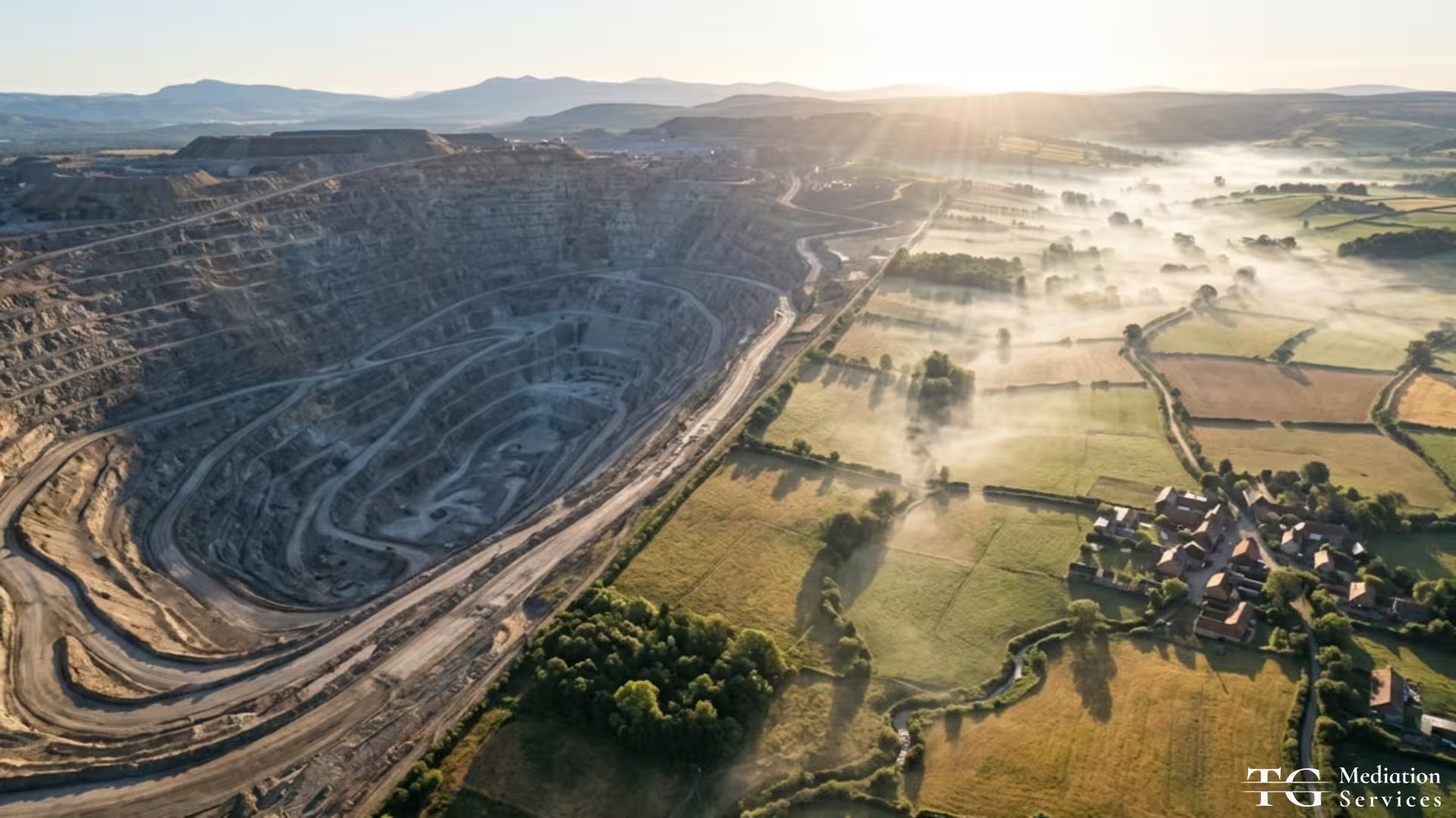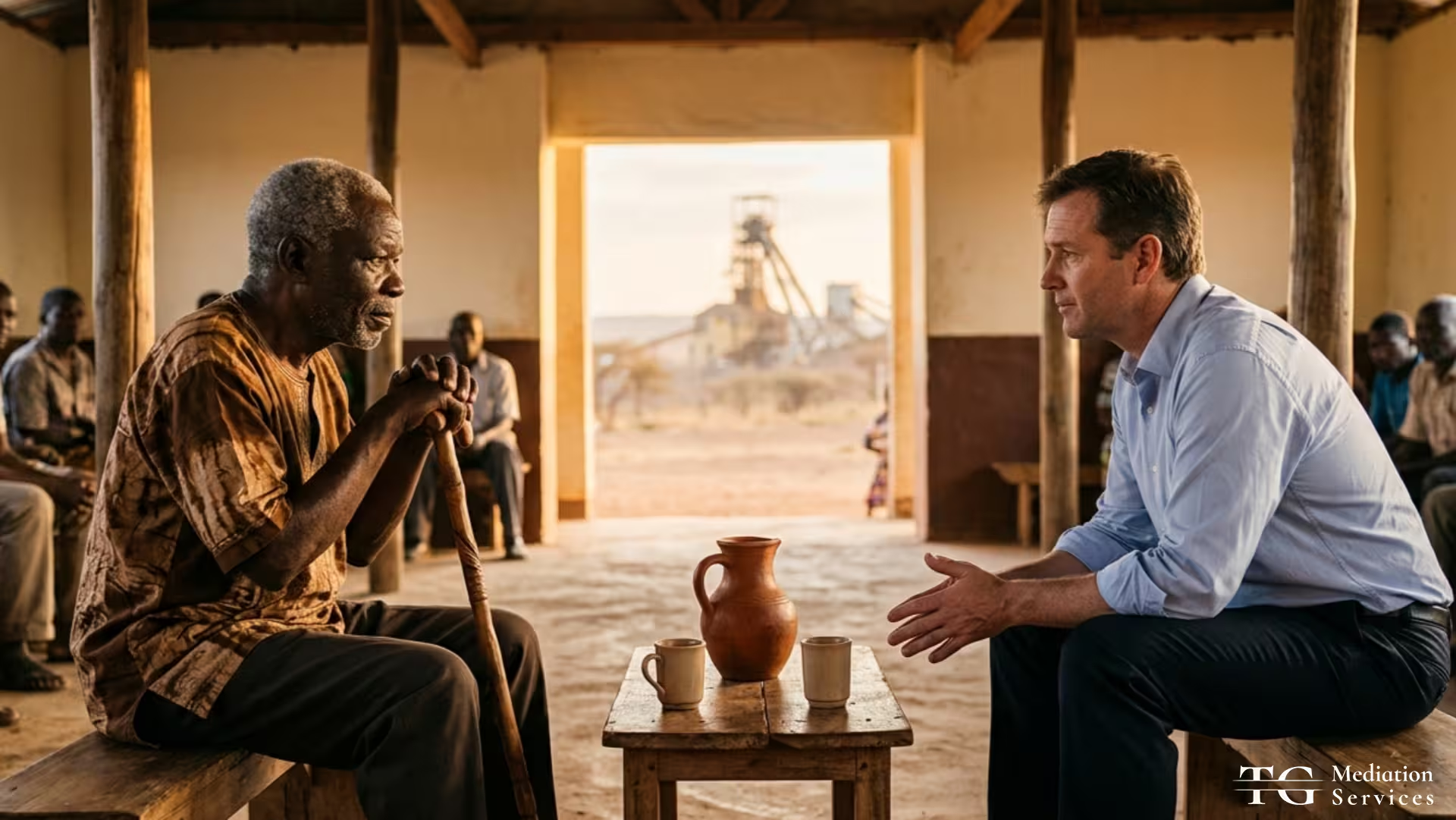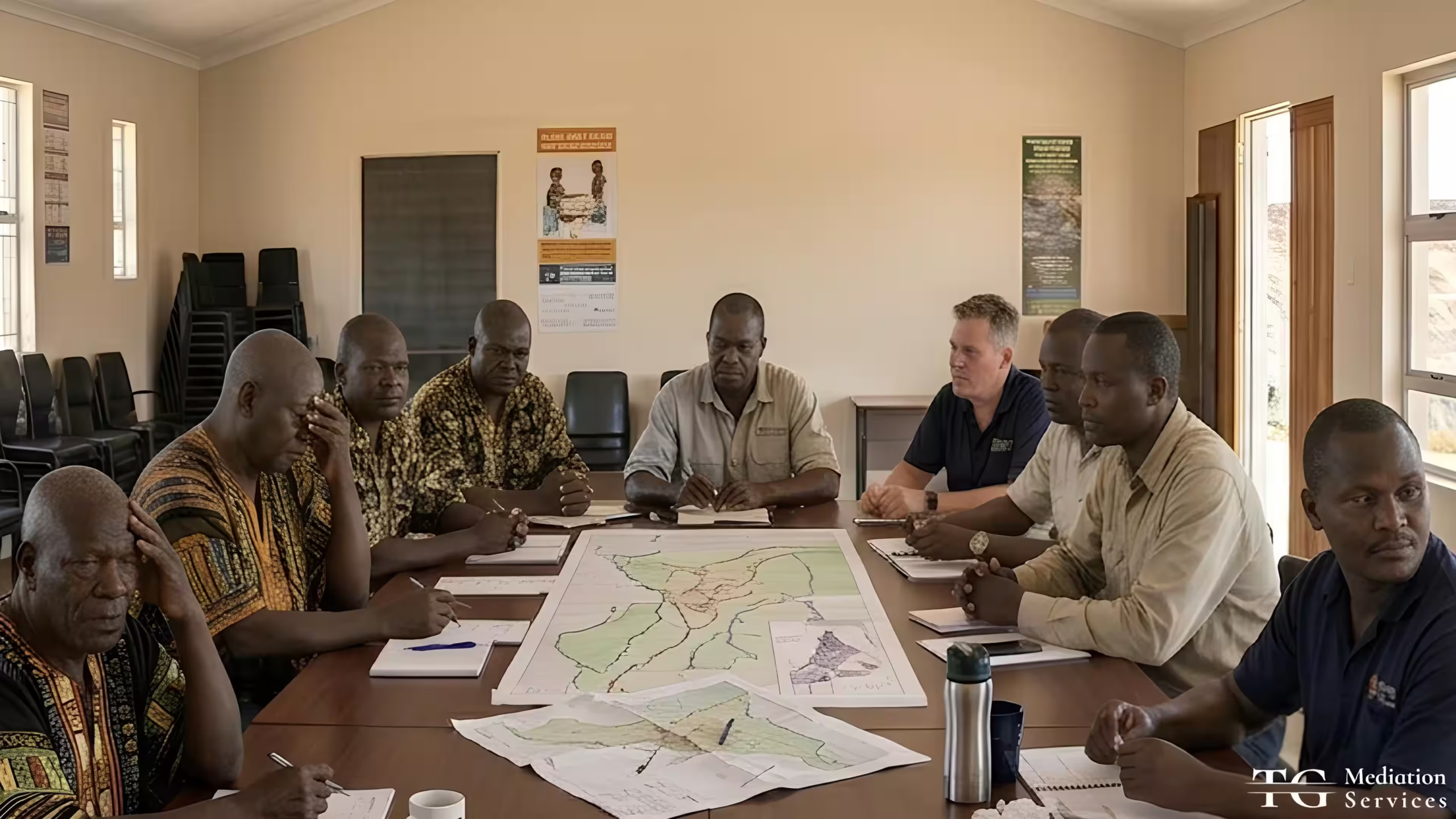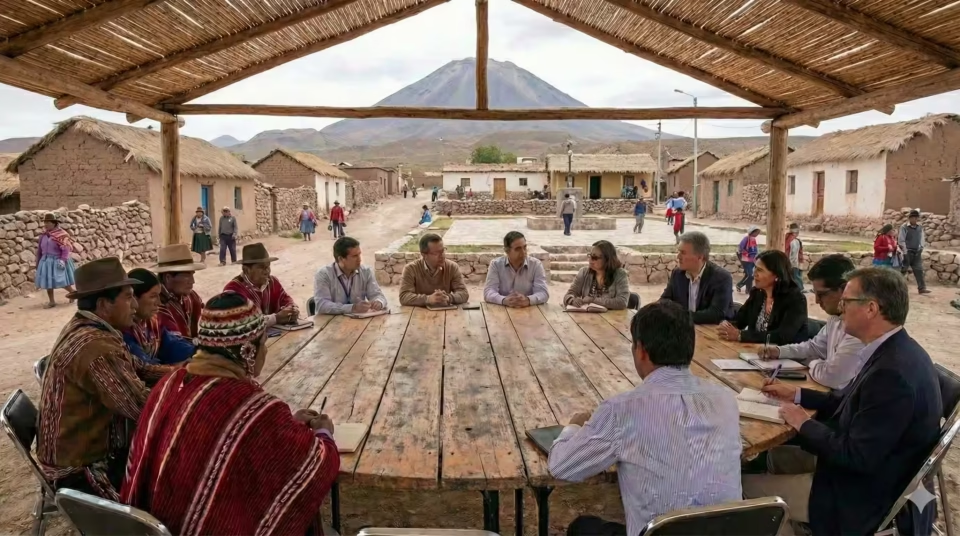
In mining-affected areas scarred by conflict, unresolved human rights claims are like a dormant volcano. On the surface, things look quiet. Beneath it, the ground is shifting. Whether rooted in past displacements, environmental damage, or confrontations with private security, these issues don’t fade on their own. They fester, resurface in unexpected ways, and eventually demand attention. The question isn’t whether a company will face these claims. It’s whether they’ll face them through dialogue or crisis.
Community mediation can be transformative, but only when it’s part of a deliberate, rights-respecting strategy. Done poorly, it becomes a rubber stamp for injustice. Done right, it becomes a pathway to genuine resolution.
Why Human Rights Mediation Is Different From Regular Dispute Resolution
Most commercial mediations ask a simple question: “What does each side want, and where can we find middle ground?” That approach fails in human rights contexts because the stakes are fundamentally different.
It’s not just about interests. It’s about justice. When someone has lost their land, seen their water polluted, or experienced violence from security personnel, they’re not just seeking compensation. They’re seeking acknowledgment that something wrong happened. This matters because a settlement that bypasses this recognition will eventually unravel. Communities can feel when they’ve been heard versus when they’ve been managed.
It’s not just about finding solutions. It’s about addressing harms. A traditional settlement might split the difference and move on. But human rights mediation requires naming what occurred, understanding how it affected people, and designing remedies that go beyond cash. Sometimes this means symbolic reparations, land restoration, changes to company policies, or guarantees that history won’t repeat.
It’s not just about company-community relations. It’s about accountability. This is the part many companies resist. They want to improve relations without accepting responsibility. But accountability isn’t punishment. It’s clarity. It’s saying, “Here’s what happened, here’s what we’re doing differently, and here’s how you’ll know we mean it.”
Because of this, human rights mediation must operate by a different set of rules than standard dispute resolution.
The Subjectivity of Justice: Why Perceptions Diverge
One of the most difficult realities in human rights mediation is that justice is not an objective measure. What feels like a fair resolution to a mining company will almost never feel fair to a community member who has been harmed. This isn’t a communication problem. It’s a structural one, rooted in fundamentally different reference points for evaluating fairness.
Companies evaluate justice through institutional logic. They ask: Is this settlement consistent with what we’ve offered others? Is it defensible to shareholders? Does it align with legal precedent? Does it close the matter definitively? These are legitimate considerations within a corporate framework. The problem is that none of them address whether the person harmed feels that justice has been done.
Communities evaluate justice through lived experience. They ask: Does this acknowledge what we lost? Does it restore what can be restored? Does it prevent this from happening to others? Will the company treat us differently going forward? A settlement that fails these tests will be perceived as unjust, regardless of the dollar amount attached to it.
Victims evaluate justice through the lens of trauma. Someone who lost their home, their health, or a family member is not comparing the settlement to a legal benchmark. They’re comparing it to what was taken from them. No amount of money restores a sacred site. No policy change brings back a parent who died from contaminated water. Justice for victims often requires something companies struggle to provide: genuine acknowledgment of wrongdoing and visible commitment to change.
This divergence explains why so many settlements fail to produce lasting peace. A company announces a “fair settlement” and expects the matter to close. The community accepts the payment but continues to harbor resentment because the core harm was never acknowledged. Years later, the conflict resurfaces, often more intense than before.
Effective mediators must surface these different justice frameworks early in the process. Ask each party directly: “What would justice look like to you?” The answers will rarely align, but naming the gap is the first step toward bridging it. A resolution that addresses only one party’s conception of justice is not a resolution. It’s a deferral.
The Harm Hierarchy: Minimizing, Mitigating, and Remediating
International human rights frameworks, particularly the UN Guiding Principles on Business and Human Rights, establish a clear hierarchy for how companies should approach harm. Understanding this hierarchy is essential for designing mediation processes that meet international standards.
First: Minimize harm before it occurs. The primary obligation is prevention. Companies should identify potential human rights impacts before they happen and design operations to avoid them. This means conducting genuine human rights due diligence, not checking boxes. It means adjusting project designs, timelines, and locations based on what due diligence reveals. Minimization is upstream work. By the time a mediator is involved, this opportunity has usually passed, but understanding what minimization should have looked like helps frame what went wrong.
Second: Mitigate harm as it unfolds. When harm cannot be entirely prevented, the obligation shifts to reducing its severity and duration. If displacement is unavoidable, mitigation means providing adequate relocation support, maintaining cultural continuity, and ensuring livelihoods are restored. If environmental contamination occurs, mitigation means containing the damage, providing alternative water sources, and monitoring health impacts. Mitigation is real-time crisis management with a human rights lens. In mediation, failure to mitigate often becomes a central grievance. Communities don’t just resent the original harm. They resent being abandoned during the crisis.
Third: Remediate harm after the fact. When harm has occurred despite prevention and mitigation efforts (or because such efforts failed), companies must provide remedy. Remediation encompasses several forms: restitution (restoring what was lost), compensation (paying for what cannot be restored), rehabilitation (supporting recovery), satisfaction (acknowledgment, apologies, truth-telling), and guarantees of non-repetition (systemic changes to prevent recurrence). Mediation typically focuses on remediation, but effective mediators recognize that the quality of earlier prevention and mitigation efforts shapes what remediation communities will accept.
The critical insight is that these three approaches are sequential preferences, not alternatives. A company cannot skip to remediation without first asking why minimization and mitigation failed. And remediation that ignores these earlier failures will feel hollow to communities.
When designing mediation processes, explicitly address all three stages. Part of the dialogue should reconstruct what happened: What did the company know? When did they know it? What did they do to prevent harm? What did they do when harm began? Only after this accounting can remediation discussions proceed with credibility. Skipping directly to “how much compensation” signals to communities that the company still doesn’t understand what went wrong.
The Non-Negotiables
Voluntary participation. No coercion, no pressure, no subtle messaging that dissent will be punished. If someone feels forced to participate, the entire process becomes extraction by another name. This is harder than it sounds in communities where a company is the largest employer or where local leaders face economic pressure. Protecting genuine voluntariness requires independent outreach and real alternatives to mediation.
Transparency about rights and limits. Communities need to understand what mediation can and cannot deliver. Can it address criminal liability? Can it overturn permits? Can it challenge the company’s business model? Be honest. Many mediations fail because people entered with expectations that the process was never designed to meet. Mediators have an obligation to manage these expectations upfront, even if it means fewer participants initially.
Power awareness in process design. The company has resources, legal teams, and structural advantages. The community has legitimacy, numbers, and the ability to make operations untenable. Neither side is powerless, but they’re unequal. Good mediators don’t pretend this inequality doesn’t exist. They design processes that compensate for it: separate confidentiality to build trust, skilled facilitators from within the community, and access to independent advisors for community representatives.
Cultural fluency about trauma. Mining zones often have histories of violence, extraction, and broken promises. This isn’t just background context. It shapes how people communicate, what they trust, and how quickly they’ll withdraw from engagement. A mediator who doesn’t understand local trauma, conflict resolution traditions, or what dignity means in that specific context will accidentally trigger dismissal or re-traumatization.
Before any substantive mediation begins, invest in a process assessment that examines each of these elements. Who participated voluntarily? Who felt pressured? What do participants expect? What power dynamics exist? What is the trauma history? This diagnostic work prevents process failures that no amount of skilled facilitation can repair.
Four Critical Design Choices
1. Stakeholder mapping that goes beyond the obvious
Most people think of mediation as company versus community. But mining conflicts involve multiple communities (local, regional, national), different categories of affected people (workers, land users, women, youth), formal leaders (chiefs, mayors, NGO heads), and informal influencers (respected elders, religious leaders, activists). The real question is not “who is at the table?” but “who speaks for whom, and do they speak with legitimacy?”
In one project, one of the formal community leaders was respected but had been away for years. Real decision-making happened through an informal women’s group managing daily grievances. Ignoring them meant the official agreements wouldn’t hold. Recognizing them meant broadening the table, which some thought would slow things down. It actually accelerated trust.
Take time to map this. It’s not an add-on. It’s the foundation.
Conduct separate stakeholder assessments with different groups before convening joint sessions. Ask each group: “Who else needs to be involved for any agreement to hold?” The answers often reveal hidden power structures and potential spoilers.
2. Parallel tracks instead of sequential solutions
The assumption that you can “solve” mining conflicts through one process is usually wrong. Legal remedies (lawsuits, administrative complaints) operate on a different timeline than dialogue. Community remediation processes work on cultural logic, not legal logic. Facilitated dialogue produces understanding, not contracts.
The better approach is running these in parallel. Someone pursuing a legal claim can also participate in dialogue. Someone in a dialogue track can escalate to mediation if breakthrough conversations aren’t working. Community members can collectively design reparation processes while the company negotiates individual settlements with others. This redundancy looks inefficient until you realize that conflicts don’t have one “right” resolution pathway. People have different needs, and a strong strategy accommodates multiple routes.
Design a “pathway map” that shows community members all available routes to resolution. Make clear that choosing one doesn’t close others. This reduces the pressure on any single process and gives people agency over their own resolution journey.
3. Independent oversight that communities trust
Confidentiality in mediation is essential for candid conversation. But in human rights contexts, confidentiality can also hide problems. A community might accept a settlement, only to find the company didn’t honor it, or a mediator was biased, or promises evaporated once attention moved elsewhere.
Independent monitors, community observers, or trusted third-party reviewers (NGOs or NGO-appointed bodies) provide accountability while preserving confidentiality. They don’t negotiate. They observe, document, and report. This gives communities confidence that the process is fair, even when they can’t see every detail of negotiations.
Build oversight into the mediation agreement itself. Specify who will monitor implementation, what they will report, and to whom. Implementation monitoring should extend at least two years beyond any settlement, because that’s when commitments are most likely to erode.
4. Cultural grounding in conflict resolution traditions
Every culture has ways of addressing harm and restoring relationships. Ubuntu in Southern Africa centers on community healing. Restorative justice in Indigenous communities emphasizes circle practices. Shame-and-honor frameworks in some Arab contexts require public acknowledgment, not private settlements. Islamic tradition emphasizes restitution and reconciliation over punishment.
Mediation that ignores these traditions will feel foreign and imposed. Mediation that draws on them gains legitimacy because it speaks to how people naturally resolve disputes. This doesn’t mean replacing professional mediation. It means anchoring it in cultural context so it feels like justice, not a corporate tool.
Before designing a process, ask community members: “How have disputes been resolved here traditionally? What makes a resolution feel legitimate?” Incorporate specific elements from these traditions, whether that’s ceremony, public acknowledgment, involvement of particular figures, or specific forms of restitution.
Concrete Examples: Where This Works
Restitution and recognition claims. A family was displaced for mining expansion decades ago. They don’t just want money. They want the company to acknowledge that displacement happened, to recognize their historical ties to the land, and to create some form of memorial or community benefit that ensures it’s never forgotten. Mediation here combines individual compensation with collective recognition, addressing both material and dignity interests.
Disputed sacred or culturally significant land. A mining concession overlaps with land communities use for ceremonies, hunting, or ancestral burial. Legal ownership might be with the company, but cultural ownership is with the community. Mediation can explore shared use agreements, community veto rights over certain areas, or boundary adjustments that preserve what matters most.
Legacy grievances from subcontractors or previous operators. Communities often have claims against contractors or former companies, not the current operator. The current operator wants to move forward. Communities want these old debts settled. A mediator can bridge this by helping the current operator understand why addressing legacy claims strengthens their position, while creating processes that distinguish the past from the present.
Each of these examples requires the mediator to help parties move beyond positional bargaining (“we want X amount”) to interest-based exploration (“we want acknowledgment, security, and a different relationship going forward”). The mediator’s role is to surface these underlying interests and design remedies that address them directly.
Key Principles for Practitioners on the Ground
Drawing on extensive experience in extractive industry disputes, several principles consistently distinguish successful mediations from failed ones:
Start with acknowledgment, not negotiation. The instinct to move quickly to “solutions” often backfires. Communities that feel unheard will reject even generous offers. Begin with structured processes for the company to listen to affected people’s stories without rebuttal or defense. This investment in acknowledgment pays dividends throughout the process.
Separate the people who caused harm from the people resolving it. When communities are asked to negotiate with the same individuals who oversaw harmful operations, trust is nearly impossible to build. Effective processes often involve new company representatives who can acknowledge past failures without personal defensiveness.
Design for implementation, not just agreement. Settlements that look good on paper fail constantly because no one planned how they would be executed. Who will monitor delivery? What happens if the company misses a deadline? How will disputes about interpretation be resolved? These questions need answers before anyone signs.
Expect the process to surface new grievances. Mediation often reveals harms that weren’t part of the original complaint. This isn’t scope creep. It’s the natural consequence of creating space for honest conversation. Build in flexibility to address newly surfaced issues without derailing the core process.
Document everything with community consent. A detailed record of the process protects both sides. It provides evidence if commitments aren’t honored. It creates precedent for future disputes. And it gives communities ownership over their own narrative of what happened.
What I Bring to This Work
I approach human rights mediation in mining contexts with several layers of experience:
Process design for multi-party, complex human rights disputes. This means creating frameworks where multiple stakeholders can engage safely, where power imbalances are acknowledged and addressed, and where justice and practical resolution move forward together. I design the architecture before mediation begins, not during it.
Co-mediation with local leaders and civil society. I can work alongside community leaders, local mediators, and NGOs who have credibility locally. My role is to bring frameworks, facilitate difficult conversations, and help navigate legal or international norms. Their role is to ground the process in cultural legitimacy and community trust. It’s partnership, not extraction.
Training for company teams and grievance staff. Many mining companies have grievance mechanisms that don’t work because the staff running them don’t understand mediation principles, trauma-informed communication, or how to manage power dynamics. Training shifts this. It turns grievance officers into bridge-builders rather than administrators.
Strategic alignment with international standards. The UN Guiding Principles on Business and Human Rights aren’t just compliance boxes. They’re a coherent framework for how companies can meet their responsibility to respect human rights while still operating. I help integrate mediation strategy into broader due diligence, ensuring that dialogue processes strengthen rather than undermine human rights outcomes.
The Deeper Truth
When human rights and mining intersect, conflict isn’t a failure. It’s inevitable. The company extracted resources. Communities bore the costs. Trust fractured. This is the starting reality, and no amount of corporate communications can wish it away.
But here’s what’s also true: conflict can become an opportunity. It can become the moment when a company genuinely reckons with its impact, when a community is heard at a level that changes how decisions are made going forward, and when past harms become the foundation for a different future.
That only happens with structures designed for it. Not structures that pressure communities to accept settlements quickly, but structures that genuinely honor their right to be part of deciding what comes next.
If your mining operation has unresolved human rights claims, if your relationship with local communities is fragile, or if you’re trying to prevent conflicts from becoming crises, mediation pathways rooted in these principles can help.
Let’s design processes that acknowledge what happened, that restore what can be restored, and that build the trust necessary for whatever comes next.