
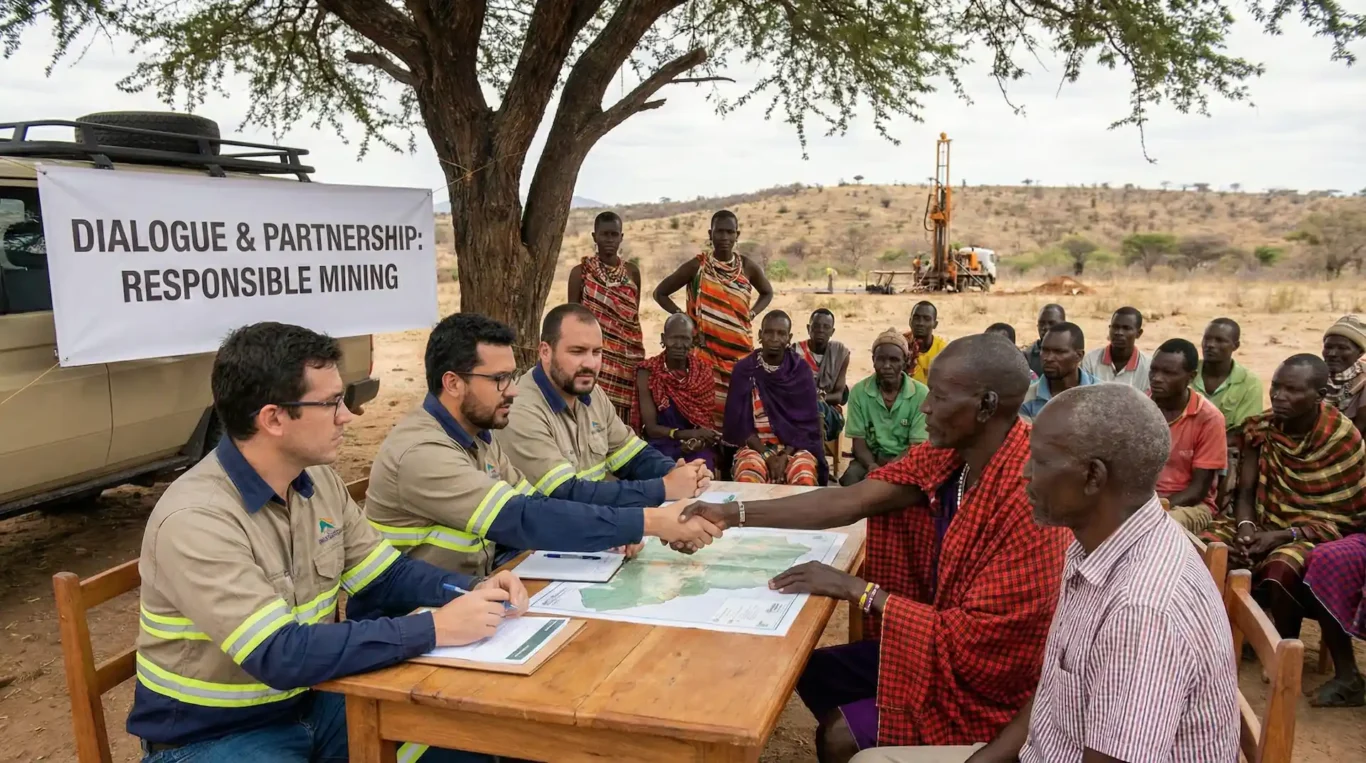
Land is never just land. For the communities who live on it, it carries generations of memory, the bones of ancestors, the rhythms of seasons and harvests, and often the scars of broken promises from outsiders who came before you. When mining companies approach land access as a transactional hurdle, they set themselves up for failure. When they approach it as a relationship to be built, everything changes.
After years of mediating disputes between extractive companies and communities across Africa and beyond, I’ve seen the same pattern repeat itself. The projects that succeed aren’t necessarily the ones with the best geology or the deepest pockets. They’re the ones that understood something fundamental: you cannot extract minerals from land while extracting yourself from the people who call it home.
Why Land Access Goes Wrong
Most land access failures don’t happen because communities reject development outright. They happen because of how the conversation started, or because it never really started at all.
Here’s what typically goes wrong:
The company moves too fast. Pressure from investors and project timelines pushes teams to secure permits and signatures before relationships exist. Communities sense the rush and interpret it as disrespect, or worse, as a sign that the company has something to hide.
Legal access is confused with social access. A signed agreement with the government doesn’t mean the grandmother whose mango trees stand in your project footprint has agreed to anything. Formal land rights and lived land relationships are often two different things.
Past trauma gets ignored. Many communities have been burned before, sometimes by mining companies, sometimes by other developers, sometimes by their own government. That history walks into every meeting, whether anyone acknowledges it or not.
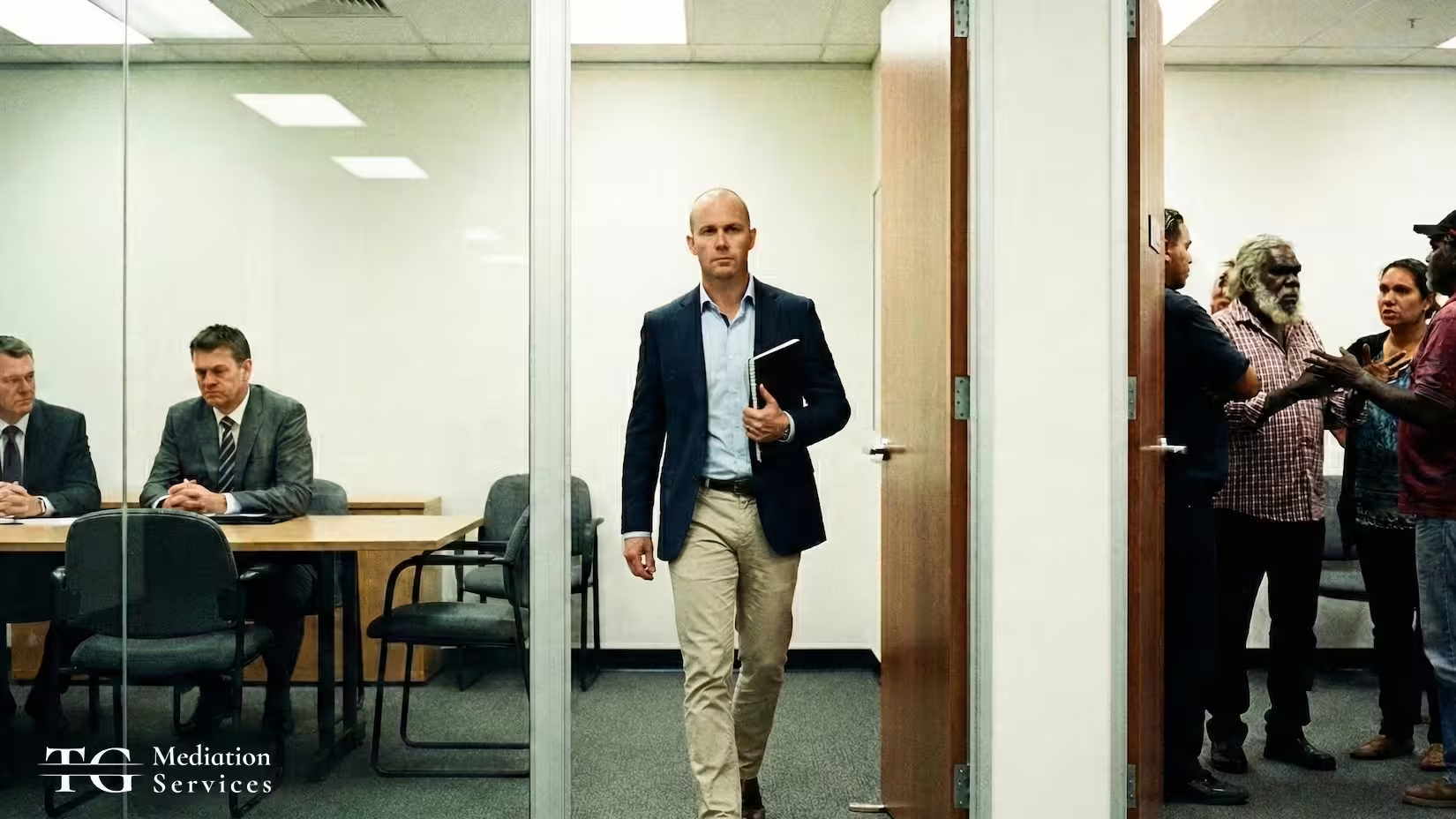
Power imbalances go unaddressed. When a multinational corporation sits across from subsistence farmers, the playing field isn’t level. Without deliberate effort to balance the conversation, communities may agree to things they don’t understand, or stay silent when they should speak.
The result? Resistance that shows up as protests, legal challenges, blocked access roads, or a slow erosion of cooperation that makes operations increasingly difficult over time.
The Case for Starting Early
Early dialogue isn’t a soft skill or a nice-to-have. It’s a strategic choice that protects your project, your reputation, and your people.
The logic is simple: conflict is easier to prevent than to resolve. Once positions harden and grievances accumulate, you’re no longer building a relationship. You’re repairing one. That’s slower, more expensive, and far less likely to succeed.
What does “early” actually mean? It means before the drill rigs arrive. Before the land surveyors mark boundaries. Ideally, before the community learns about your project from rumors or news reports rather than from you directly.
Early dialogue creates space for something that’s increasingly rare in extractive industries: genuine surprise. When you listen before you plan, you learn things that change your approach. You discover that the hillside you assumed was empty is actually a burial ground. You learn that the village chief everyone directed you to doesn’t actually speak for the women who farm the land. You find out that a previous project left behind contaminated water and unpaid compensation, and that your company will be judged against that memory whether you like it or not.
This intelligence is invaluable. It lets you design around problems rather than crash into them.
What Mediation Brings to the Table
You might be thinking: we already do community engagement. We have consultation processes. What’s different about mediation?
The difference is structure, neutrality, and depth.
Standard community engagement often looks like a company representative standing at the front of a room, explaining what’s going to happen, and asking if there are questions. Information flows one way. The agenda is set by the company. The power dynamic is obvious to everyone.
Mediated dialogue flips this. A neutral facilitator, someone with no stake in the project’s outcome, creates conditions where communities can actually speak freely. The conversation starts with their concerns, not your plans. Hidden tensions surface before they become crises. People who would never challenge a company representative directly will often open up to a skilled mediator.
The core principles that make this work:
Neutrality. The facilitator isn’t on your side or theirs. This independence builds trust that company representatives simply cannot achieve on their own, no matter how well-intentioned.
Voluntary participation. No one is compelled to be there or to agree. This sounds obvious, but in practice, many community “consultations” carry implicit pressure. Real consent requires real choice.
Confidentiality. Sensitive issues can be explored without fear of public exposure or retaliation. This is especially important for internal community divisions or historical grievances.
Focus on interests, not positions. Positions are what people say they want. Interests are why they want it. A community that says “no mining” may actually be saying “we don’t trust you,” or “we’re afraid of losing our water,” or “we’ve been promised jobs before and never received them.” Mediation digs beneath the surface to find solutions that address what really matters.
A Practical Roadmap
Theory only takes you so far. Here’s how to put early dialogue into practice.
Understand the landscape before you enter it
Before your first community meeting, invest in genuine understanding. This means more than demographic data and land title searches. You need to know:
Who actually makes decisions about land? Formal leaders and influential voices are often different people. Women, youth, and marginalized groups may have no formal power but significant informal influence.
What happened here before? Previous projects, broken promises, unresolved grievances. All of this shapes how you’ll be received.
What are the internal dynamics? Communities are rarely monolithic. There are factions, families with historical tensions, disagreements about development. Walking into these dynamics blindly is dangerous.
Conflict sensitivity tools like context analysis and power mapping help here, but so does simply spending time in the area, talking to people, observing, and listening.
Bring in trusted intermediaries
You probably can’t facilitate this process yourself. You’re not neutral, and communities know it.
Instead, identify people who can bridge the gap: local mediators, respected civil society figures, traditional authorities who are seen as fair, or professional facilitators with cross-cultural experience. These intermediaries should be genuinely independent. If the community perceives them as company agents, you’ve lost the benefit of their involvement.
The right intermediary can translate not just language but meaning. They understand local customs, communication styles, and taboos. They know when a “yes” actually means “I don’t want to offend you by saying no.”
Create genuine space for listening
Your first conversations shouldn’t be about your project. They should be about the community’s experience, concerns, and aspirations.
Hold these sessions in places the community chooses, on their territory, on their terms. Let people tell stories. Allow emotions to surface. Don’t rush to solutions or reassurances. The goal is understanding, not persuasion.
Questions that open real dialogue:
- What has your experience been with other development projects?
- What do you value most about this land and your life here?
- What would need to be true for you to feel secure about the future?
- What are you most worried might happen?
These conversations often reveal concerns that would never emerge in a formal consultation. I’ve seen projects completely redesigned based on what came out of these sessions, avoiding conflicts that would have cost years and millions of dollars.
Co-design agreements, don’t impose them
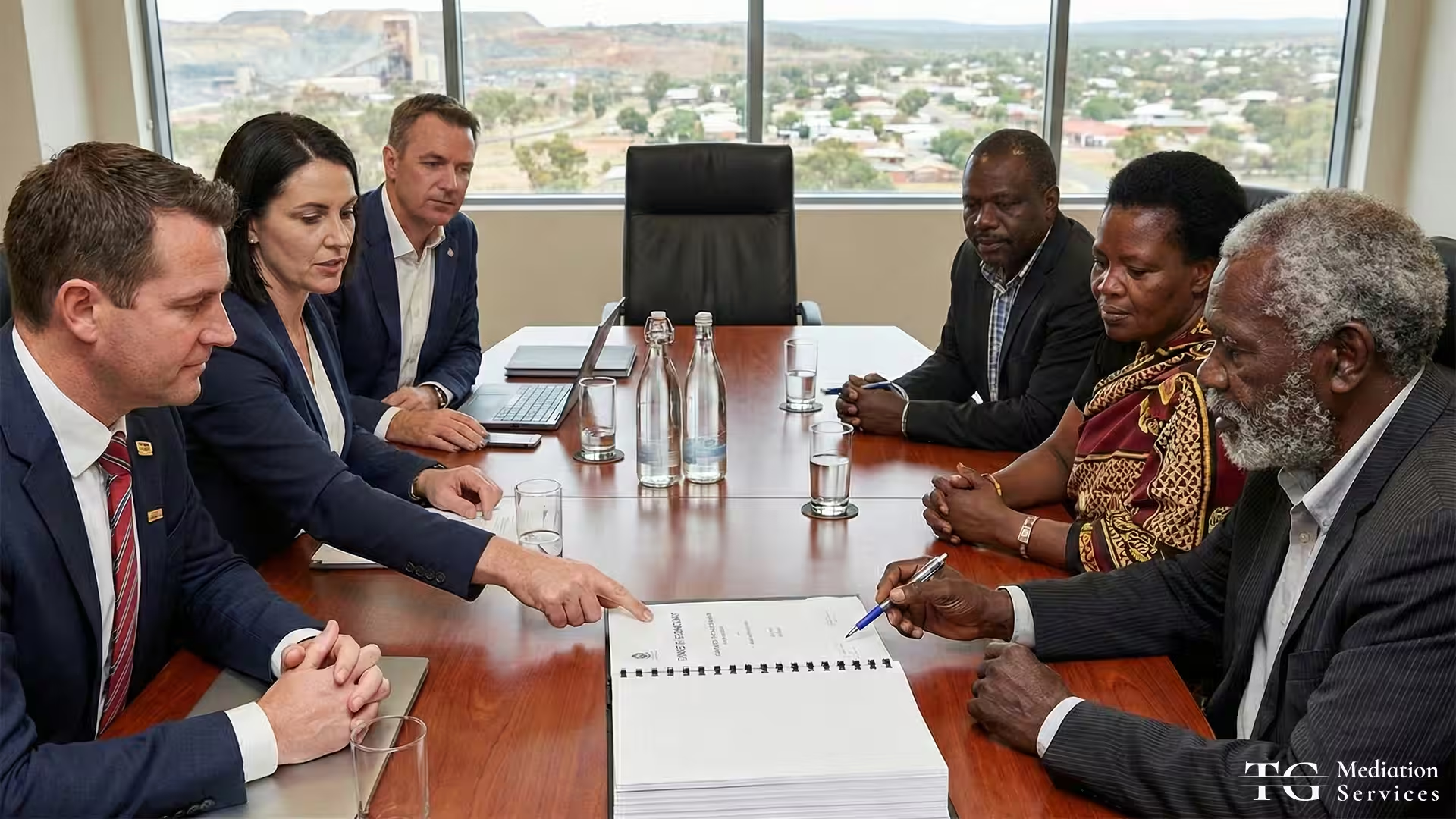
When it’s time to negotiate formal arrangements, bring the same principles into the room. Agreements reached through genuine negotiation are more durable than those signed under pressure.
This means:
Using language people actually understand. Legal documents drafted in capital city offices often mean nothing to rural communities. Translate agreements into local languages and explain them in plain terms.
Including what matters to communities, not just what matters to you. Compensation is important, but it’s rarely the only issue. Environmental guarantees, local employment commitments, respect for sacred sites, mechanisms for ongoing communication: these often matter more than the cash payment.
Building in flexibility. Conditions change. Good agreements include provisions for review, adaptation, and dispute resolution when things don’t go as planned.
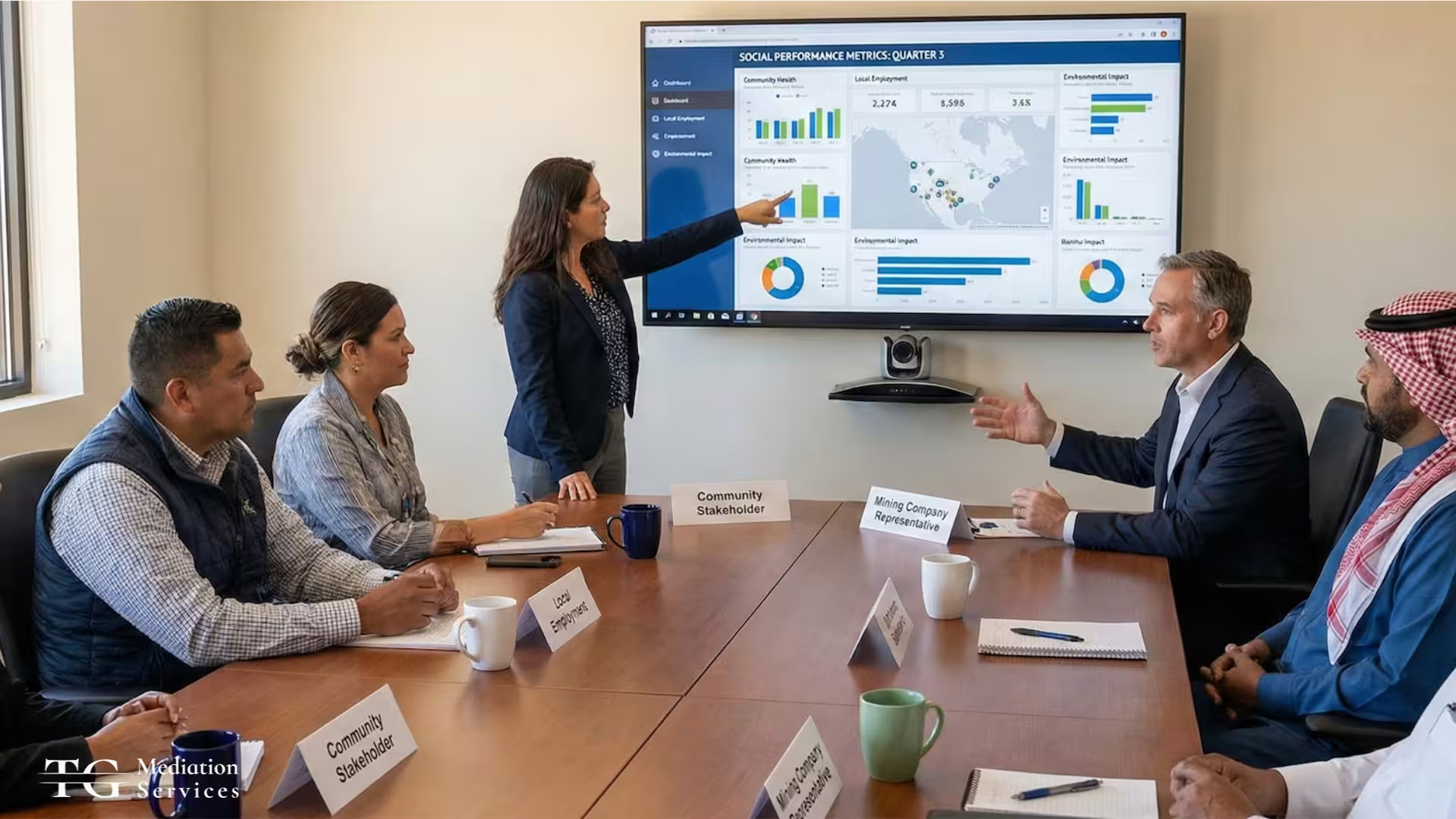
Making monitoring a shared responsibility. Joint committees that track implementation keep everyone accountable and surface problems before they escalate.
Stay engaged after the signature
The agreement isn’t the end. It’s the beginning of a relationship that will last for the life of your project.
Establish regular communication channels. This might mean a community liaison office, a local representative on-site, monthly meetings, or a WhatsApp group where concerns can be raised quickly. The specific form matters less than the commitment to ongoing dialogue.
When complaints arise, and they will, treat them as information rather than attacks. A functioning grievance mechanism with mediation built in can resolve issues at the local level before they become national headlines.
What This Looks Like in Practice
In one West African context, a gold mining company was facing community resistance after exploration activities triggered unrest. The land held agricultural and spiritual significance, and relationships had deteriorated quickly.
Rather than push forward, the company paused and brought in external mediators to facilitate a structured dialogue process. Over several weeks of sessions, the conversation transformed.
Elders were given space to explain ancestral connections to the land. Women and youth, often excluded from formal negotiations, were consulted separately to ensure their voices were heard. The company learned that certain areas considered essential for their project were actually sacred sites that could never be disturbed without catastrophic damage to the relationship.
The outcome wasn’t just access to land. It was a genuine partnership. The project was redesigned to avoid sensitive areas. An agricultural buffer zone protected farming livelihoods. Ancestral remains were respectfully reburied according to traditional practices. Microfinance programs supported farmers who relocated.
Years later, that relationship continues to deliver value for both sides through collaboration on education, environmental management, and local economic development.
The Real Cost of Skipping This Work
I understand the pressure to move quickly. Every month of delay costs money. Investors are impatient. Project teams are measured on timelines.
But consider the alternative costs:
Protests that halt construction for months or years. Legal challenges that wind through courts with uncertain outcomes. Security incidents that put staff at risk and attract regulatory scrutiny. Reputational damage that spooks investors, lenders, and off-take partners. Relationships so damaged that they poison the operating environment for the project’s entire lifespan.
I’ve seen companies spend more on conflict response than they would have spent on conflict prevention, often many times more. And the money is only part of it. The human cost, for communities and company employees alike, is real and lasting.
A Different Way Forward
Land access negotiations don’t have to be adversarial. The interests of mining companies and host communities aren’t necessarily opposed. Both want predictability. Both want to avoid conflict. Both want arrangements they can rely on over time.
The question is whether you’re willing to invest the time and humility required to find common ground.
Mediation offers a path. It creates structure for difficult conversations. It provides the neutrality that builds trust. It surfaces problems early enough to address them constructively.
But the tool is only as good as the commitment behind it. Early dialogue works when companies genuinely want to understand, not just to check a box. It works when communities believe the conversation is real. It works when both sides show up prepared to listen as much as they speak.
If you’re planning land access negotiations or struggling with community resistance, don’t wait for the conflict to force your hand. Start the conversation now, before positions harden and options narrow.
The land will still be there. The relationship may not be.
I provide mediation services, stakeholder engagement strategy, and training for companies navigating complex land access and community relations challenges. If you’re working in a sensitive region and want to get ahead of conflict, let’s talk.

 EN
EN  FR
FR  PT
PT