

To mediate land access disputes in mining operations effectively, you need a structured process that addresses both the substantive issues and the underlying relationships. The most effective approach involves six phases: thorough preparation and stakeholder mapping, a carefully designed opening session, collaborative agenda setting, deep exploration of interests beneath stated positions, creative option generation, and structured negotiation toward durable agreement. Success depends on addressing power imbalances between companies and communities, building trust through demonstrated action rather than promises alone, and recognizing that land disputes in extractive industries carry emotional weight far beyond their economic value. Communities facing displacement are not simply negotiating about money. They are often fighting for their identity, their ancestral connections, and their future.
I have seen situations where company-built relocation villages had better houses, better water systems, and better roads than what the community left behind, yet the people were devastated. The houses were improved by every measurable standard, but the place was wrong. The sacred groves where ancestors were honored, the river where children learned to swim, the informal social spaces where community life happened: none of these could be replicated in the new location. This guide will walk you through each phase of the mediation process, with practical checklists and lessons from real cases.
Why Land Access Disputes in Mining Are Different
Extraction requires access to land. This simple fact generates enormous conflict. Four characteristics make these disputes uniquely challenging:
- Location-specificity: Resources cannot be moved. Unlike commercial disputes where parties can find alternative suppliers or customers, the ore body is where it is. The community lives where it lives. Neither can relocate.
- Irreversibility: Extraction permanently transforms landscapes. Open-pit mines cannot be unfilled. Diverted rivers cannot be unturned. Decisions made today create consequences that will outlast everyone currently alive.
- Uneven distribution: Benefits flow outward (to shareholders, governments, distant consumers) while costs concentrate locally (environmental degradation, social disruption, displacement). Those who bear the costs rarely receive proportionate benefits.
- Intergenerational time horizons: Impacts persist for decades or centuries. Current leaders are making decisions that will bind their grandchildren who have no voice in the process.
These characteristics create conflicts of unusual intensity. Standard commercial mediation techniques, designed for disputes where parties can walk away and find alternatives, may not serve when the community cannot leave and the resource cannot be moved.
The Six-Phase Mediation Process
Effective land access mediation follows a structured but adaptable process. Each phase builds on the previous one, and skipping steps almost always creates problems later.
Phase 0: Preparation and Pre-Mediation
Preparation is where mediations are won or lost. This phase serves four essential purposes: building initial trust with all parties, understanding the conflict deeply, assessing whether conditions are right for mediation, and designing a process that fits the specific situation.
Stakeholder Identification
Your first task is identifying who needs to be at the table. This is more complex than it appears. On the company side, you need representatives with both the knowledge to understand community concerns AND the authority to make commitments. A community relations officer may understand the issues but lack authority to commit resources. A CEO may have authority but lack detailed knowledge. Often, you need a team.
On the community side, the analysis is even more complex. Communities are not monolithic. Different groups may have different interests: farmers versus artisanal miners, elders versus youth, women versus men, those with formal title versus those with customary rights. Both formal leaders (elected officials, traditional chiefs) and informal leaders (respected elders, activists, religious figures) may need to participate. Agreements lacking buy-in from influential community members often fail during implementation.
Do not forget secondary stakeholders: government officials, NGO partners, neighboring communities, media. These parties may not participate directly but can influence outcomes significantly. And watch for potential spoilers: those who benefit from continued conflict or who may oppose resolution for their own reasons.
Conducting Pre-Mediation Meetings
Meet separately with each party before bringing them together. These meetings serve multiple purposes: explaining the mediation process, hearing each party’s story, exploring underlying interests, assessing concerns about participation, and building rapport. Aim for 70% listening, 30% talking. The quality of these meetings sets the tone for everything that follows.
Assessing Readiness
Not every conflict is ready for mediation. Assess five factors: Willingness (are parties genuinely open to dialogue?), Authority (can participants commit their side?), Safety (can everyone participate without risk?), Good faith (do parties intend to negotiate honestly?), and Timing (is this the right moment?). If any factor is missing, address it before proceeding or delay mediation until conditions improve.
Phase 1: The Opening Session
The opening session shapes everything that follows. Your goals are to establish the mediator’s role and neutrality, explain the process and ground rules, create psychological safety for honest dialogue, and allow each party to share their perspective and feel heard.
Begin with a clear explanation of mediation and your role. Many participants have never experienced mediation and may confuse it with arbitration or litigation. Clarify that you will not judge who is right or wrong, that participation is voluntary, and that nothing said in mediation can be used in court proceedings.
Establish ground rules collaboratively. Typical rules include: treat others with respect even when disagreeing, allow each person to speak without interruption, focus on interests and problem-solving rather than blame, maintain confidentiality about what is discussed, and commit to good faith participation.
Then invite opening statements. Each party shares their perspective on the situation, what matters most to them, and what they hope to achieve. These are not arguments but opportunities to be heard. During opening statements, transformation begins. Adversaries who have communicated only through lawyers or protests now sit in the same room. Both sides begin to see the human beings behind the stereotypes they have built up.
Phase 2: Agenda Setting
Work with parties to create a shared agenda. What issues need to be addressed? In what order? This collaborative process gives parties ownership and ensures nothing important is left out. In complex land access disputes, the agenda might include topics like land compensation, employment opportunities, environmental monitoring, resettlement housing, community development funding, and communication protocols.
Frame agenda items neutrally. Instead of “company’s failure to compensate,” use “land compensation arrangements.” Instead of “community’s unreasonable demands,” use “employment and livelihood restoration.” Neutral framing opens space for problem-solving rather than blame.
Phase 3: Exploring Interests and Needs
This is where the real transformation begins. Help parties move from positions to interests. A position is what someone says they want. An interest is why they want it.
For example, the community might say, “We want five million dollars in compensation.” That is a position. Ask, “Why is this amount important to you?” The answers reveal interests: healthcare for community members who have become sick, educational opportunities for youth who can no longer fish in contaminated waters, economic security for families who lost their farmland. When interests are revealed, creative solutions become possible. Maybe there are ways to address healthcare, education, and economic security that neither side initially imagined.
Techniques for Uncovering Interests:
- Ask “why”: “Why is that important to you?”
- Explore what the position achieves: “If you received that, what would it do for you?”
- Use hypotheticals: “If the company could guarantee X, how would that affect your view?”
- Listen for interests within positions: Capture hints like “because we need to…”
- Ask future-focused questions: “What would your community look like in five years if this were resolved well?”
Key Insight: When mediating land disputes, never assume that financial compensation resolves the issue. Ask about non-economic attachments to the land: ancestral connections, sacred sites, livelihood dependencies, social networks. These often matter more than money, and addressing them can unlock solutions that pure compensation cannot.
Phase 4: Generating Options
With interests understood, brainstorm possible solutions without evaluating them yet. The goal is creative expansion. Separate invention from decision. What are all the ways these interests might be addressed?
In a mining land access dispute, options might include: direct compensation payments, establishing a community development fund, creating employment and training programs, improving environmental monitoring with community participation, funding healthcare initiatives, establishing joint decision-making committees, protecting sacred sites through exclusion zones, creating buffer areas between operations and villages, or developing revenue-sharing arrangements.
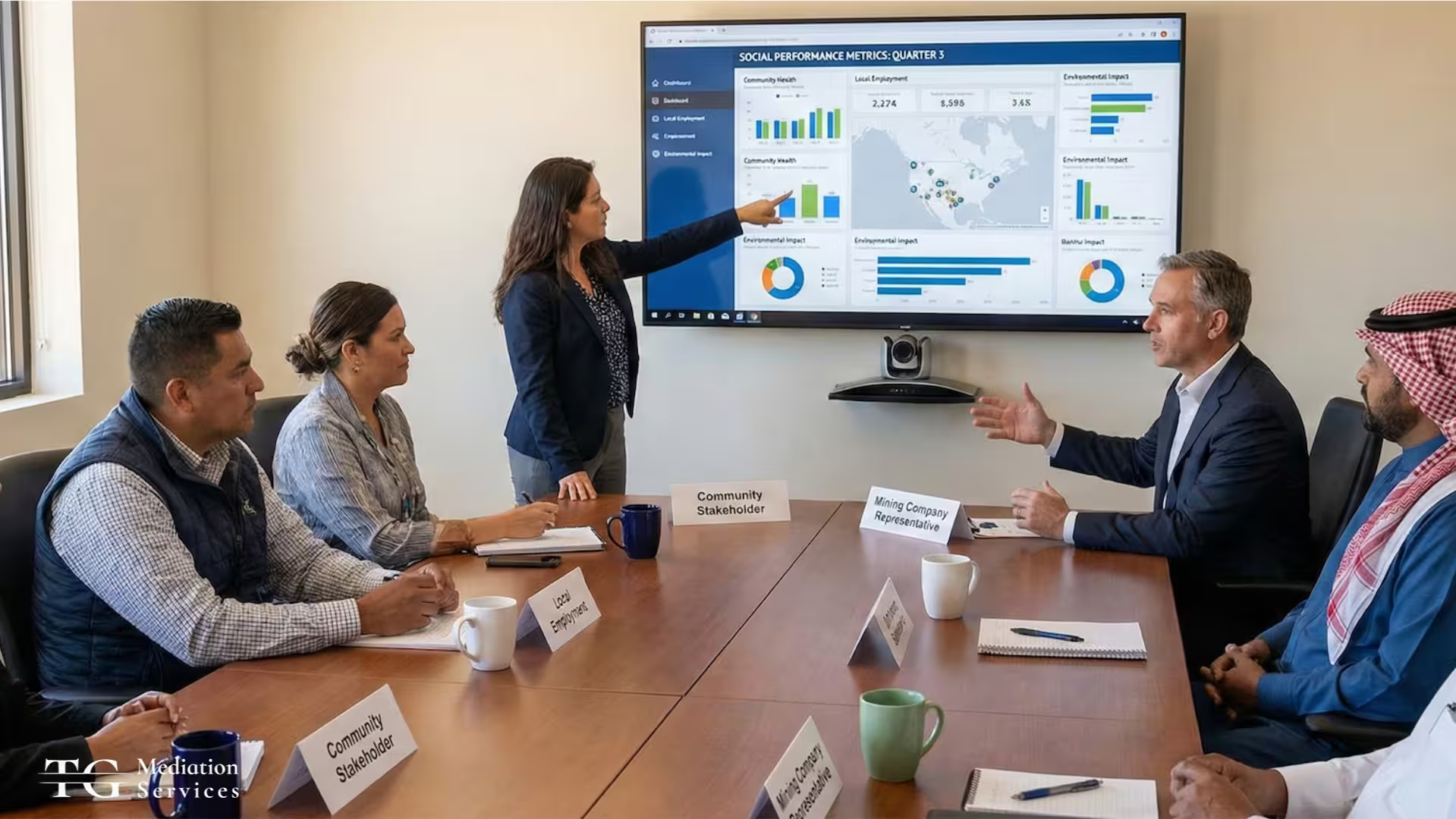
I find visual tools helpful during option generation. Project a map on the wall and draw different configurations together. “What if the buffer extended from here to here?” “What if we created two smaller exclusion zones instead of one large one?” The visual comparison helps parties evaluate options much more effectively than they could evaluate verbal descriptions alone.
Phase 5: Negotiation and Bargaining
Now parties evaluate options, make tradeoffs, and work toward agreement. This is where the hard decisions happen. The trust and understanding built in earlier phases makes this negotiation possible. Parties who have heard each other’s stories, who understand each other’s interests, negotiate differently than adversaries who see each other only as obstacles.
Use these criteria to evaluate options:
- Feasibility: Can this actually be implemented? Does the company have the resources? Does the community have the capacity to manage what is proposed?
- Interest satisfaction: How well does this option address the underlying interests identified in Phase 3?
- Acceptability: Can both parties live with this? Will their constituencies accept it?
- Durability: Will this agreement hold over time? What happens if circumstances change?
When negotiations stall, use reality testing. Help parties understand their alternatives if mediation fails (their BATNA: Best Alternative to Negotiated Agreement) and the consequences of no agreement (their WATNA: Worst Alternative to Negotiated Agreement). Often, genuinely understanding the alternative to agreement creates motivation to find solutions.
Phase 6: Reaching Agreement
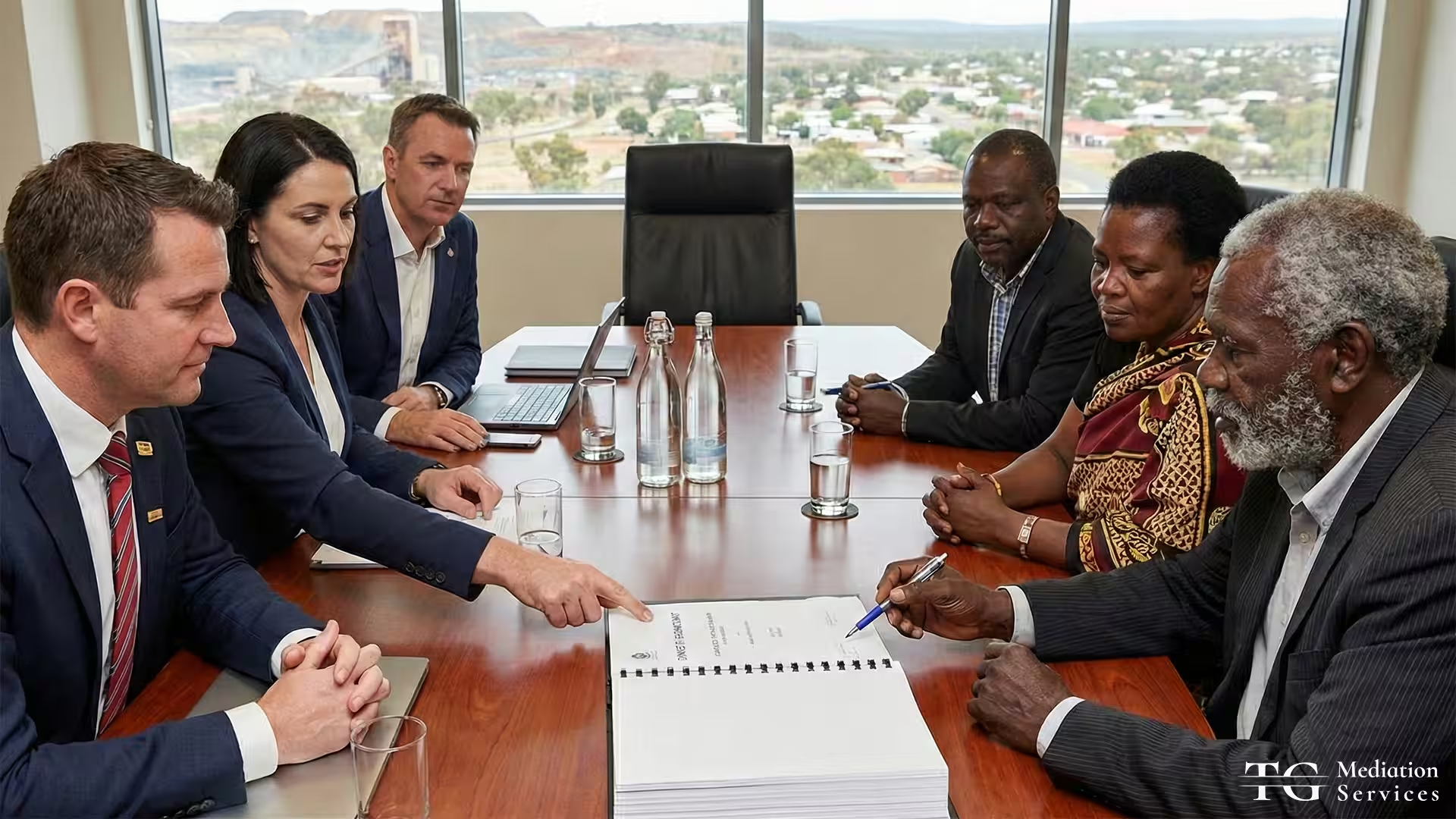
The final phase involves documenting clear, specific terms. An agreement is only as good as its clarity. Vague language invites later disputes. Ambiguity allows parties to interpret terms differently. Specificity creates accountability and enables verification.
Every commitment should specify:
- What exactly will be done (specific deliverables, not vague promises)
- Who is responsible for doing it (named individuals or roles)
- When it will be completed (specific dates, not “as soon as possible”)
- How it will be measured or verified (observable standards)
- What happens if commitments are not met (consequences and remedies)
Build in monitoring mechanisms and dispute resolution procedures. What happens if a party believes the other is not fulfilling commitments? How will disputes about interpretation be resolved? Planning for these contingencies prevents small implementation problems from becoming major conflicts.
Addressing Power Imbalances
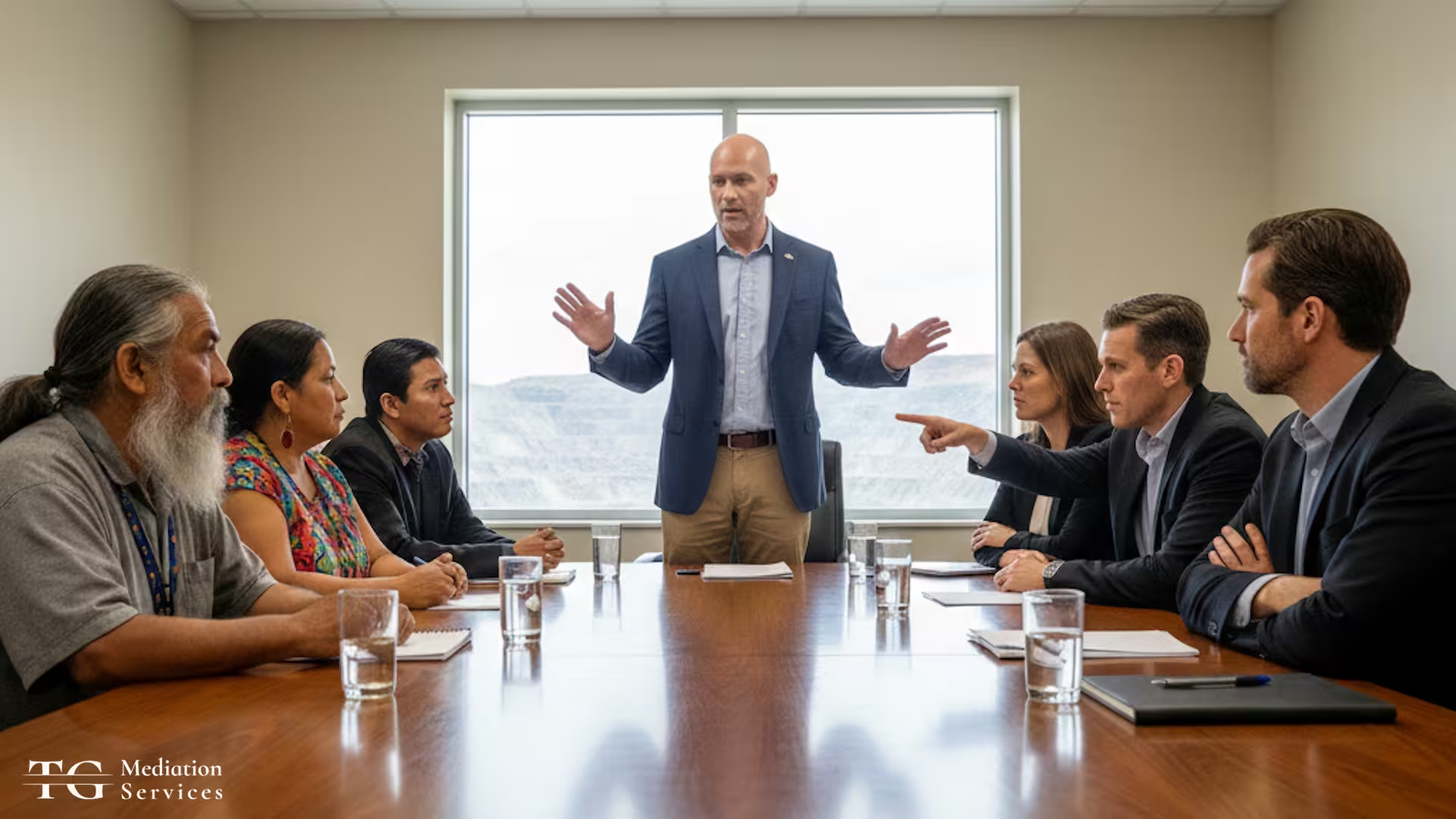
The structural inequality between companies and communities underlies many land access disputes. Companies have financial resources, legal expertise, government connections, and media access. Communities often have none of these. This imbalance shapes every interaction and can doom negotiations before they begin.
Strategies for balancing power include:
- Information equalization: Ensure communities have access to the same information as companies. This may require independent technical reviews, translated documents, and expert assistance to interpret complex data.
- Capacity building: Help communities prepare for negotiation. This might include training on negotiation skills, technical education about mining impacts, or support in organizing their own governance structures.
- Process design: Structure the process to give communities adequate time for internal consultation. Do not allow artificial urgency to pressure communities into decisions they have not fully considered.
- Technical support: Provide or facilitate access to independent legal, technical, and financial advisors who can help communities evaluate proposals.
A Case in Point: The Seven-Year Journey
Consider the mediation between an affected community and a gold mine in West Africa, facilitated through the Compliance Advisor Ombudsman (CAO) from 2017 to 2024. The community had accumulated grievances over years: inadequate consultation about resettlement, compensation perceived as insufficient, broken promises about infrastructure, destruction of livelihoods, and human rights concerns about security responses to protests.
Trust had deteriorated to the point where direct dialogue was ineffective. Community members viewed company representatives with suspicion, believing any engagement was designed to delay rather than address their concerns.
The mediators designed a phased approach rather than attempting to resolve all issues at once. This was crucial for several reasons:
- Trust was too low for comprehensive negotiation. The parties could not sit down and resolve everything when they did not believe each other’s basic good faith. Building trust required demonstrated action, not just promises.
- Some issues required urgent attention. Water access and interim housing could not wait for resolution of complex long-term questions.
- Early agreements on smaller issues demonstrated that mediation could work. When the company committed to improving water access and actually delivered, the community gained evidence that negotiated commitments might be kept.
Over seven years, the mediation navigated numerous impasses. There were moments when trust collapsed and one party threatened to abandon the process. There were external disruptions: political changes, commodity price fluctuations, a global pandemic. The mediators maintained momentum through persistent engagement, separate meetings when joint sessions were too contentious, and focus on concrete improvements that could demonstrate progress even when broader issues remained stuck.
Key Lesson: Community preparation was crucial throughout. The mediators invested significant effort in pre-mediation work with the community to ensure genuine representation and informed participation. Without this investment, the community would have been overwhelmed by the company’s professional negotiating team.
Special Considerations: Indigenous Rights and FPIC
When land access disputes involve indigenous peoples, additional protections apply. Under the UN Declaration on the Rights of Indigenous Peoples (UNDRIP) and ILO Convention 169, indigenous peoples are entitled to Free, Prior, and Informed Consent (FPIC) before projects proceed on their lands.
FPIC is fundamentally different from consultation. Consultation requires informing communities and considering their views. FPIC requires obtaining their agreement. Each element has specific meaning:
- Free: Without coercion, manipulation, or undue pressure. Security presence at consultation meetings, threats, or artificial deadlines all violate the “free” requirement.
- Prior: Before decisions are made and activities begin. Seeking consent after permits are granted is not “prior” consent.
- Informed: With full information about the project, its impacts, alternatives, and community rights. Information must be accessible, provided in local languages, and communities must have time to understand and deliberate.
- Consent: Affirmative agreement through the community’s own decision-making processes. The community’s decision, whether yes or no, must be respected.
As a mediator, you should ensure that indigenous parties understand their rights and that processes respect FPIC requirements. Do not accept company claims that consultation satisfies FPIC. They are different standards with different implications.
Pre-Mediation Checklist
Use this checklist before beginning mediation.
Stakeholder Preparation
- All key stakeholders identified (primary parties, secondary influencers, potential spoilers)
- Parties confirmed willing and ready to participate voluntarily
- Decision-makers identified and confirmed to have authority
- Pre-mediation meetings completed with each party
- All participants understand the mediation process
Process Design
- Format determined (joint sessions, caucuses, working groups)
- Timeline established (number of sessions, overall timeframe)
- Ground rules drafted and agreed
- Confidentiality provisions established
- Agreement to Mediate prepared if appropriate
Logistics
- Neutral venue selected and booked
- Translation and interpretation arranged if needed
- Materials prepared (flipcharts, markers, maps, documents)
- Breakout rooms available for caucuses
- Transportation and accommodation arranged for participants if needed
Special Considerations
- Cultural protocols identified and incorporated
- Trauma considerations addressed
- Power imbalance mitigation strategies planned
- Support resources available (legal, technical, psychosocial)
- Safety concerns addressed
- Indigenous rights (including FPIC requirements) assessed
Common Pitfalls to Avoid
- Rushing preparation. The pressure to “get to the table” can tempt mediators to shortcut pre-mediation work. Resist this pressure. Every mediation that goes well has thorough preparation behind it. Every mediation that fails often has inadequate preparation as a root cause.
- Treating the community as monolithic. Communities have internal divisions. Different groups have different interests. Women may be excluded from formal decision-making but most affected by changes to water access. Youth may prioritize different outcomes than elders. Missing these distinctions leads to agreements that lack genuine community support.
- Assuming financial compensation resolves everything. Money cannot replace ancestral lands, sacred sites, or community cohesion. Always explore non-economic dimensions of what the community has lost or fears losing.
- Premature closure. The relief of reaching agreement can tempt parties and mediators to finalize terms before all issues are genuinely resolved. Test agreements thoroughly. “What happens if…” questions reveal whether parties have truly thought through implementation.
- Ignoring power imbalances. Fair processes require roughly balanced parties. If you proceed with mediation when one side is dramatically more powerful, sophisticated, or resourced than the other, you risk facilitating an unfair outcome dressed up as voluntary agreement.
Conclusion: From Agreement to Lasting Change
Mediating land access disputes in mining operations is demanding work. It requires technical knowledge about extractive industries, cultural sensitivity to community contexts, patience to build trust over months or years, and skill to navigate complex multi-party negotiations. The stakes are high: these disputes affect people’s homes, livelihoods, health, and cultural heritage.
But the rewards are equally significant. When mediation works, it can transform relationships between companies and communities from adversarial to collaborative. It can prevent or resolve conflicts that would otherwise cause suffering on all sides. It can create agreements that genuinely address underlying interests rather than papering over grievances.
The key principles to remember: Invest deeply in preparation. Focus on interests, not positions. Address power imbalances directly. Build trust through demonstrated action. Draft agreements with specificity that enables accountability. And recognize that you are dealing with people who may be fighting not just for resources but for their identity and their future.
An agreement is only as good as its implementation. Plan for follow-through from the beginning. The communities and companies that need mediators deserve practitioners who will stay engaged until commitments become reality, not just until papers are signed.
Ready to put these principles into practice?
Contact me to get my complete Pre-Mediation Checklist template, including stakeholder mapping worksheets, readiness assessment forms, and agreement drafting guidelines. For complex disputes requiring specialized expertise, schedule a consultation with our experienced mediation team.


 EN
EN  FR
FR  PT
PT