
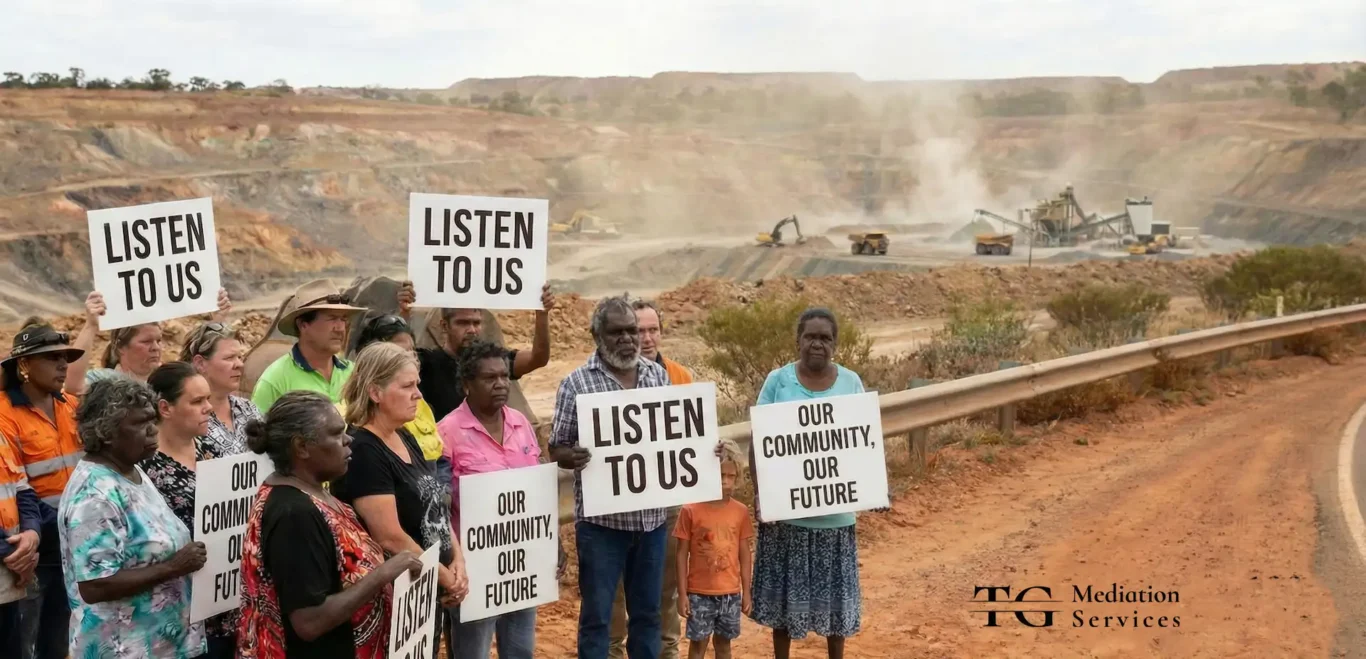
1. Introduction: Reframing Resistance as Resource
Change, whether it arrives as a new development project, a revised zoning ordinance, the closure of a public institution, or the introduction of industrial activity, is rarely welcomed without friction. In communities, change touches something deeper than inconvenience. It implicates identity, disrupts routines, threatens livelihoods, and challenges intergenerational expectations about how life should be lived and what the future should look like. Resistance to such change is not merely an obstacle to progress but a form of communication, a signal that something of value is at stake that decision-makers may not have adequately considered.
The conventional approach to community opposition treats it as a problem to be solved, typically through more information, better messaging, or procedural compliance with consultation requirements. This deficit model assumes that if communities only understood the benefits of a proposed change, their resistance would dissolve. Yet decades of experience across sectors, from mining to urban planning to healthcare restructuring, demonstrate that informational campaigns rarely shift entrenched opposition. People do not resist change primarily because they lack information. They resist because they perceive threats to things they value, feel excluded from decisions that affect them, or carry legitimate grievances from past experiences that inform their present scepticism.
Mediation offers a fundamentally different approach. Rather than positioning communities as barriers to be overcome or audiences to be persuaded, mediation treats community members as stakeholders whose perspectives contain valuable intelligence about risks, opportunities, and implementation challenges. This reframe is not merely rhetorical. It reflects a practical recognition that projects imposed over community objections frequently encounter operational difficulties, legal challenges, reputational damage, and ongoing conflict that prove far more costly than the time invested in genuine engagement.
This article presents a comprehensive framework for mediating resistance to change in community contexts. It examines the psychological and sociological roots of opposition, critiques conventional engagement models, and offers practitioners actionable methodologies for facilitating productive dialogue. Throughout, the analysis draws on case examples that illustrate both the pitfalls of adversarial approaches and the potential of mediation to transform conflict into collaboration.
2. Understanding Why Change Sparks Conflict
2.1 The Psychology of Resistance
Change creates uncertainty, and uncertainty activates threat responses that are deeply rooted in human psychology. When confronted with proposed changes to their environment, people instinctively ask a series of questions that reflect fundamental concerns about security, autonomy, and fairness. What will I lose? Will I be displaced, either physically or in terms of my social position and economic standing? Will my values, traditions, and way of life be respected or overridden? Who benefits from this change, and who bears the costs? Perhaps most importantly: who decided this, and why was I not consulted?
These questions are not irrational, nor do they indicate ignorance or obstinacy. They reflect legitimate cognitive processes for evaluating risk under conditions of imperfect information. Research in behavioural economics consistently demonstrates that humans weight potential losses more heavily than equivalent gains, a phenomenon known as loss aversion. A community facing the potential loss of familiar landscapes, established businesses, or social cohesion will not be persuaded by statistics showing aggregate benefits if those benefits accrue to others while the losses fall on them.
A social performance colleague who participated in one of my workshops described a telling example from a water infrastructure project. The engineering team had prepared extensive documentation demonstrating that a new treatment facility would improve water quality for the entire region. Yet community meetings were dominated by anger and suspicion. The problem, as the colleague came to understand, was that the facility would be located in a neighbourhood that had historically been selected for undesirable infrastructure. For residents, the technical merits were secondary to the pattern they perceived: once again, their community was being asked to bear costs for benefits that would flow elsewhere. The resistance was not about water treatment. It was about dignity and distributive justice.
2.2 Historical Memory and Accumulated Grievance
Communities are not blank slates. They carry collective memories of how previous changes were implemented, promises that were broken, and harms that went unaddressed. This historical dimension is frequently invisible to proponents of new initiatives, who may view their project as a discrete proposal deserving evaluation on its own merits. For community members, however, each new proposal arrives within a narrative context shaped by prior experience.
In regions with histories of extractive industries, for instance, communities may have witnessed environmental degradation, economic boom-and-bust cycles, and corporate departures that left lasting damage. A new mining company arriving with promises of responsible development confronts not only the specific concerns about its project but the accumulated scepticism generated by predecessors. Similarly, in urban contexts, communities subjected to previous waves of “revitalisation” that resulted in displacement and gentrification will approach new development proposals with wariness that is entirely reasonable given their experience.
A mediator colleague working in post-industrial regions of Southern Europe shared an observation that has shaped my own practice. She noted that in communities with long memories of exploitation, the first meeting is never really about the current project. It is about acknowledging what came before, about demonstrating that this time, someone is actually listening. Until that acknowledgment occurs, substantive discussion of the present proposal cannot meaningfully begin.
2.3 The Meaning Dimension: Identity and Place
Perhaps the most underestimated driver of community resistance is the meaning dimension, the way places, practices, and patterns of life constitute identity. Decision-makers, particularly those operating within technical or economic frameworks, often fail to appreciate how deeply people are invested in the specific character of their communities. A landscape is not merely scenery but the backdrop to personal and collective memory. A local business is not just an economic unit but a gathering place that structures social relationships. A school is not simply a service delivery point but a symbol of community continuity across generations.
When change threatens these meaning-laden elements, the response often appears disproportionate to observers who do not share the local context. Why would people fight so hard against a project that creates jobs and brings investment? The answer lies in recognising that resistance is rarely about the technical specifications of a proposal. It is about what the proposal signifies: about power, about who gets to determine the character of a place, and about whether the future will include space for current residents and their ways of life.
This is why resistance, though it is often frustrating for proponents, is better understood as feedback than as friction. The intensity of opposition communicates something important about what is at stake. The specific objections raised, even when they seem technically misguided or legally untenable, point toward concerns that deserve attention. A skilled mediator learns to read resistance as a map of community values, using the heat generated by conflict to identify what matters most deeply to those affected.
3. Why Conventional Engagement Fails
3.1 The Information Deficit Model
The most common response to community resistance is the information campaign. Decision-makers assume that opposition stems from misunderstanding, so they produce fact sheets, host informational meetings, and deploy communications professionals to explain the benefits of proposed changes. This approach rests on what scholars call the “deficit model,” the assumption that public resistance results from insufficient knowledge and can be remedied through education.
The deficit model fails for several reasons. First, it misdiagnoses the problem. As discussed above, resistance typically reflects concerns about values, fairness, and autonomy rather than informational gaps. Providing more data about economic benefits does not address worries about who receives those benefits or how decisions are made. Second, the deficit model is inherently condescending. It positions community members as ignorant or irrational, needing to be educated by experts who know better. This positioning often intensifies resistance by confirming suspicions that decision-makers do not respect local perspectives.
A workshop participant from the renewable energy sector recounted an illustrative experience. Her company had prepared an exhaustive technical report addressing every environmental concern raised about a proposed wind farm. At the public meeting where the report was presented, community members barely glanced at it. Instead, they raised questions about property values, visual impact, and why the project was being sited in their area rather than elsewhere. The technical team had answered questions no one was asking while ignoring the questions that actually drove opposition.
3.2 Procedural Compliance Without Genuine Participation
Many jurisdictions require some form of public consultation before major decisions can be implemented. These requirements, which vary from formal hearings to comment periods to environmental impact assessments, create procedural checkboxes that proponents must complete. However, procedural compliance is not the same as genuine participation, and communities quickly recognise the difference.
A public hearing where residents can speak for three minutes before a decision that has already been made is not participation. It is performance. A comment period where submitted concerns receive boilerplate responses is not engagement. It is documentation. Communities subjected to these pseudo-participatory processes often emerge more alienated than if no consultation had occurred at all. They have been invited to speak but not to be heard. Their input has been collected but not incorporated. The ritual of consultation has been performed while the substance of decision-making remains unchanged.
This pattern generates what might be called “consultation fatigue,” a deep cynicism about engagement processes that accumulates across repeated experiences of tokenistic participation. Communities suffering from consultation fatigue may refuse to engage even with genuinely well-intentioned processes, having concluded that participation is futile. For proponents, this creates a vicious cycle: communities are labelled as “impossible to engage” or “unreasonable,” justifying further reductions in participatory effort.
3.3 Adversarial Framing and Escalation Dynamics
When initial engagement efforts fail to overcome resistance, proponents often shift to adversarial strategies. They may mobilise legal resources to overcome objections, deploy public relations campaigns to discredit opponents, or seek political pressure to bypass community concerns. These strategies sometimes succeed in achieving short-term objectives, but they typically generate long-term costs that exceed any time savings achieved.
Adversarial approaches trigger escalation dynamics. Communities that feel dismissed or overridden intensify their resistance, moving from formal objections to protests, media campaigns, litigation, and direct action. Projects that could have been implemented smoothly with community support become mired in controversy, delay, and ongoing conflict. Relationships that might have enabled constructive problem-solving calcify into mutual hostility. Each side develops narratives that villainise the other, making future cooperation increasingly difficult.
A colleague who consults on social license issues with extractive companies often cites a maxim that has proven true across contexts: “You can win the argument and lose the relationship, and in community contexts, the relationship is what determines whether your project succeeds over time.” Legal victories that alienate communities create conditions for ongoing resistance, regulatory scrutiny, and reputational damage that can persist for decades.
4. The Mediator’s Role in Change-Driven Disputes
Mediation offers an alternative to both the deficit model and adversarial approaches. Rather than assuming communities need to be educated or overcome, mediation creates structured space for dialogue that treats all perspectives as legitimate starting points for collaborative problem-solving. The mediator’s role is not to convince communities to accept change but to facilitate conversations in which stakeholders can understand each other’s concerns, explore options, and craft solutions that address underlying interests.
This section examines the key functions mediators serve in change-driven community disputes and offers guidance for practitioners navigating these complex dynamics.
4.1 Acknowledging Emotions and History
The first task in community mediation is often the most underrated: creating space for the expression of emotion and the acknowledgment of history. Change frequently reactivates old wounds, and until those wounds are acknowledged, substantive negotiation cannot proceed productively. A community carrying grievances about past expropriations, broken promises, or histories of exclusion needs to tell that story before it can engage with present proposals.
This is not merely a procedural courtesy. Emotional acknowledgment serves crucial functions in dispute resolution. It validates the legitimacy of community concerns, demonstrating that their perspective matters. It helps community members feel heard, reducing the defensive postures that block creative problem-solving. And it provides decision-makers with essential context for understanding why certain issues carry such weight.
Caution is warranted here. Acknowledgment should not be performative or insincere. Communities quickly detect when expressions of understanding are tactical rather than genuine. Mediators must coach proponents to listen with actual curiosity rather than simply waiting for their turn to respond. When representatives of companies or governments acknowledge past harms without defensiveness or minimisation, the effect on community posture can be transformative.
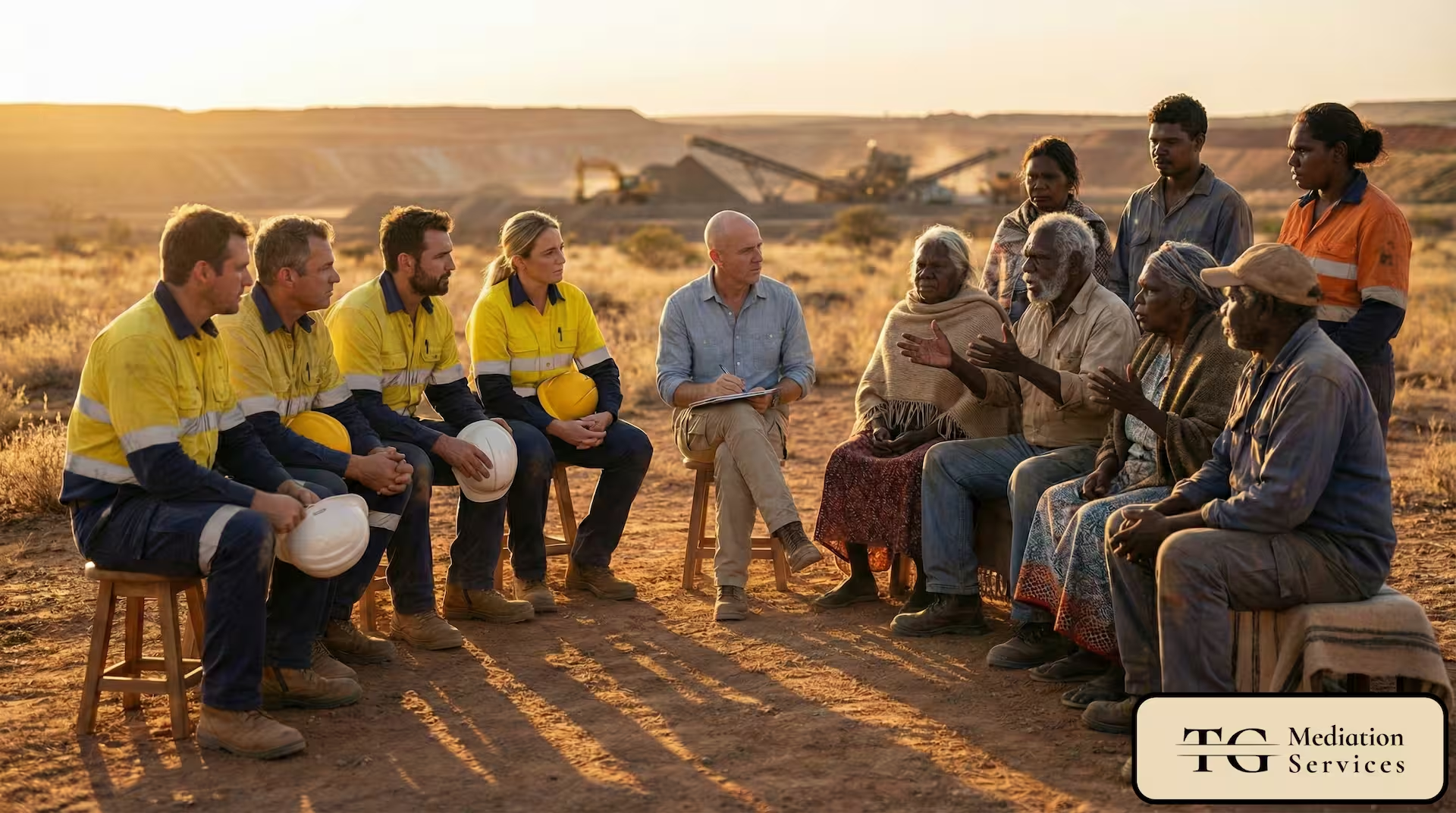
A practitioner tip from experience: dedicate the first session entirely to listening. Resist the temptation to move toward solutions. Allow community members to express the full scope of their concerns without interruption or rebuttal. The information gathered in this session will reveal which issues are truly generative for the community, guiding subsequent process design.
4.2 Clarifying Interests Behind Positions
One of mediation’s core contributions is the distinction between positions and interests. A position is what someone says they want: “No new project.” “Stop the development.” “Leave our community alone.” Interests are the underlying needs, concerns, and values that give rise to positions: respect, consultation, equitable benefit-sharing, environmental protection, cultural preservation, economic security.
Positions are often binary and non-negotiable. Interests, by contrast, can frequently be satisfied in multiple ways. A community whose position is “no mining” may have interests in environmental protection, economic participation, and respect for traditional land use. These interests might be addressed through rigorous environmental safeguards, local employment and procurement requirements, and cultural heritage protocols, allowing a project to proceed in a form acceptable to community members who initially appeared implacably opposed.
The mediator’s task is to help parties articulate and explore their interests, moving beyond positional bargaining toward interest-based negotiation. This requires patient questioning, active listening, and the ability to reflect back what parties are saying in ways that reveal the concerns beneath their stated demands. It also requires helping proponents understand that community positions, however frustrating, point toward legitimate interests that deserve attention.
A caution for practitioners: do not assume you know what community interests are. Even interests that seem obvious, such as employment or environmental protection, may not be priorities for a particular community, or may be understood in ways that differ from external assumptions. Let community members articulate their own interests rather than imposing frameworks from outside.
4.3 Ensuring Inclusive Representation
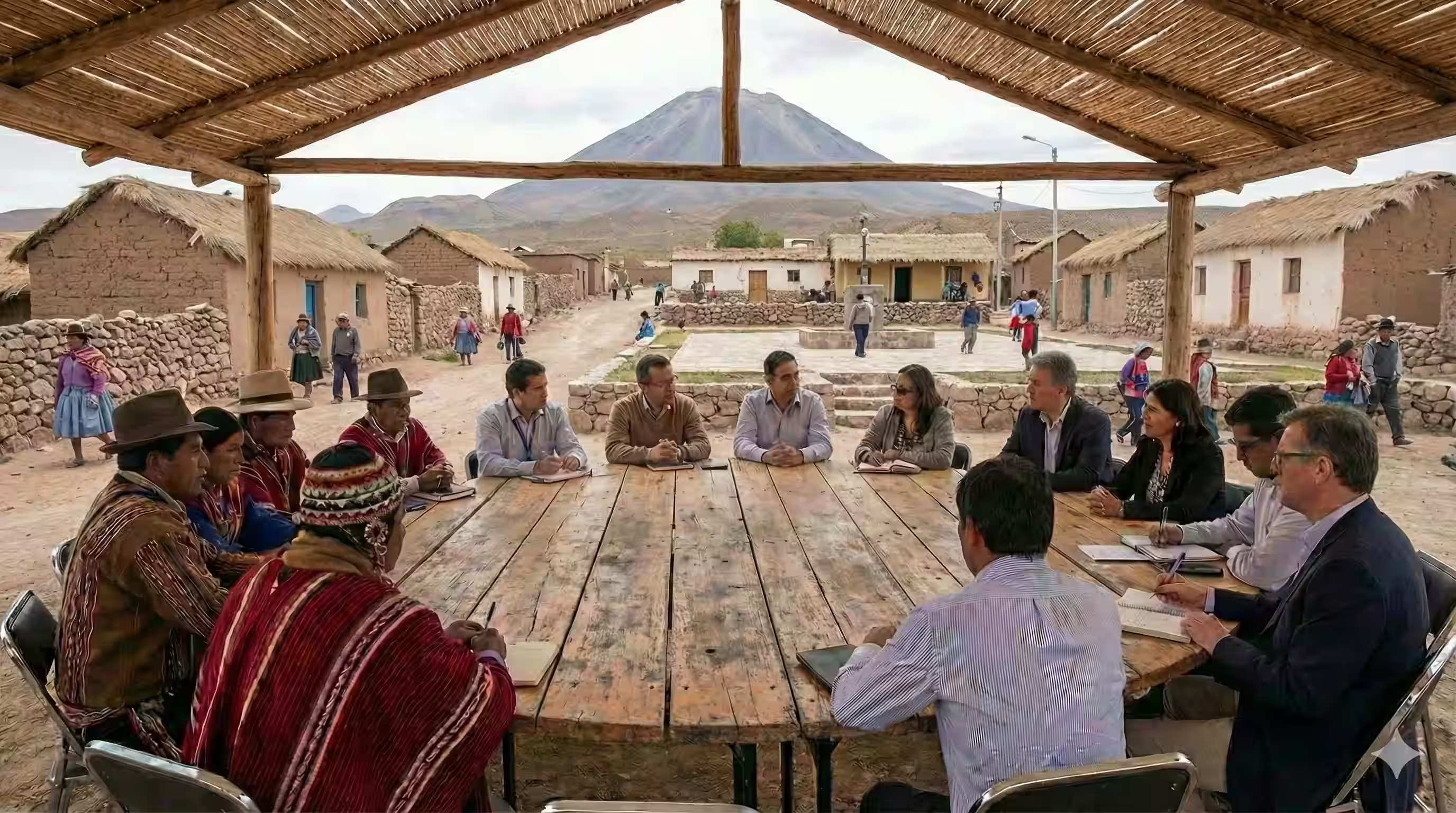
Communities are not monolithic. They contain diverse perspectives, competing factions, and power dynamics that shape whose voices are heard. Effective mediation requires attention to who is at the table and whose perspectives might be missing. Youth, elders, women, ethnic minorities, informal leaders, and economically marginalised residents may all have perspectives that differ from those of formal community representatives. A mediation process that engages only official spokespersons or the most vocal opponents risks producing agreements that lack genuine community support.
Mediators can help design inclusive engagement processes that bring diverse stakeholders into dialogue. This might involve separate consultations with different community segments, using multiple engagement formats to reach people who would not attend formal meetings, or explicitly addressing power imbalances that might silence certain voices. The goal is not to manufacture consent but to ensure that the range of community perspectives informs the negotiation.
A workshop participant who works on urban redevelopment described learning this lesson through failure. An early project achieved what appeared to be strong community support through negotiations with neighbourhood association leaders. However, the association represented primarily homeowners and longer-term residents. Renters, recent immigrants, and younger families had different concerns that were never voiced in the formal process. When the project proceeded, significant opposition emerged from precisely these groups, leading to delays and modifications that might have been incorporated from the start had the engagement been more inclusive.
4.4 Translating Between Different Logics
Resistance often seems irrational to proponents because communities operate according to different logics than those familiar to corporate or governmental actors. Economic analyses, risk assessments, and legal frameworks that make perfect sense within institutional contexts may be irrelevant or actively offensive to community members whose reasoning is grounded in lived experience, traditional knowledge, or values that cannot be quantified.
The mediator serves as a translator between these different ways of understanding the world. This involves helping proponents appreciate why community concerns, though expressed in unfamiliar terms, reflect legitimate perspectives. It also involves helping community members understand the constraints within which decision-makers operate, not to persuade them to accept those constraints but to enable more strategic engagement.
A colleague who mediates disputes involving indigenous communities describes this translation function as central to her practice. Company representatives often arrive expecting to negotiate over compensation amounts and mitigation measures. Community members want to discuss relationships, reciprocity, and respect for sacred sites. Until both parties understand what the other means by “negotiation,” productive dialogue cannot occur. The mediator’s role is to bridge these conceptual gaps, helping each side comprehend the logic by which the other operates.
4.5 Facilitating Collaborative Solution Design
Change is easier to accept when people feel they have had a hand in shaping it. This insight, grounded in decades of research on procedural justice and participatory decision-making, points toward one of mediation’s most valuable contributions: the facilitation of collaborative solution design. Rather than presenting communities with take-it-or-leave-it proposals, mediated processes enable stakeholders to jointly develop arrangements that address multiple interests.
Collaborative design does not mean communities can veto any change or demand unlimited concessions. It means creating structured processes in which community input genuinely shapes outcomes. This might involve joint working groups that develop project modifications, participatory budgeting for community benefit funds, community representation on oversight bodies, or iterative design processes that incorporate feedback at multiple stages.
The outcomes of collaborative processes often exceed what either side would have proposed independently. Community members bring local knowledge about conditions that affect project viability. Proponents bring technical expertise and resources that can address community priorities. When these perspectives combine through structured dialogue, solutions emerge that neither party would have envisioned alone.
5. Case Illustrations
5.1 Rural Renewable Energy: From Protest to Partnership
A colleague who specialises in energy transitions shared a detailed account of a wind energy project that had stalled in the face of fierce community opposition. Initial opposition manifested through protest signs along access roads, social media campaigns depicting the developer as an external exploiter, and packed public meetings where residents expressed visceral anger at the proposal.
The developer’s initial response followed the familiar deficit model: technical presentations, economic impact studies, and assurances about environmental safeguards. These efforts not only failed to reduce opposition but intensified it, as community members interpreted them as attempts to manipulate rather than engage. Relationships between company representatives and local leaders deteriorated to the point where informal conversations became impossible.
A mediated process was initiated at the suggestion of a regional development agency concerned about the loss of investment. The first phase focused entirely on listening. Through a series of small-group sessions, community concerns were documented without rebuttal or defence. Three primary themes emerged. First, process concerns: residents felt blindsided by a project announced without prior consultation and perceived the company as arrogant. Second, substantive concerns: worries about noise, visual impact, property values, and effects on wildlife. Third, distributive concerns: scepticism that local residents would benefit from a project that would generate revenue flowing elsewhere.
With these concerns articulated, the mediation moved into joint problem-solving. Over six months of structured dialogue, stakeholders co-designed a comprehensive community agreement. Key elements included a local hiring commitment with training programmes to qualify residents for available positions, a community benefit fund with governance shared between the company and an elected community committee, visual impact mitigations including turbine placement adjustments and landscape screening, property value protection guarantees backstopped by independent valuation, and a joint oversight committee with authority to raise concerns throughout the operational period.
The project proceeded, though not because opposition evaporated entirely. Some residents remained opposed and continued to voice objections. However, the process had separated those with fundamental objections from those whose concerns could be addressed, built relationships that enabled ongoing problem-solving, and created mechanisms for community voice that reduced fears of abandonment once construction began. Crucially, the company’s representatives had learned to understand community concerns as legitimate rather than obstructionist, transforming their approach to engagement in subsequent projects.
5.2 Municipal School Closure: Preserving Voice Amid Difficult Decisions
Not all change can be avoided through negotiation. Sometimes fiscal realities, demographic shifts, or policy imperatives require decisions that will generate community opposition regardless of process. Even in these circumstances, mediation can serve valuable functions, though its role differs from situations where multiple outcomes remain genuinely possible.
A mediation colleague working in municipal contexts described facilitating dialogue around a school closure that was, practically speaking, unavoidable. Enrolment had declined to levels that made continued operation economically unsustainable, and regional consolidation had already progressed to the point where reversal was politically impossible. Yet the affected community was devastated. The school represented not just education but community identity, a gathering place, and a symbol of vitality that its loss would threaten.
The mediation could not change the closure decision, but it could shape how the closure occurred and what followed. Sessions focused on three questions: How could the closure process honour the school’s history and the community’s connection to it? What future uses of the building would serve community interests? And what supports did families need during the transition to new schools?
The outcomes included a community celebration documenting the school’s history through photographs, oral histories, and a commemorative publication. The building was repurposed as a community centre with programming designed by residents. Transportation supports and transition programming eased children’s movement to new schools. And community representatives gained seats on the district committee overseeing future facility decisions, ensuring their voice in subsequent changes.
This case illustrates an important point about mediation’s limits and possibilities. The process could not prevent loss, but it could transform how that loss was experienced, from something imposed without voice to something navigated with dignity and agency. Participants remained grieved by the closure, but their relationship with municipal authorities had been preserved rather than destroyed, and their capacity for future civic engagement had been strengthened rather than eroded.
5.3 Extractive Industries: Building Durable Social License
Resource extraction presents particularly challenging dynamics for community mediation. Projects are typically large-scale, long-duration, and associated with significant environmental and social impacts. Communities often have limited leverage once projects receive regulatory approval, yet their capacity to disrupt operations through protest, litigation, or political mobilisation creates ongoing risk for operators.
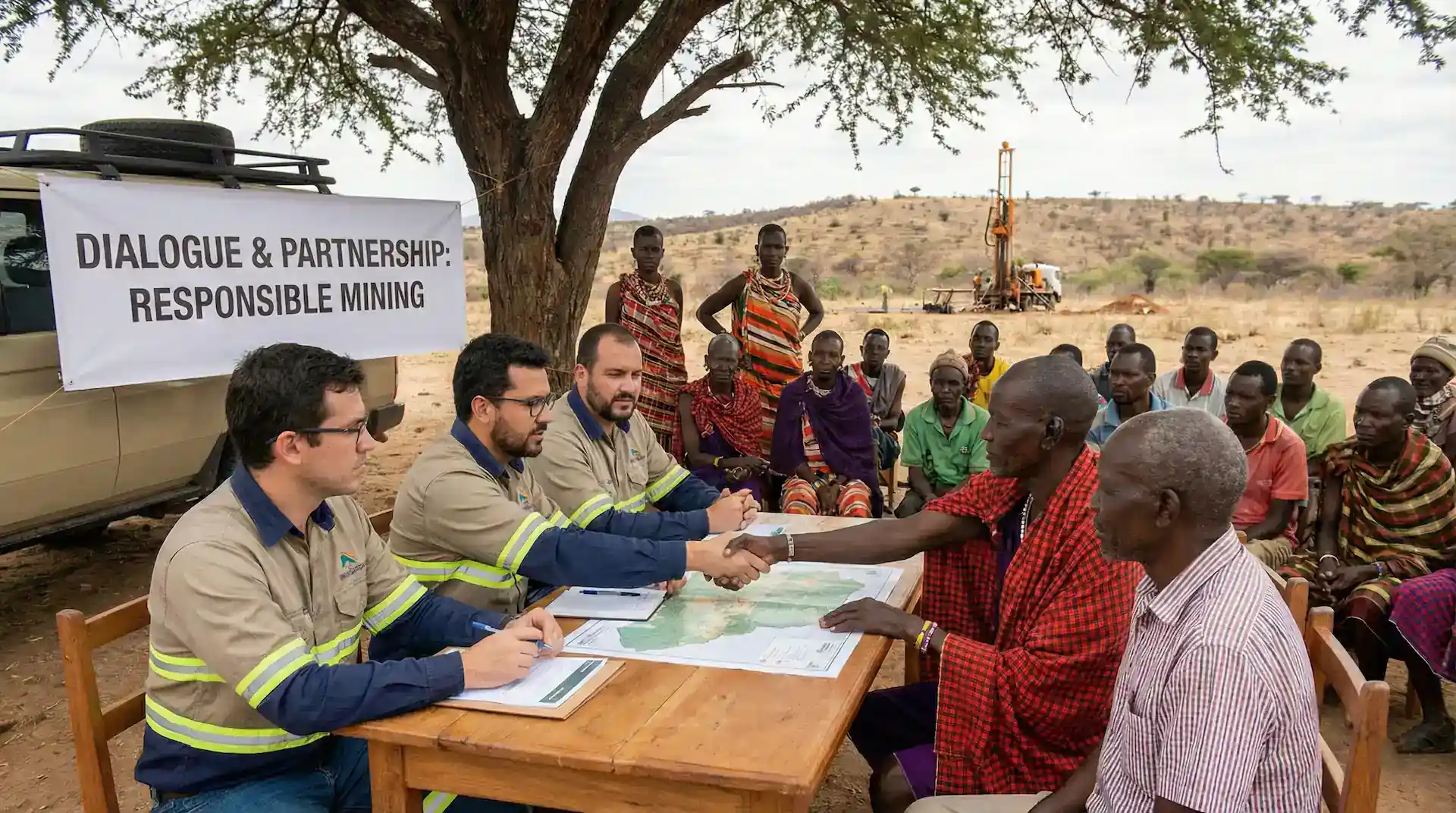
A social performance specialist who attended a workshop series on community engagement shared insights from a lithium extraction project that had invested heavily in mediated dialogue from the earliest exploration stages. Rather than treating community relations as a compliance function, the company positioned meaningful engagement as central to project viability. The rationale was both ethical and pragmatic: in a context of global scrutiny over supply chain sustainability, community conflict posed material risks that justified substantial investment in prevention.
The approach began with extensive mapping of stakeholder interests and concerns well before any formal proposal was announced. Community researchers, hired locally and trained in qualitative methods, documented perspectives across demographic segments. This intelligence informed project design from the outset, allowing modifications that addressed concerns before they became points of conflict.
Formal mediation processes supplemented this ongoing engagement when disputes arose. When concerns emerged about water usage, joint technical committees with community participation examined hydrological data and developed monitoring protocols. When disagreements arose about benefit-sharing, facilitated negotiations produced arrangements tied to project milestones rather than upfront payments, ensuring ongoing community leverage. When cultural heritage sites were identified in project areas, collaborative processes determined protection measures and interpretation responsibilities.
The key insight from this example is that social license is not a static achievement but an ongoing relationship requiring continuous attention. The initial agreements reached through mediation established frameworks for continued engagement, creating channels through which concerns could be raised and addressed before escalating into conflict. This relational infrastructure proved as valuable as the specific terms negotiated, providing mechanisms for adaptive management as conditions evolved.
6. Practical Guidance for Practitioners
6.1 Assessment and Process Design
Before initiating mediated dialogue, practitioners should conduct thorough conflict assessments. This involves identifying all stakeholder groups, including those whose voices might not be immediately apparent, such as future generations, transient populations, or those with interests but no organised representation. Assessment should map the history of the dispute, including prior engagement efforts and their outcomes, accumulated grievances, and existing relationships between parties. Assessment should also identify the decision-making framework: what outcomes are genuinely negotiable, what constraints are fixed, and who has authority to commit.
Process design should flow from assessment findings. In contexts of high mistrust, substantial time may need to be invested in preliminary relationship-building before formal negotiations can begin. In contexts where multiple community factions hold competing views, separate consultations may be necessary before joint sessions. Where power imbalances are severe, structural adjustments such as technical assistance for community participants or independent information verification may be needed to enable meaningful negotiation.
6.2 Essential Skills and Approaches
Community mediation requires skills beyond those used in commercial or interpersonal dispute resolution. Practitioners should cultivate the following capacities.
Cultural humility involves recognising that communities may operate according to values, norms, and decision-making processes unfamiliar to the mediator. Rather than imposing external frameworks, practitioners should inquire about how the community makes decisions, resolves disagreements, and defines legitimate authority. This learning posture builds trust and ensures processes are culturally appropriate.
Trauma-informed practice recognises that community conflicts frequently involve experiences of loss, betrayal, or violation that generate trauma responses. Practitioners should be attuned to signs of trauma activation, create safety through predictable and transparent processes, and avoid re-traumatisation through careless process design. Where deep trauma is present, collaboration with mental health professionals may be appropriate.
Systemic thinking involves understanding that community disputes rarely exist in isolation. They connect to broader patterns of inequality, political economy, and historical injustice. Mediators who grasp these systemic dimensions can help parties recognise shared interests in structural change and avoid agreements that address symptoms while perpetuating underlying problems.
Patience and persistence are essential because community mediation typically operates on longer timescales than commercial dispute resolution. Building relationships, processing emotions, and developing genuinely creative solutions takes time. Practitioners should resist pressure to rush toward closure and help sponsors understand that time invested in process quality typically reduces total time to durable resolution.
6.3 Common Pitfalls and How to Avoid Them
Experience reveals several recurring pitfalls in community mediation that practitioners should actively guard against.
Premature problem-solving occurs when mediators move too quickly toward solutions without adequately exploring concerns. The pressure to produce results can lead to superficial agreements that fail to address underlying interests. Resist this pressure by ensuring all parties feel genuinely heard before shifting to negotiation mode.
Capture by dominant voices happens when the loudest or most organised participants dominate processes, marginalising perspectives that are quieter but equally legitimate. Active facilitation should create space for diverse voices, potentially through separate consultations, anonymous input mechanisms, or explicit attention to whose perspectives have not yet been heard.
False neutrality involves the mediator maintaining equidistance even when power imbalances or factual asymmetries exist that undermine fair process. Genuine neutrality may require structural interventions that level the playing field, such as ensuring communities have access to technical expertise or adjusting processes to account for different capacities.
Agreement fetishism refers to treating signed agreements as the goal rather than as tools for managing ongoing relationships. Agreements that are achieved through pressure or that fail to address core concerns will likely fail in implementation. Practitioners should prioritise agreement quality over agreement existence, even if this means concluding without settlement.
Implementation neglect occurs when attention drops off after agreement is reached. Community mediation outcomes require ongoing monitoring, adaptation, and relationship maintenance. Build implementation mechanisms into agreements and plan for post-agreement engagement from the outset.
7. Moving the Field Forward
7.1 Research Priorities
Despite growing practice in community mediation, systematic research remains limited. Several areas merit increased scholarly attention. Longitudinal studies tracking the durability and adaptation of mediated agreements over time would provide valuable evidence about what process features predict sustained implementation. Comparative research across contexts could identify which approaches transfer across cultures and which require substantial adaptation. Research on the relationship between procedural justice and substantive outcomes could strengthen arguments for investment in quality engagement. And critical examination of mediation’s limitations, including the conditions under which mediation may legitimate problematic power arrangements, would strengthen practice through honest assessment.
7.2 Institutional Development
Community mediation capacity remains unevenly distributed. Building institutional infrastructure to support practice development should be a priority. This includes training programmes that equip practitioners with community-specific skills, professional networks that enable peer learning and quality assurance, funding mechanisms that make mediation accessible to communities lacking resources, and policy frameworks that create space for mediated approaches within regulatory and governance structures.
Particular attention should be paid to ensuring that mediation capacity exists within communities themselves, not only among external professionals. Training community members in facilitation and negotiation skills builds local capacity for ongoing self-governance while reducing dependence on external intervenors. This approach also addresses legitimacy concerns that can arise when outsiders mediate internal community matters.
7.3 Integration with Other Approaches
Community mediation should be understood as one tool within a broader toolkit for participatory governance. It complements rather than replaces other approaches, including deliberative democracy processes, collaborative planning methodologies, restorative justice practices, and traditional or indigenous conflict resolution mechanisms. Practitioners should develop fluency across multiple approaches and skill in selecting appropriate methods for specific contexts.
Emerging technologies offer both opportunities and risks for community engagement. Digital platforms can expand participation, reaching residents who cannot attend in-person meetings and enabling asynchronous deliberation. However, digital divides may exclude already-marginalised populations, and online environments can amplify polarisation dynamics. Practitioners should approach technological innovation critically, assessing whether specific tools genuinely enhance inclusion and deliberative quality.
8. Conclusion: Resistance as Invitation
Community resistance to change is not a nuisance to be managed or an obstacle to be overcome. It is information, often the most valuable information available about what matters to the people most affected by proposed changes. Resistance communicates that something of value is at stake, that concerns have not been adequately addressed, or that the process of decision-making has failed to include those who will live with its consequences.
Mediation offers a framework for hearing this information and converting it into insight that improves outcomes for all stakeholders. By creating structured space for dialogue, helping parties move from positions to interests, ensuring inclusive representation, translating between different logics, and facilitating collaborative solution design, mediators enable conversations that adversarial approaches foreclose. The result is not just fewer conflicts but better decisions, decisions informed by perspectives that might otherwise have been missed, tested against concerns that might otherwise have emerged as implementation failures, and supported by relationships that enable adaptive management over time.
This reframe, from resistance as problem to resistance as resource, carries implications for how developers, governments, and civil society organisations approach community engagement. It suggests that engagement should begin early, before plans are fixed and positions entrenched. It suggests that engagement should be genuine, creating real opportunities for community input to shape outcomes rather than performing consultation for procedural compliance. And it suggests that engagement should be sustained, maintaining relationships and communication channels throughout implementation rather than treating agreement as an endpoint.
None of this is easy. Community mediation demands time, skill, patience, and willingness to hear perspectives that may be uncomfortable for decision-makers. It may delay projects and require modifications that reduce returns. It cannot guarantee consensus or eliminate conflict entirely. Some community members will remain opposed regardless of process quality, and some proposals may prove genuinely unacceptable to those affected.
Yet the alternative, imposing change over objection or manipulating communities into acquiescence, carries costs that are frequently underestimated. Projects implemented without genuine support face ongoing resistance, operational disruption, reputational damage, and relationship destruction that can persist for generations. The time invested in mediated engagement typically proves far less than the time lost to conflict. More fundamentally, the quality of outcomes improves when diverse perspectives inform decision-making. Resistance, properly engaged, is not opposition to progress. It is an invitation to do better.
Thomas Gaultier is a certified mediator, international dispute resolution consultant, and Community Relations Expert with extensive experience in the extractive industries. He lectures on negotiation and mediation at Universidade Católica Portuguesa and serves as co-founder of ICFML (Instituto de Certificação e Formação de Mediadores Lusófonos). Contact Thomas for inquiries about mediation services, stakeholder engagement consulting, or conflict-sensitive planning for mining operations.


 EN
EN  FR
FR  PT
PT