
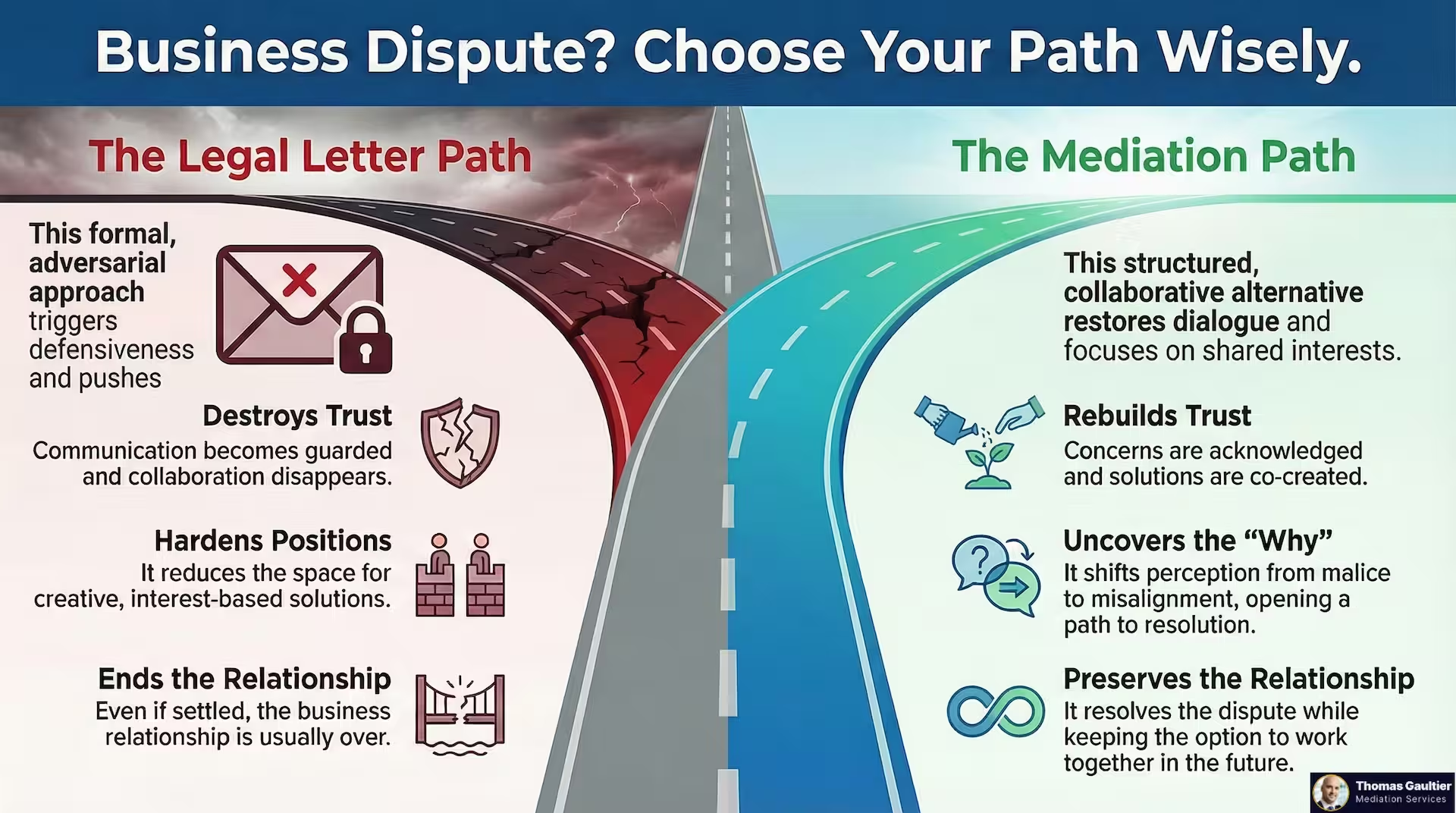
When a business relationship starts to break down, the first formal step is often a letter, drafted by legal counsel, carefully worded, and implicitly (or explicitly) adversarial. It marks the end of informal negotiation and the beginning of escalation.
But here’s the problem: once the legal letter goes out, trust erodes. Communication becomes guarded. Collaboration disappears. And even if the dispute is eventually settled, the relationship is usually over.
There’s another way.
Mediation offers a structured, professional alternative to immediate legal escalation. It helps restore dialogue, identify shared interests, and rebuild trust, even in high-stakes commercial conflicts.
What the Legal Letter Does (and Doesn’t Do)
A legal letter serves important functions:
- It documents a formal position
- It preserves legal rights
- It creates a deadline or call to action
But it also:
- Triggers defensiveness
- Hardens positions
- Pushes parties into their legal silos
- Reduces the space for creative, interest-based resolution
The letter says, “We’re prepared to fight.” It rarely says, “We’re still open to working together.”
That’s where mediation reopens the door.
Why Trust Matters in Business Disputes
Most commercial disputes aren’t about bad faith. They’re about miscommunication, misalignment, or unexpected change:
- A supplier who couldn’t deliver on time due to unforeseen delays
- A client who misunderstood scope
- A partner who pivoted too fast or too slowly
These situations don’t call for war, they call for clarity, correction, and trust repair.
Mediation creates a structured setting where:
- Parties can speak freely
- Concerns are acknowledged, not dismissed
- Solutions are co-created, not imposed
The Mediation Advantage in Business Disputes
1. It Keeps Relationships Intact
Litigation (or arbitration) may resolve the dispute, but it almost always destroys the relationship. Mediation preserves optionality.
2. It Helps You Understand the Other Side’s Why
In many disputes, each side feels blindsided or betrayed. Mediation allows both to explain why they acted as they did.
This clarity often shifts perception from malice to misalignment, opening space for resolution.
3. It Leads to More Durable Agreements
When parties co-design the resolution, compliance improves. Agreements aren’t “won”, they’re shared.
4. It Offers a Confidential Forum
Mediation discussions are private. This allows for transparency and vulnerability, without reputational or legal risk.
5. It Keeps Lawyers Involved, but Not in Charge
In commercial mediation, legal counsel often attends. Their role shifts from advocate to advisor, ensuring that their client’s interests are protected, but within a collaborative process.
A Real-World Example
Two joint venture partners in a construction consortium found themselves at odds. One alleged mismanagement; the other claimed interference. The legal letters had begun. Arbitration seemed inevitable.
Instead, they agreed to mediation.
Through three sessions, they:
- Reconstructed a shared timeline of events
- Identified communication breakdowns
- Renegotiated the division of responsibilities
- Built a new governance structure with shared oversight
The legal claims were paused. The project continued. Future conflict was preempted.
When to Mediate (Even After Legal Letters Are Sent)
- When you want to resolve the issue without losing the relationship
- When you want more control than a court or arbitrator will provide
- When reputational risk is high
- When costs are escalating with no resolution in sight
How I Support Business Disputes
I help companies in complex sectors, construction, energy, infrastructure, professional services, resolve disputes through:
- Early conflict assessment and party interviews
- Legal-informed but commercially-focused mediation design
- Joint or separate sessions depending on sensitivity
- Summary agreement documentation for legal formalization
Whether you’re midway through legal correspondence or just sensing the drift toward escalation, it’s not too late.
Mediation isn’t the absence of strategy. It’s the evolution of it.
Let’s talk before your next letter turns a repairable dispute into an irreversible rift.





 EN
EN  FR
FR  PT
PT