
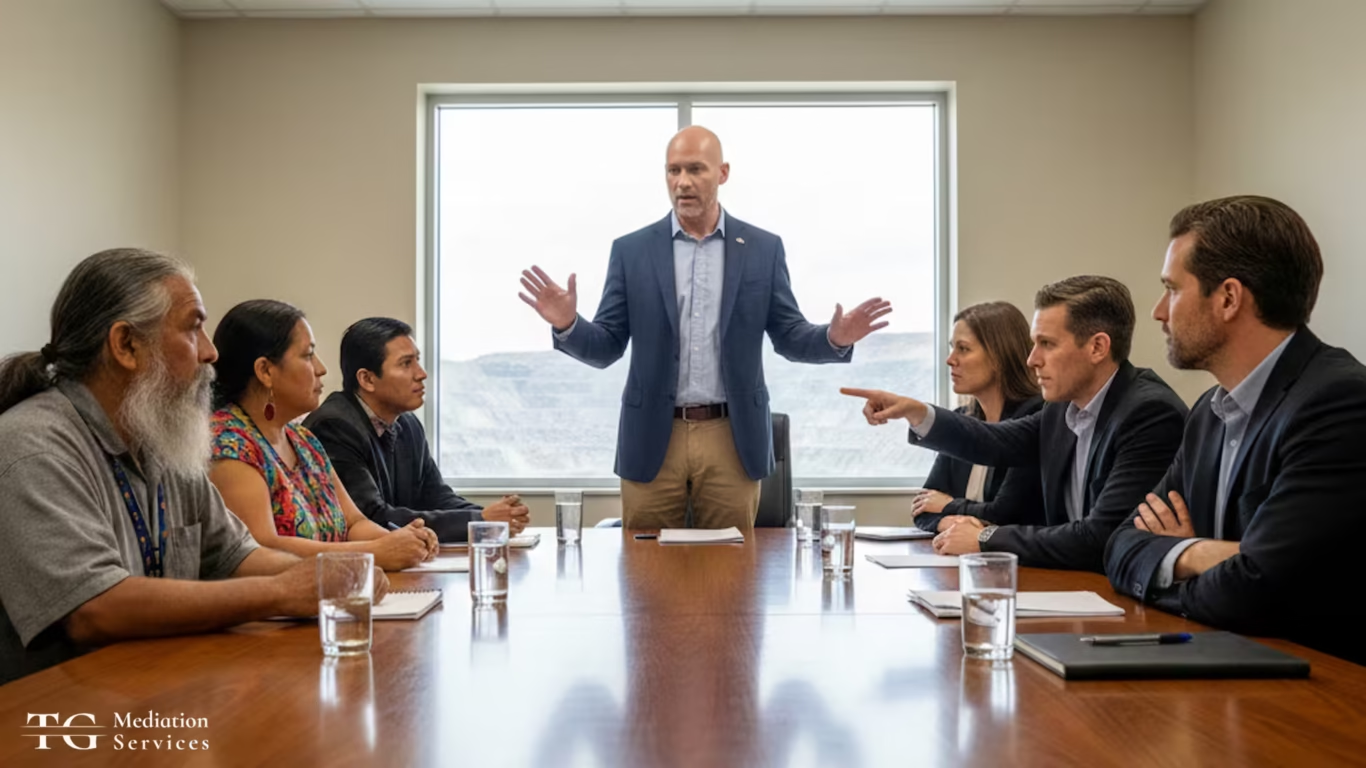
Understanding Root Causes and Building a Prevention Strategy
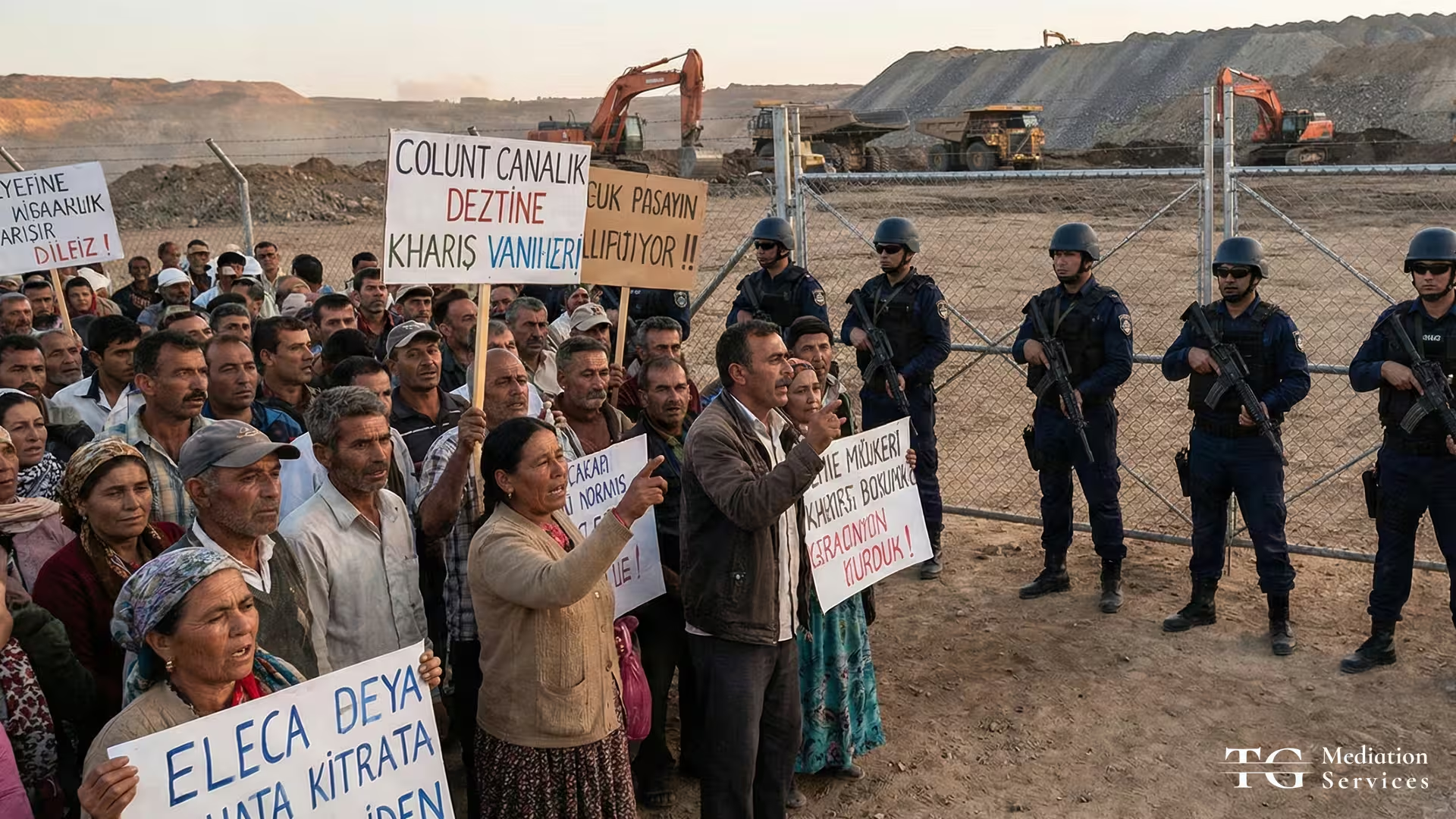
Mining community conflicts rarely erupt from a single incident. They grow from a convergence of structural conditions: competition over land and water, unmet expectations from broken promises, inadequate consultation that excludes affected communities from decisions shaping their futures, power imbalances that leave communities without meaningful voice, and environmental damage that threatens livelihoods and health. The visible flashpoint, whether it is a road blockade, a protest, or a formal complaint to an international accountability mechanism, is almost always the surface expression of grievances that have been accumulating for months or years.
Understanding these root causes is not an academic exercise. Research from the University of Queensland and the Harvard Kennedy School found that community conflict costs major mining projects approximately US$20 million per week in delayed production for operations with capital expenditure between US$3 billion and US$5 billion. One company’s internal analysis revealed US$6 billion in conflict-related costs over just two years. These are not hypothetical risks. They are quantifiable business losses that effective conflict analysis and prevention can substantially reduce.
This article provides a practitioner’s framework for diagnosing the root causes of mining-community conflicts, understanding how they escalate, recognizing early warning signs, and implementing prevention strategies that address structural drivers before they produce crises.
The Three Dimensions of Mining-Community Conflict
Before diagnosing root causes, it helps to understand that every mining-community conflict operates across three interconnected dimensions. Misidentifying which dimension is driving the conflict leads to interventions that treat symptoms while the underlying disease progresses.
Substantive Dimension
These are the tangible, material issues at the heart of the dispute: land access, compensation amounts, employment quotas, water quality, infrastructure commitments, revenue sharing. Substantive disputes are the most visible and the easiest to articulate. They are also, counterintuitively, often the easiest to resolve, because they involve quantifiable interests that can be negotiated.
Process Dimension
How decisions are made, who is consulted, when information is shared, and whether affected communities have meaningful participation in choices that affect their lives. Process failures are among the most potent drivers of conflict, because they communicate disrespect and exclusion even when the substantive outcome might have been acceptable.
A field example illustrates this clearly: a mining company offered what it considered generous compensation for land acquisition. The community rejected it angrily. The company was confused by the rejection until a mediator identified the real issue: the offer had been announced publicly before consulting community leaders, bypassing elders and making them feel disrespected in front of their own people. The substantive offer might have been welcomed if delivered through an appropriate process that honored community authority structures.
Emotional Dimension
Fear, grief, humiliation, distrust, and anger that accumulate from lived experience. Communities that have watched a cemetery disappear beneath a tailings facility, that have seen children develop unexplained illnesses after a river changed colour, or that have been forcibly relocated without adequate support carry emotional weight that no purely technical negotiation can address. For many Indigenous and rural communities, land is not merely an economic asset but the foundation of cultural identity. Displacement can trigger grief responses comparable to the death of a loved one.
These three dimensions are deeply interconnected. Process failures generate emotional responses. Emotional states shape how substantive offers are received. Substantive disputes trigger process conflicts about how to resolve them. Effective conflict analysis attends to all three simultaneously.
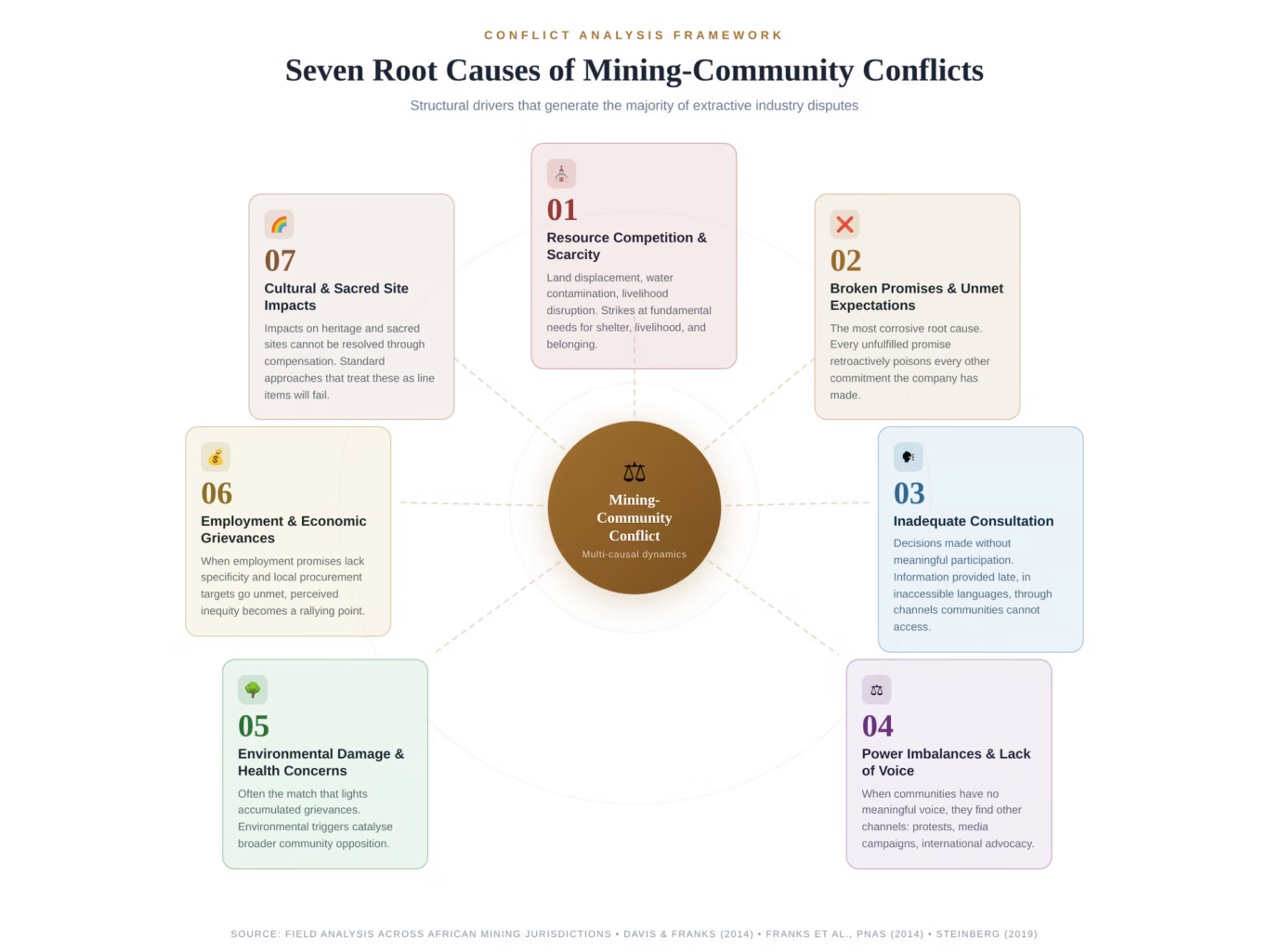
Seven Root Causes of Mining-Community Conflicts
Drawing from field experience across African mining jurisdictions and documented case studies globally, these are the structural root causes that generate the vast majority of extractive industry disputes. Most conflicts involve several operating simultaneously.
1. Resource Competition and Scarcity
Land displacement strikes at fundamental human needs for shelter, livelihood, and belonging. Even when relocation is handled carefully, the rupture of connection to ancestral land creates lasting grievance. Water impacts create existential threats: when mining operations affect the quality or quantity of water that communities depend on for drinking, farming, and livestock, the stakes are not economic but survival-level. Communities living near mining operations frequently report anxiety about invisible contamination threats they cannot see or control, adding chronic psychological stress to tangible losses.
A survey of 2,500 mines operating in Africa between 1990 and 2014 found that roughly one quarter experienced social conflict, with resource competition and benefit distribution at the core of most disputes. The lesson is clear: where mining operations compete with communities for the same resources, conflict is not a risk to be managed. It is a near-certainty to be planned for.
2. Broken Promises and Unmet Expectations
This is arguably the most corrosive root cause in extractive industry disputes, because it destroys the trust that all future engagement depends upon. The pattern is painfully common: during initial community engagement, company representatives make commitments about employment, infrastructure, environmental management, and community development funding. Over time, some commitments are honored and others slip. Budget constraints hit. Management changes. Priorities shift. The partially built school foundation stands as a visible symbol of broken faith.
The damage from broken promises extends far beyond the specific commitment. Every unfulfilled promise retroactively poisons every other commitment the company has made. Communities begin to view all company statements through a lens of suspicion. New managers who arrive with genuine intentions inherit a trust deficit they did not create but must navigate. The cost compounds over time, because restoring trust after it has been broken requires far more investment than maintaining it would have.
3. Inadequate Consultation and Communication
Decisions about resettlement made without meaningful community participation. Information provided late, in languages communities do not read, through channels they do not access. Community members excluded from choices that will fundamentally alter their lives. These process failures do not merely frustrate communities. They communicate a message about power and respect that no subsequent technical fix can undo.
Effective consultation is not a box-ticking exercise. It requires genuine two-way dialogue where community input actually influences project decisions, conducted at a pace that respects traditional decision-making processes, through culturally appropriate channels, with accessible language and formats. When a company provides a 200-page Environmental Impact Assessment in English to a community where fewer than 15% of adults are literate in English, the message received is not ‘we are being transparent.’ The message received is ‘your understanding does not matter to us.’
4. Power Imbalances and Lack of Voice
Mining companies and affected communities rarely negotiate from positions of equal power. Companies possess economic resources, technical expertise, legal capacity, political connections, and information access that communities typically lack. These imbalances can undermine the integrity of engagement processes and produce agreements that reflect power rather than fairness.
When communities feel they have no meaningful voice in decisions affecting their lives, they eventually find other channels. Regulatory complaints, media campaigns, political advocacy, international accountability mechanisms, and direct action (protests, blockades, work stoppages) all represent efforts to assert influence that the formal engagement process denied. The irony is that these channels are typically far more disruptive and costly for companies than genuine participatory engagement would have been.
5. Environmental Damage and Health Concerns
When pollution contaminates water sources, dust coats homes and crops, or blasting shakes foundations, communities experience both immediate harm and ongoing fear about their future. Environmental grievances carry a particular intensity because they implicate health, livelihoods, and intergenerational wellbeing simultaneously. A farmer whose crops fail because of dust deposition or water contamination is not experiencing an inconvenience. They are experiencing a threat to their family’s survival.
Environmental triggers are often the match that lights accumulated grievances. The Franks et al. research published in the Proceedings of the National Academy of Sciences found that while environmental impacts frequently trigger visible conflict, the underlying drivers typically relate to the quality of the relationship between the company and community, the fairness of benefit distribution, and the adequacy of consultation processes.
6. Employment and Economic Grievances
Communities adjacent to massive mining operations that generate billions in revenue naturally expect economic benefits. When employment promises fail to materialize, when local procurement targets go unmet, when the economic benefits flow to distant shareholders while the local community bears the environmental and social costs, the sense of injustice is acute.
A common failure pattern involves employment commitments that lack specificity. ‘Priority for local hiring‘ means nothing without defined percentages, clear definitions of who qualifies as ‘local,’ training programs linked to guaranteed positions, and consequences for non-compliance. Vague commitments set expectations they were never designed to fulfill, creating a grievance that is simultaneously predictable and avoidable.
7. Cultural and Sacred Site Impacts
For Indigenous and traditional communities, impacts on cultural heritage, sacred sites, and traditional practices cannot be resolved through compensation. When a mining operation destroys a burial ground, blocks access to ceremonial sites, or disrupts cultural practices that have sustained community identity for generations, the harm is existential. These impacts require approaches that go beyond standard environmental and social management to address what communities experience as assaults on their identity and continuity.
This root cause is where the intersection of mediation expertise and cultural competence becomes critical. Standard conflict resolution approaches that treat cultural impacts as one more line item in a compensation matrix will fail.
How Conflicts Escalate: The Four-Stage Pattern
Understanding where a conflict sits on the escalation spectrum is essential for choosing the right intervention. Techniques appropriate for early stages may be dangerously inadequate at later stages. The following framework, adapted from Friedrich Glasl’s escalation model for company-community contexts, provides a practical diagnostic.
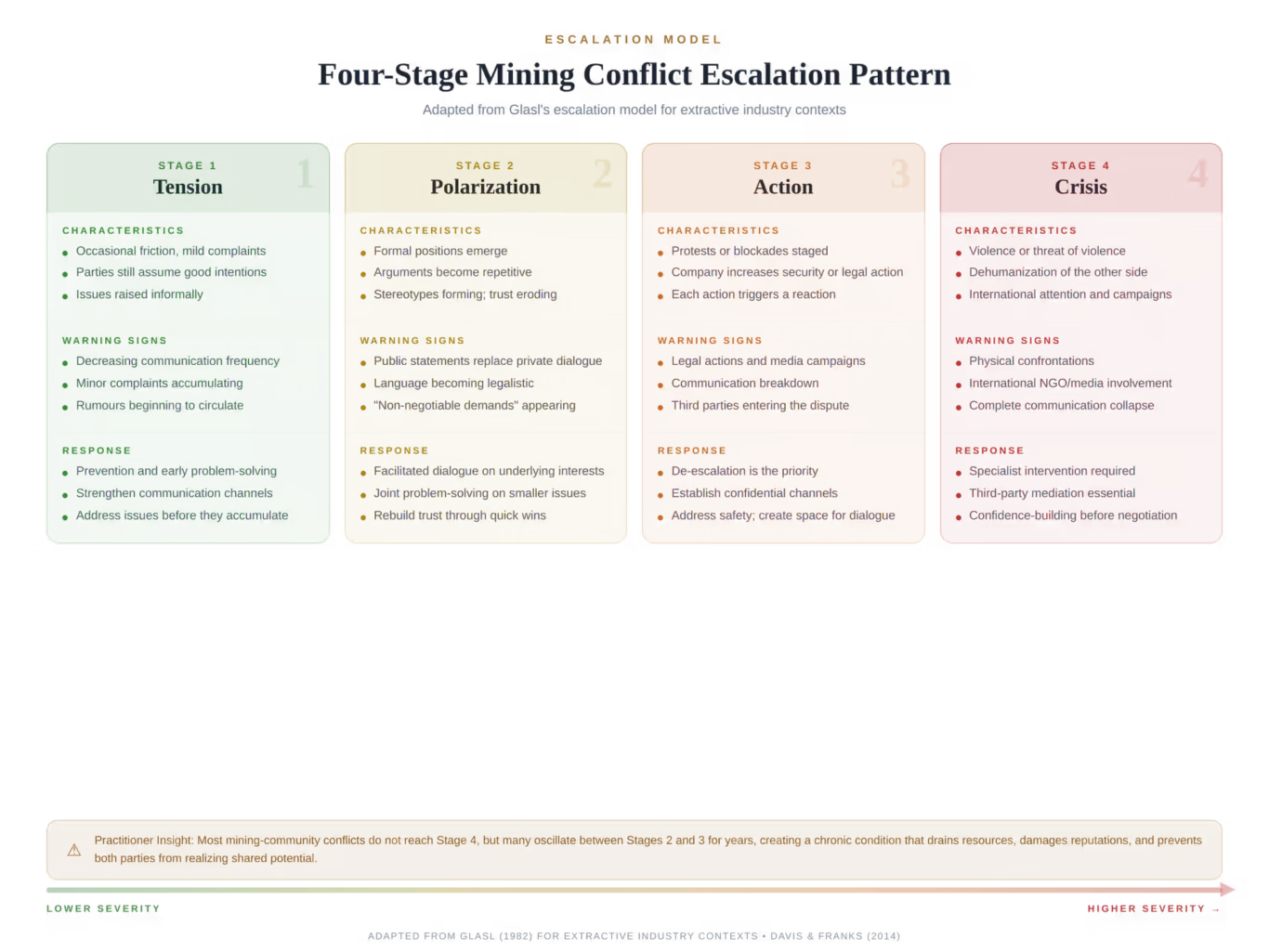
A critical insight for practitioners: most mining-community conflicts do not reach Stage 4, but many oscillate between Stages 2 and 3 for years, creating a chronic condition that drains resources, damages reputations, and prevents both the company and the community from realizing the potential of their relationship. The goal of conflict analysis is not just crisis prevention. It is identifying and addressing the structural drivers that keep conflicts simmering at Stages 2 and 3 indefinitely.
The Conflict Anatomy Framework: A Field-Tested Diagnostic
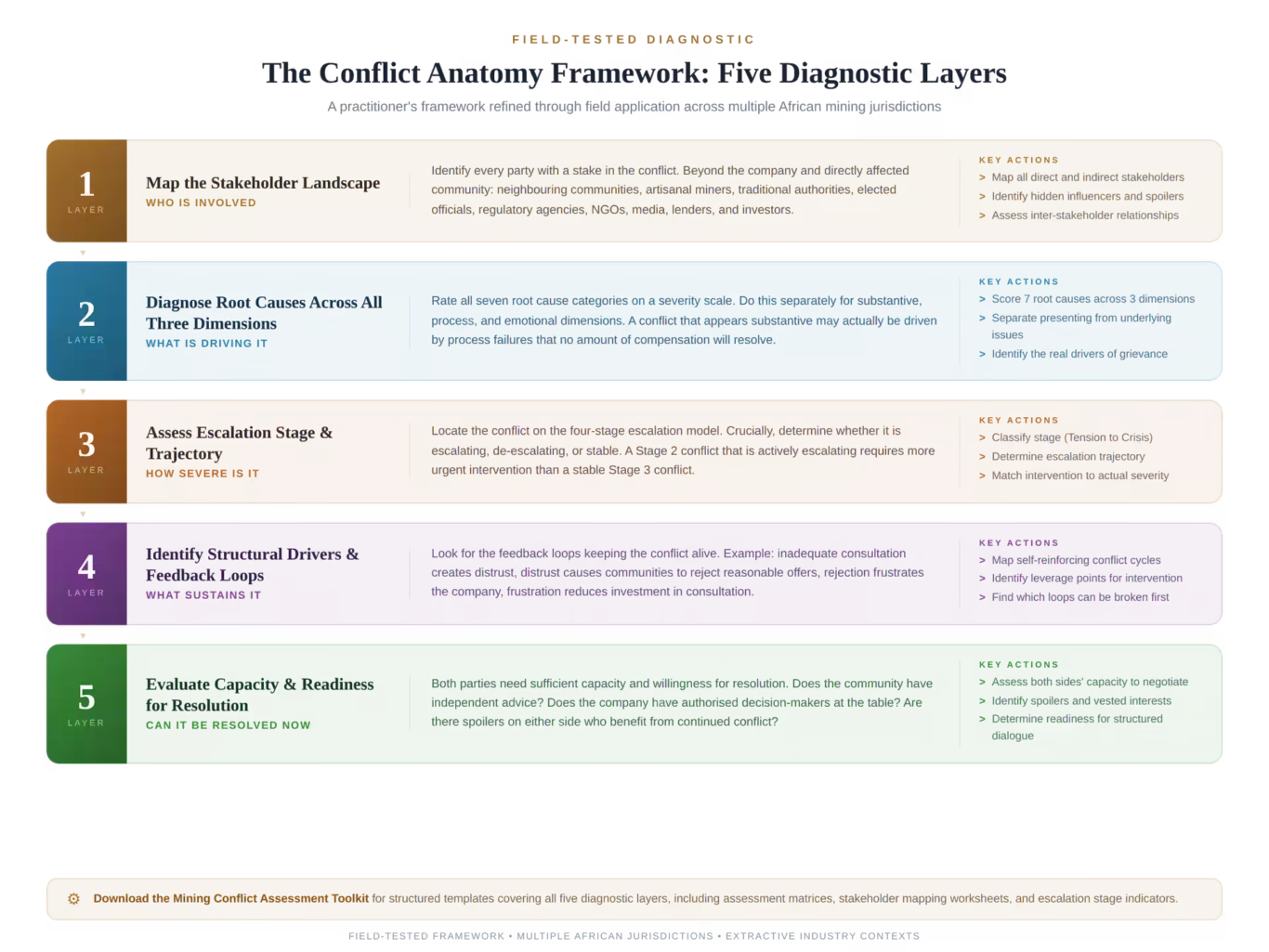
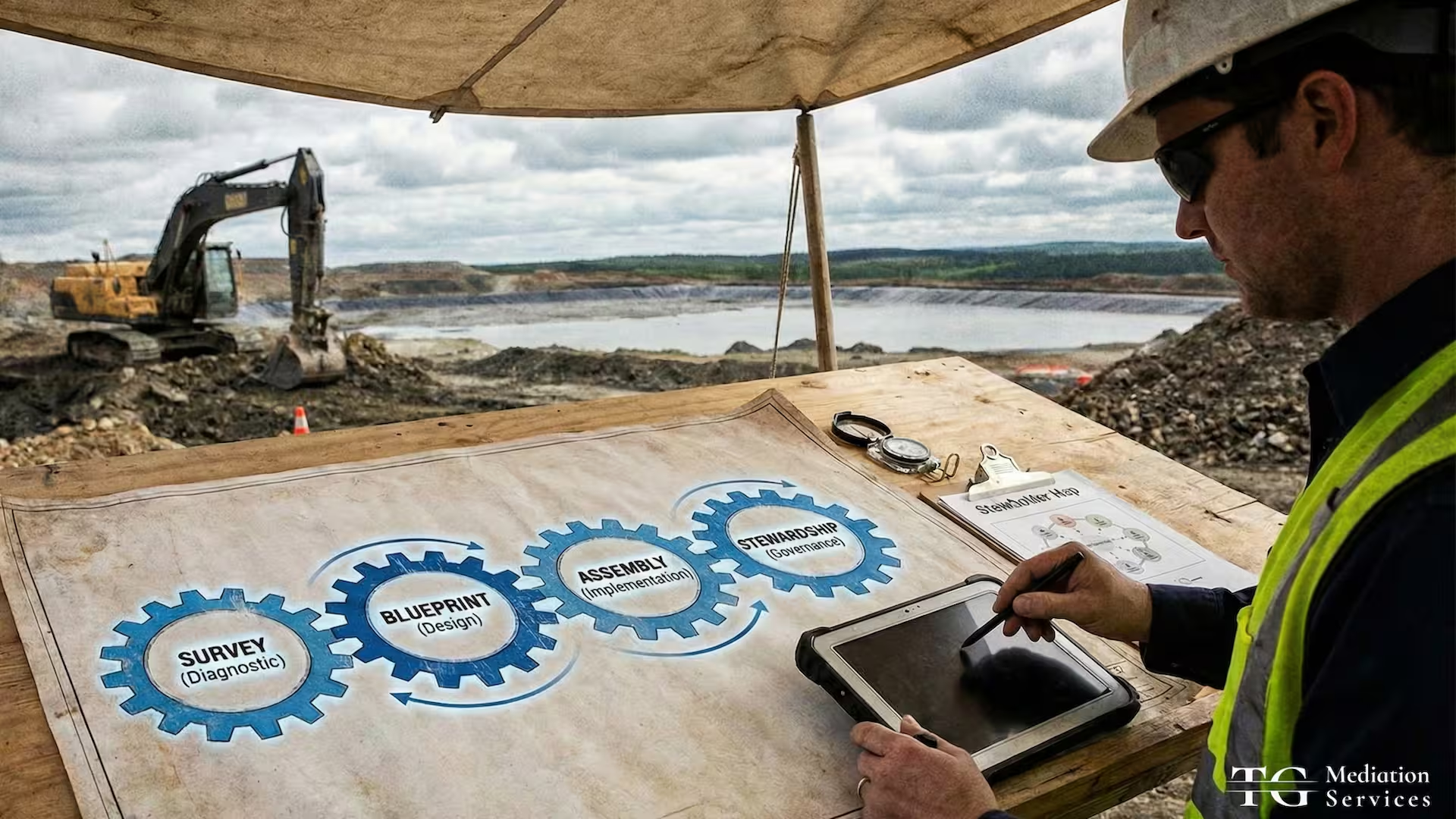
When I conduct a conflict assessment for a mining operation, I work through five diagnostic layers. This is not a theoretical model. It is a practical framework refined through field application across multiple African jurisdictions and extractive industry contexts. Each layer reveals different information, and skipping any layer risks misdiagnosis.
Layer 1: Map the Stakeholder Landscape
Identify every party with a stake in the conflict, not just the obvious ones. Beyond the company and the directly affected community, consider neighboring communities, artisanal and small-scale miners, traditional authorities, elected officials, regulatory agencies, NGOs, media, lenders, and investors. For each stakeholder, assess their interests, their influence, their relationships with other parties, and their capacity for engagement. Who has power? Who is excluded? Whose voice is missing from the current conversation?
Layer 2: Diagnose Root Causes Across All Three Dimensions
Rate each of the seven root cause categories (resource competition, broken promises, inadequate consultation, power imbalances, environmental damage, economic grievances, and cultural impacts) on a severity scale. Critically, do this separately for the substantive, process, and emotional dimensions. A conflict may have moderate substantive severity (the compensation offer is not unreasonable) but extreme process severity (communities were never consulted) and high emotional severity (the process failure humiliated community leaders). Treating this as primarily a compensation dispute will fail.
Layer 3: Assess Escalation Stage and Trajectory
Where does the conflict sit on the four-stage escalation model? Crucially, is it escalating, de-escalating, or stable? A Stage 2 conflict that is actively escalating requires more urgent intervention than a Stage 3 conflict that has stabilized. Look for the warning signs detailed in the escalation table above: communication changes, behavioral shifts, external actor involvement, and deadline pressures that could trigger sudden escalation.
Layer 4: Identify Structural Drivers and Feedback Loops
This is where analysis goes beyond what generalist approaches typically offer. Look for the feedback loops that keep the conflict alive. For example: inadequate consultation creates distrust, distrust causes communities to reject offers that might otherwise be acceptable, rejection frustrates the company, the company reduces engagement effort, reduced engagement deepens the consultation failure. Unless you interrupt the loop, addressing any single element will produce only temporary relief.
Layer 5: Evaluate Capacity and Readiness for Resolution
Both parties need sufficient capacity and willingness for resolution to succeed. Does the community have access to independent technical and legal advice? Does the company have decision-makers with authority to negotiate and commit? Are there spoilers on either side who benefit from continued conflict? Are there external pressures (elections, permit renewals, commodity price changes) that could help or hinder resolution? This layer determines not just what needs to happen, but whether the conditions exist for it to happen now.
Prevention Strategies: Addressing Root Causes Before They Produce Crises
Prevention is not merely ‘good community relations.’ It is a structured approach to eliminating the conditions under which conflicts develop. As Rachel Davis of Shift and the Harvard Kennedy School noted in the landmark UQ/Harvard cost of conflict research, “It is much harder for a company to repair its relationship with a local community after it has broken down; relationships cannot be retro-fitted.”
Build Accessible, Trusted Grievance Mechanisms
A well-functioning grievance mechanism should show a high volume of low-level complaints being resolved quickly. This indicates that community members trust the mechanism enough to use it and that the company is addressing concerns before they escalate. Zero grievances is a red flag, not a success indicator. It typically means the mechanism is not trusted, not accessible, or actively suppressing concerns.
Repeat grievances deserve special attention. When the same issue is raised multiple times without satisfactory resolution, the company is treating symptoms rather than addressing root causes. A community member who raises the same concern three times without satisfaction will seek other channels: regulatory complaints, media, political advocacy, or direct action. At that point, the grievance mechanism has failed as an early warning system.
Design Engagement for Genuine Participation, Not Compliance
Move beyond information sessions disguised as consultations. Genuine participation means community input actually influences project decisions. It means conducting engagement at a pace that respects traditional decision-making processes, which may operate on consensus timelines that differ significantly from corporate schedules. It means providing information in accessible formats and languages. And it means following up on what was heard, demonstrating that community voice has consequences.
Make Specific, Enforceable Commitments
The single most effective conflict prevention measure is ensuring that every commitment the company makes is specific, measurable, time-bound, and enforceable. Replace ‘we will support local employment’ with ‘40% of non-technical positions filled by community members within three years, verified by quarterly reporting, with financial penalties for non-compliance.’ This approach prevents the most corrosive root cause, broken promises, by making promises that can actually be tracked and honoured.
Invest in Continuous Relationship Monitoring
Do not wait for formal grievances to surface. Establish regular community liaison, conduct periodic relationship health assessments, and track the communication and behavioural warning signs detailed in the escalation framework above. The most effective community relations teams treat their work as ongoing intelligence-gathering, continuously reading the signals that indicate whether trust is building or eroding.
Address Power Imbalances Proactively
Support community access to independent technical and legal advice during negotiations. Fund capacity-building that enables community representatives to participate effectively. Ensure that engagement processes include voices that traditional power structures may exclude, particularly women, youth, and marginalized groups. The ICMM Mining Principles explicitly call for stakeholder engagement based on analysis of local context, with access to effective grievance mechanisms. Companies that take these principles seriously create conditions where conflicts can be resolved before they escalate.
Is Your Project Sitting on an Undiagnosed Conflict?
Most mining companies discover they have a community conflict after it has already escalated past the point where internal resources can manage it. A professional conflict assessment identifies the root causes, maps the stakeholder dynamics, evaluates the escalation trajectory, and provides a prioritized intervention strategy before the US$20-million-per-week costs begin. Schedule a conflict assessment consultation to discuss your project’s specific risk profile and develop a prevention strategy grounded in field-tested methodology.
When Prevention Is Not Enough: Knowing When to Call for Help
Even the best prevention strategies cannot eliminate all conflict. Extractive industries fundamentally transform environments, communities, and economies, and some degree of tension is inherent in that transformation. The question is not whether friction will arise but whether it will be managed constructively or allowed to escalate into entrenched conflict.
Consider seeking external specialist support when internal efforts at dialogue have stalled or are producing diminishing returns, when communication between the company and community has shifted from private to public channels, when external actors (NGOs, media, lawyers, politicians) have entered the dispute, when the same grievances are being raised repeatedly without resolution, or when there is any indication of potential violence or severe escalation.
The intersection of mediation expertise, stakeholder engagement methodology, and deep extractive industry knowledge is what distinguishes effective intervention from generic dispute resolution. Mining-community conflicts involve technical, cultural, legal, environmental, and relational dimensions simultaneously. Addressing them requires practitioners who understand all of these dimensions and how they interact.
Frequently Asked Questions
Q: What is the most common cause of mining-community conflicts?
Broken promises and unmet expectations are the most corrosive root cause, because they destroy the trust that all future engagement depends upon. However, most conflicts involve multiple root causes operating simultaneously. Resource competition over land and water, inadequate consultation, and power imbalances are also among the most frequent structural drivers.
Q: How much do mining-community conflicts cost?
Research by the University of Queensland and the Harvard Kennedy School found that community conflict costs approximately US$20 million per week in delayed production for major mining projects valued between US$3 billion and US$5 billion. One company’s analysis revealed US$6 billion in conflict-related costs over two years. These figures do not capture indirect costs such as reputational damage, regulatory risk, and lost opportunity for expansion.
Q: Can mining-community conflicts be predicted?
Yes. Community conflict follows predictable patterns and produces identifiable warning signs before escalation. Decreasing communication, hardening positions, public statements replacing private dialogue, and the entry of external actors all signal escalating risk. Systematic monitoring of these indicators enables early intervention when resolution is still relatively straightforward.
Q: What is the difference between a grievance and a conflict?
A grievance is a specific complaint about a specific issue. A conflict is a broader pattern of adversarial relationship driven by accumulated grievances, structural conditions, and relational breakdown. Effective grievance mechanisms prevent individual complaints from aggregating into systemic conflict.
Sources
1. Davis, R. & Franks, D. (2014). “Costs of Company-Community Conflict in the Extractive Sector.” Harvard Kennedy School, Shift, and Centre for Social Responsibility in Mining, University of Queensland. https://www.csrm.uq.edu.au/media/docs/603/Costs_of_Conflict_Davis-Franks.pdf


 EN
EN  FR
FR  PT
PT