
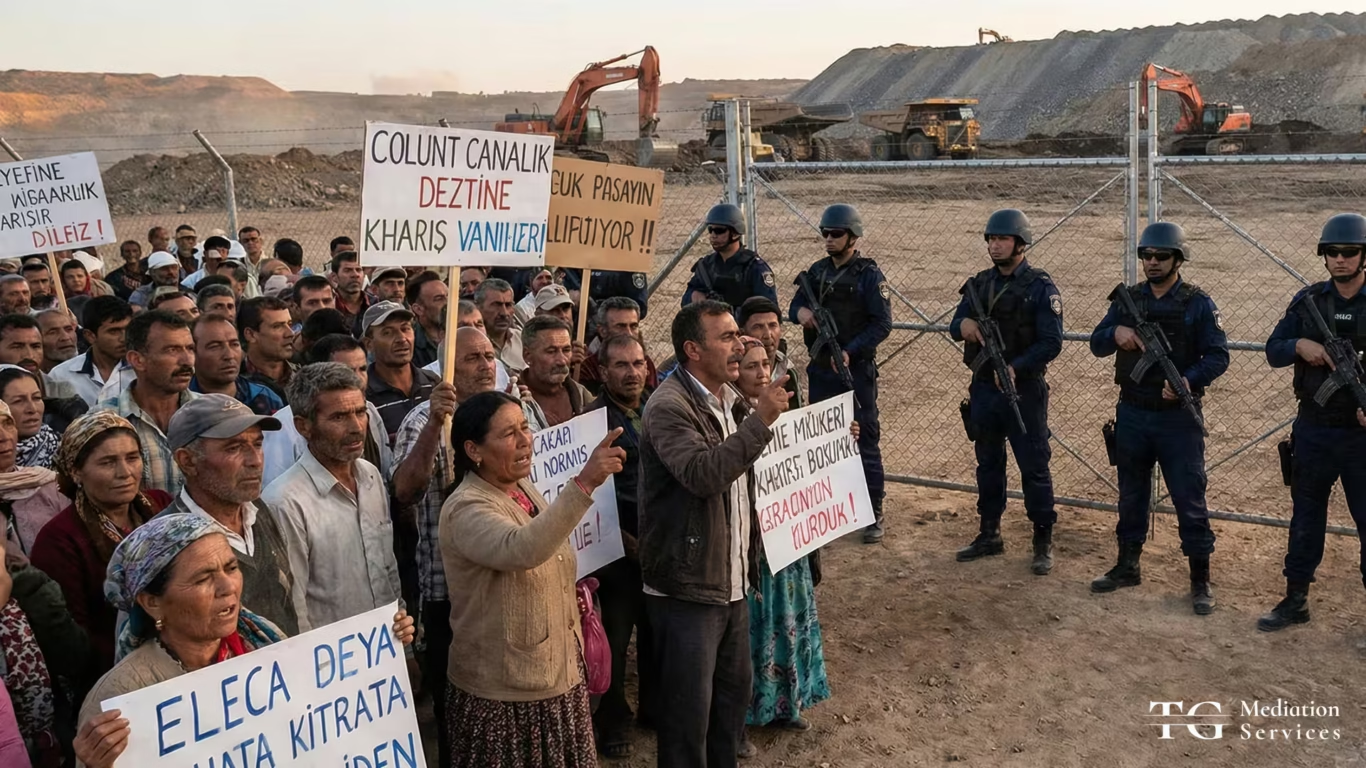
A crisis response framework and field-tested de-escalation tactics for when community conflict disrupts operations
When community protests block your mining operation, your first priority is stabilization, not resolution. You cannot negotiate comprehensive agreements while people are grieving, while facts remain unknown, while adrenaline overrides judgment. Within the first hours, focus on three things: ensure immediate safety by addressing any security postures that escalate tension, establish a direct communication channel between actual decision-makers on both sides, and negotiate a simple interim agreement that creates breathing room. A 48-hour standstill where the company pauses disputed activities while the community suspends protest actions gives everyone space to move from reaction to reflection. Only after stabilization can meaningful dialogue about underlying grievances begin. This article provides the operational framework and specific tactics that have worked in dozens of mining disputes across multiple continents.
Why Protests Erupt at Mining Sites
Community protests rarely emerge suddenly. They represent the culmination of accumulated grievances that the company either missed or dismissed. Understanding what drives communities to this point helps you respond more effectively when it happens.
In my experience mediating mining disputes across Africa, Latin America, and Asia, the grievances that eventually lead to confrontation typically fall into predictable patterns. Community members allege inadequate consultation, where decisions about operations were made without meaningful participation. They point to unfulfilled commitments regarding compensation, infrastructure, and employment. They report environmental impacts affecting water and air quality. And they describe a fundamental sense of exclusion from decisions that transform their lives.
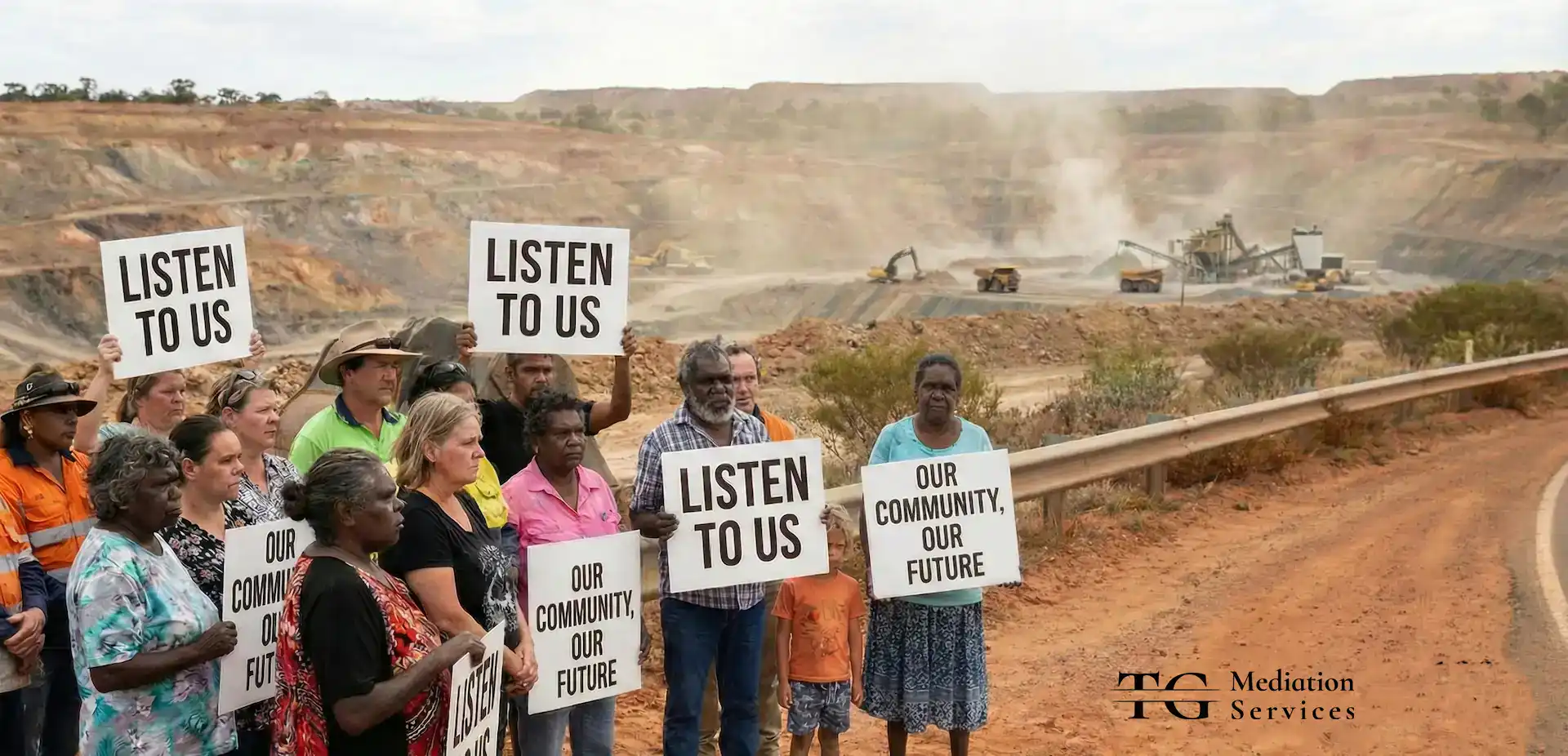
Trust deteriorates over time until direct negotiation repeatedly fails. A community that organized a blockade last week has likely spent months or years feeling unheard. Their letters received form responses. Their requests for meetings were delayed. The protest represents not the beginning of conflict, but its escalation to a new phase.
This matters for your response. You are not dealing with a misunderstanding that can be quickly cleared up. You are dealing with relationship breakdown that will require genuine effort to repair.
The Crisis Mindset: Why Standard Approaches Fail
Crisis mediation is fundamentally different from normal dispute resolution. Several characteristics make protests at mine sites particularly challenging.
Time compression changes everything. In normal mediation, you might have weeks or months to gather information, build relationships, and explore options. In crisis, decisions must be made in hours or days. Delays that would be routine elsewhere can be catastrophic here.
Emotional intensity is extreme. You are dealing with raw emotion: shock, grief, rage, fear. The prefrontal cortex, the part of the brain that enables rational decision-making, is essentially offline. You are working with people whose limbic systems are in control.
Information chaos reigns. Rumors spread faster than facts. Each party has their own narrative, shaped by fear and anger. You must act without knowing what is really happening.
Physical danger is real. In normal mediation, the worst that usually happens is a shouting match or a walkout. In crisis, physical violence is possible or has already occurred. Security forces may be present. Crowds may be gathering.
Here is something counterintuitive that I have observed repeatedly: crisis is both the worst time and the best time for intervention. It is the worst time because emotions are highest, information is least reliable, and the risk of mistakes is greatest. It is the best time because parties who would never talk yesterday may talk today. A company that ignored community concerns for years suddenly wants dialogue because their operation is shut down. A community that refused to engage suddenly wants to talk because the alternative has become intolerable.
The Triage Checklist: Your First 72 Hours
When you arrive at a crisis, you need a mental checklist that works under pressure. I call this the Triage Checklist (download here), borrowing from emergency medicine. Just as an emergency room doctor must quickly assess which patients need immediate attention, you must assess the situation and prioritize your interventions.
The checklist has five elements, and they must be addressed in order. Each builds on the previous one.
Element One: Immediate Safety
Before anything else, assess what must happen right now to prevent further harm. This is not about mediation. This is about basic human safety.
Is there ongoing violence? Are security forces confronting a crowd? Is an environmental spill spreading? Are injured people receiving medical attention? Is there a structure at risk of collapse?
If immediate safety is at risk, that must be addressed before any dialogue about underlying issues. Sometimes this means insisting that armed security withdraw before you will engage. Sometimes it means ensuring that emergency medical services have been called. Sometimes it means getting people to move away from a dangerous area.
Field Example: At a gold mine in West Africa, a tailings spill had contaminated a stream used by the community for drinking water. The community gathered at the mine gate, angry and frightened. The company deployed its security team with weapons visible. A mediator arriving at the scene immediately recognized that the security presence was making everything worse. She went to the site manager and said simply: “Your security team must withdraw. Right now. Before I can help you with anything else, they must be out of sight.” The manager resisted, claiming they were there for protection. “They are creating the danger you fear,” she replied. The effect of withdrawal was immediate. The crowd’s energy shifted. They were still angry, still frightened, but the confrontational edge softened. Dialogue became possible.
Element Two: Direct Communication Channel
Once immediate safety is addressed, establish a direct communication channel between the key decision-makers on each side. This is not formal mediation. It is a hotline.
Identify the person on the company side who can actually make decisions. In crisis, this is often not the community relations officer or even the site manager. It may be someone more senior who has authority delegated specifically for the emergency.
Identify the person on the community side who is actually leading the response. This may not be the traditional chief or the usual community liaison. In crisis, leadership often shifts to whoever has the energy, the anger, or the credibility to mobilize people. You need to find that person, even if they are not the official representative.
Then get those two people connected. This might mean a phone number they can call directly. It might mean a physical meeting in a safe location. It might mean you serving as an intermediary, carrying messages back and forth.
Why is this so important? Because when crises escalate, it is often because each side is responding to their imagination of what the other side is doing rather than to reality. The company hears rumors and responds with security measures. The community sees those measures and concludes the company is preparing for violence. Each responds to their fear of the other, creating a spiral. A direct communication channel interrupts this spiral.
Field Example: In one crisis I facilitated, the breakthrough came from something absurdly simple. The community leader and the site manager had never spoken directly. All communication went through intermediaries, getting distorted at each step. I arranged for them to meet briefly at a neutral location. Not to negotiate. Just to meet. At the end, I asked each to write their mobile phone number on a napkin and hand it to the other. “When something happens,” I said, “call each other before you call anyone else. Before you call your lawyer. Before you call your supporters.” Over the following weeks, they used those numbers multiple times. Each call prevented a misunderstanding from escalating. A napkin with a phone number. Sometimes the simplest interventions are the most powerful.
Element Three: The Interim Agreement
Once you have established communication, your next goal is an interim agreement. This is not a comprehensive resolution. It is a simple, short-term commitment that creates breathing room.
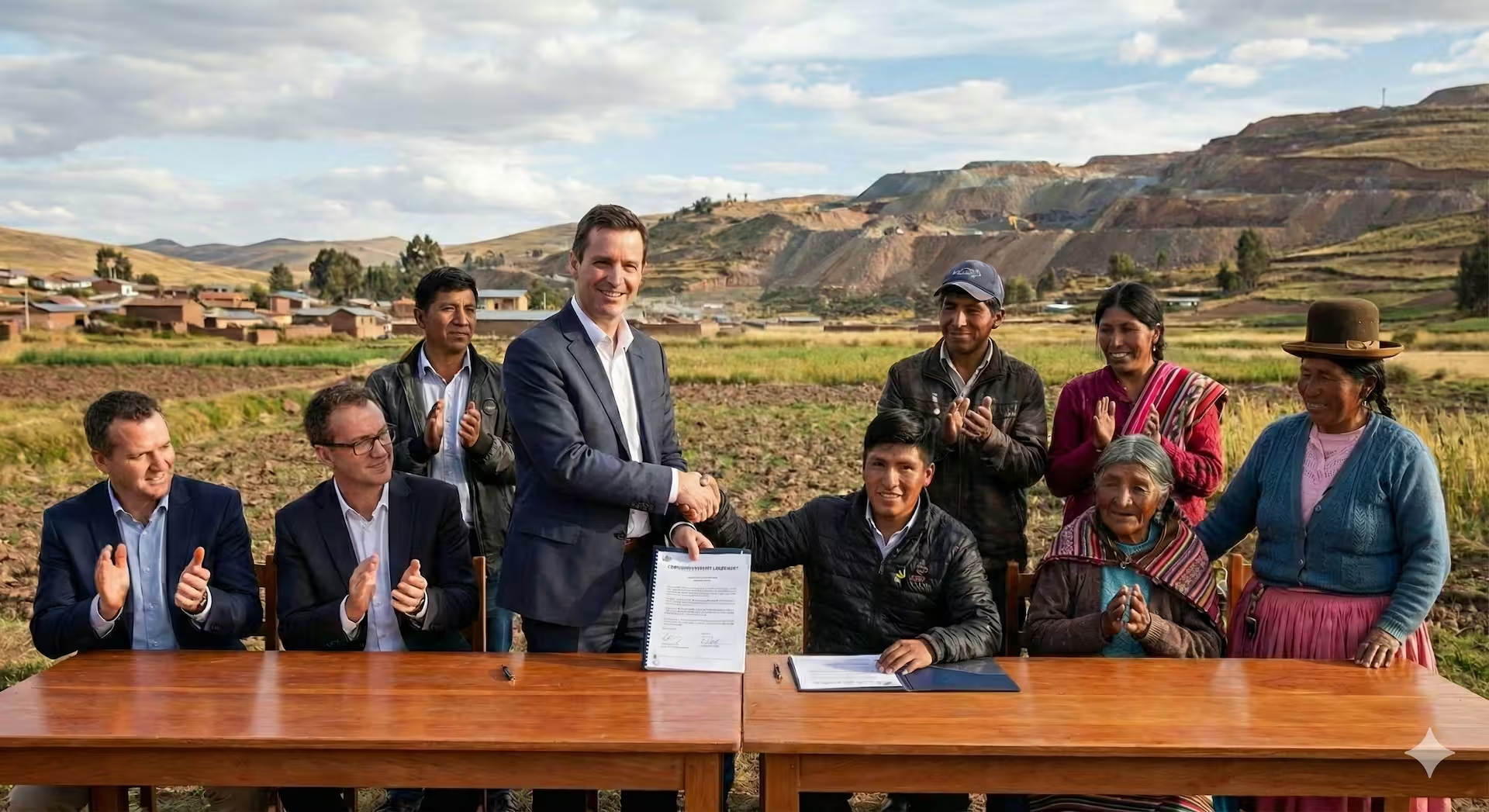
The classic interim agreement looks something like this: The company agrees to stop operations for 48 hours. The community agrees to remove the road blockade. Both parties agree to meet at a specific time and place to discuss the situation. That is it. Nothing about compensation. Nothing about blame. Nothing about the future. Just a pause that allows everyone to breathe.
The interim agreement has several essential characteristics:
- It must be time-limited. Open-ended commitments create anxiety. A 48-hour pause is tolerable; an indefinite suspension is not.
- It must be reciprocal. Each side gives something and gets something. If only one side makes commitments, resentment builds.
- It must be specific. Vague promises lead to disagreements. “We will reduce security presence” means different things to different people. “Security personnel will remain inside the compound and will not approach the community gathering area” is specific.
- It must include a next step. A ceasefire with no plan for what comes next just postpones the crisis. The agreement should specify when parties will meet again, where, and what they will discuss.
Element Four: Information Triage
In crisis, you cannot know everything. But you need to know some things. The fourth element is rapidly gathering the most critical information while resisting the temptation to wait for complete understanding before acting.
For immediate stabilization, you typically need to know: How many people are injured or affected? Is the incident contained or ongoing? Where are people gathering? What are the immediate demands? Who has authority to make decisions?
Be explicit about what you know and what you do not know. When parties ask you questions you cannot answer, say so clearly. “I do not yet know what caused the accident. What I do know is that four people are confirmed injured and three are in hospital.” This honesty about the limits of your knowledge actually builds credibility.
Managing the rumor mill is critical. Rumors in crisis spread like wildfire, and they can be just as destructive. Rather than arguing against rumors, ask for specifics. “Who saw this happen? Who can tell me the names of the people involved?” When no one can provide firsthand knowledge, the rumor’s power diminishes.
Element Five: Stakeholder Mapping Under Pressure
The final element is a rapid stakeholder assessment. In normal mediation, you would conduct thorough stakeholder mapping before beginning. In crisis, you need a compressed version that identifies the key players quickly.
On the company side, identify who has actual authority. On the community side, map the real leadership structure, which may differ from formal positions. Identify potential spoilers who benefit from continued conflict. Note external actors like NGOs, government officials, or media who may influence the situation.
De-Escalation Tactics That Work
De-escalation does not mean resolving the conflict. It means reducing intensity, slowing spirals, and creating conditions where constructive engagement becomes possible. De-escalation creates space for resolution, but it is not resolution itself.
Immediate Techniques
Create physical and temporal space. Space can reduce intensity. Call a break in heated discussions. Move to a different location. Slow the pace of interaction. Sometimes the most effective intervention is simply stopping. In one community mediation, I noticed voices rising and body language closing. I simply said, “Let us take fifteen minutes. There is coffee in the next room.” When we reconvened, the emotional temperature had dropped several degrees.
Acknowledge emotions without agreeing with positions. When you say “I can see you are very angry about this” or “This has clearly caused real pain,” you communicate that the emotional experience is seen and respected. Acknowledgment alone can reduce intensity because people often escalate to be heard. When they feel heard, the pressure to escalate diminishes.
Slow down deliberately. Speak slowly. Pause before responding. Refuse to match escalatory energy. When one person speeds up and raises their voice, resist the temptation to do the same. Instead, slow down further. Lower your voice. This models a different pace and often brings others along.
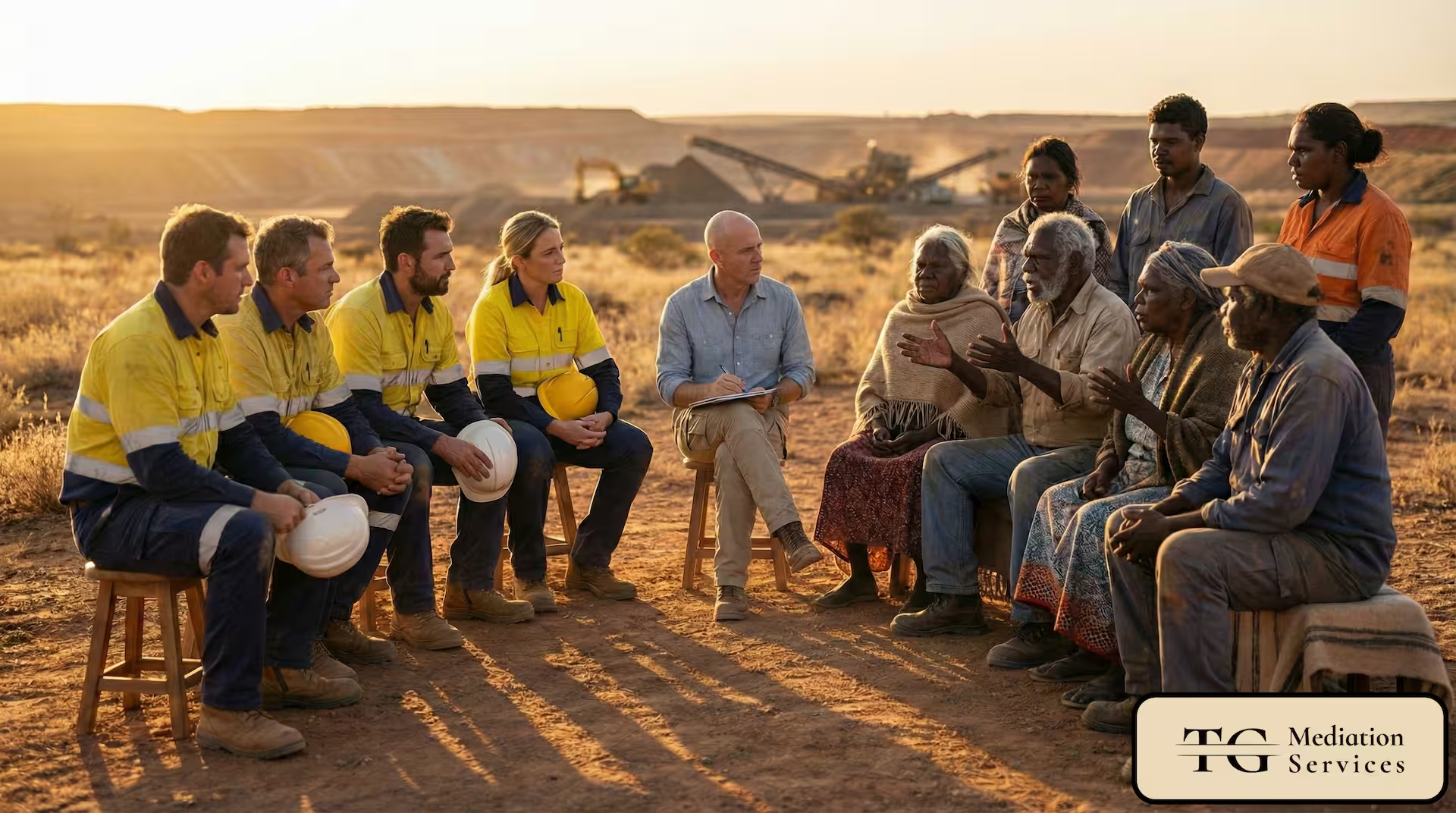
Use shuttle diplomacy when needed. If direct interaction is producing escalation, meet with each party separately. Let them vent, explore concerns, and prepare for constructive dialogue without the other side present to react. Shuttle diplomacy is slower than direct negotiation, but when direct negotiation would only generate more conflict, it allows progress while protecting parties from destructive interaction.
Structural De-Escalation Strategies
Establish reliable communication channels. Creating trusted ways for parties to communicate can prevent the spiral of misunderstanding that drives escalation. Regular meetings, designated liaisons, and established protocols provide structure that contains conflict.
Introduce neutral parties strategically. Third parties, whether mediators, ombudsmen, or respected community figures, can absorb some of the relational tension and provide face-saving paths to de-escalation. In the mining mediation context, external accountability mechanisms like the Compliance Advisor Ombudsman have played this role effectively.
Create joint projects on non-contentious issues. Collaboration on something separate from the core dispute can rebuild working relationships. In one case, a company and community locked in bitter dispute agreed to jointly plant trees along a local stream. It had nothing to do with their core conflict. But working together on something positive shifted how they saw each other. This small collaboration created an opening for addressing larger issues.
Use graduated reciprocation. Small, unilateral de-escalatory gestures, if reciprocated, can begin a positive spiral. A company might release information as a goodwill gesture. The community might acknowledge the gesture publicly. Each reciprocation builds toward larger de-escalation. Start with low-cost, low-risk gestures. If these are reciprocated, move to slightly larger gestures. Each successful exchange builds toward larger moves.
The Power of Acknowledgment
One of the most powerful de-escalation tools is also one of the simplest: acknowledgment. Not apology, not admission of liability, not agreement with the other side’s narrative. Just acknowledgment that their experience is real and that they have reasons for their feelings.
Field Example: In a South American mining dispute, tensions had escalated to the point of threatened blockades. A new company manager was advised to begin meetings with a simple acknowledgment: “I know this company has not always kept its promises. I know you have reason to be skeptical. I am not asking you to trust us, but I am asking you to test us.” This acknowledgment, though it committed to nothing concrete, shifted the dynamic. The community felt their experience was validated. The manager did not have to agree that the company was wrong. He just had to acknowledge that from the community’s perspective, there were legitimate reasons for their distrust. That simple shift opened space for dialogue that had not existed before.
Knowing When Crisis Response Has Succeeded
How do you know when the crisis phase is over and normal mediation can begin? Several indicators suggest the transition point has arrived.
- Parties can have a conversation without it escalating. They may still be angry, still grieving, but they can express these emotions without losing control. You can raise difficult topics without triggering a walkout.
- Parties are thinking about the future rather than just the past. Instead of only talking about what happened and who is to blame, they are starting to ask what happens now and what should we do next.
- The direct communication channel is being used. If parties are calling each other to check facts or coordinate rather than assuming the worst, the crisis is de-escalating.
- Physical indicators of crisis are subsiding. Crowds are dispersing. Security postures are relaxing. People are returning to normal activities even while the dispute continues.
None of these indicators means the conflict is resolved. It means the acute crisis has passed and you can begin the longer work of actual resolution.
Transitioning to Substantive Mediation
Once stabilization is achieved, you are moving from crisis response to conventional mediation. The skills shift from de-escalation and stabilization to process design, interest exploration, and option generation.
The transition is not abrupt. Crisis psychology lingers. Trust that was damaged will take time to rebuild. But you can begin to use the full range of mediation tools rather than just crisis intervention techniques.
Consider a phased approach. In complex mining disputes, attempting to resolve all issues at once often fails. Trust is too low for comprehensive negotiation. Instead, address urgent needs first while longer-term negotiations continue. Early agreements on smaller issues demonstrate that mediation can work. When the company commits to improving water access and actually delivers, the community gains evidence that negotiated commitments might be kept. Each kept promise becomes a foundation for the next agreement.
Build in community consultation mechanisms. Agreements reached at the negotiating table must be accepted by the broader community. Build in consultation breaks where the negotiating team returns to the community to report progress, gather feedback, and adjust positions. Major decisions should not be made at the table alone. They should be brought back as proposals for community consideration. This takes longer, but agreements reached this way actually hold.
Address power imbalances deliberately. Company-community disputes typically involve significant power imbalance. The company has financial resources, legal expertise, and technical knowledge. Without deliberate attention, mediation can simply ratify the preferences of the more powerful party. Ensure the community has access to technical expertise. Allow additional time for community consultation. Design processes that give weaker parties real voice, not just formal presence.
Common Mistakes to Avoid
In my years of mediating mining disputes, I have seen well-intentioned interventions fail repeatedly due to the same errors.
- Rushing to resolve before stabilizing. You cannot negotiate comprehensive agreements while people are still in crisis mode. Resist the pressure to skip ahead.
- Relying on formal leadership when informal leadership has emerged. The person leading the protest may not be the traditional chief. Find and engage with whoever actually has influence.
- Making promises that cannot be kept. Every broken promise deepens distrust. Make only commitments you can deliver, even if they seem modest.
- Ignoring the history. Today’s protest reflects years of accumulated grievance. Solutions that ignore this history will not hold.
- Trying to de-escalate too quickly. Sometimes parties need to fully voice their anger or grief before they can move forward. Attempting to calm emotions before they are expressed can backfire.
- Treating security as the solution. Armed security presence almost always makes things worse. It may feel protective to the company, but it is almost always perceived as threatening by the community.
The Human Cost: Taking Care of Yourself
Crisis work extracts a toll. You absorb the fear and grief and rage of people in extremis. You make decisions under pressure with incomplete information. You carry the weight of knowing that mistakes could cost lives or livelihoods.
This work is not sustainable without attention to your own wellbeing. You need practices that discharge accumulated stress. Physical grounding techniques, supervision or peer consultation, relationships outside the work that remind you of the ordinary goodness of human life. The mediator who burns out cannot help anyone.
Manage your own nervous system first. Before entering a tense situation, take deliberate breaths. Notice your feet on the ground. Consciously relax your shoulders. You cannot help others regulate if you are dysregulated. Your calm presence can become an anchor for others in chaos.
Moving Forward
Community protests at mining sites represent relationship breakdown, not random events. They are the culmination of unaddressed grievances, broken promises, and lost trust. Resolving them requires more than crisis management. It requires genuine commitment to rebuilding the relationship.
The framework I have outlined, focusing first on stabilization through the triage checklist, then de-escalation, then transition to substantive mediation, has worked in disputes across multiple continents. But every situation is unique. The framework provides structure; your judgment must provide adaptation.
The goal is not just to end the current crisis. It is to create conditions where future disputes can be handled constructively before they escalate. This means establishing communication channels that survive personnel changes, building trust through kept promises, and creating mechanisms for ongoing dialogue. The company and community that will live alongside each other for decades need more than a transaction. They need a transformed relationship.
Somewhere, right now, a crisis is unfolding that could use a skilled mediator. The techniques in this article could make the difference between escalation and stabilization, between more tragedy and the beginning of healing. Use them well.
Ready to prepare for your next crisis?
Download our complete Crisis Response Triage Checklist: a printable tool to guide your first 72 hours, assess the situation, and ensure no critical de-escalation step is missed.
Request a consultation: my team has extensive experience mediating community protests and disputes, and has already supported numerous projects in Africa, Europe, and Latin America. Contact us to discuss how we can support your crisis response.


 EN
EN  FR
FR  PT
PT