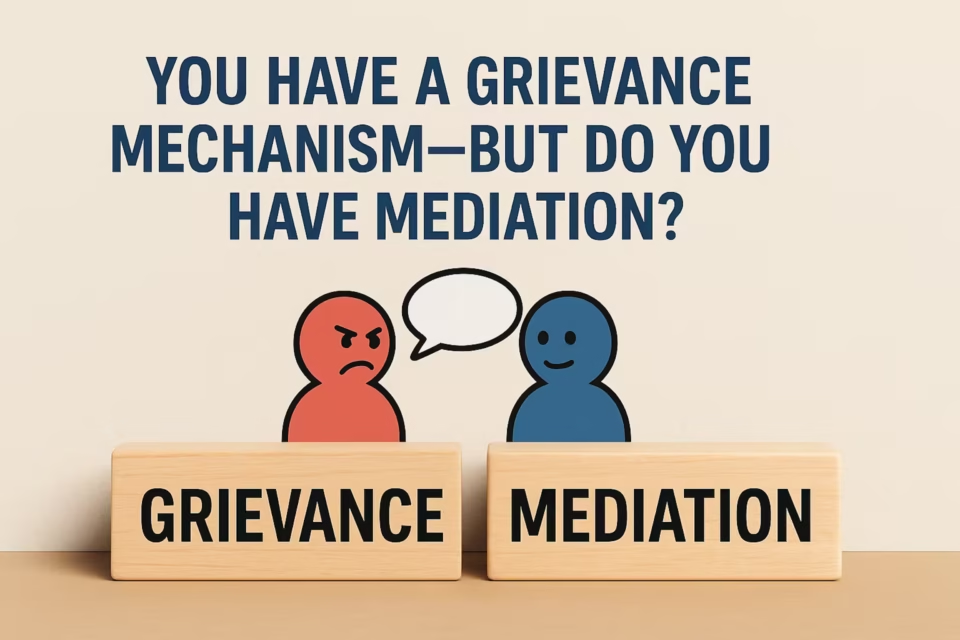
Many companies, especially those in infrastructure, energy, and extractive sectors, pride themselves on having a robust grievance mechanism. It’s often listed in ESG reports, shared with stakeholders, and integrated into social performance plans. But here’s the question: is it working?
More specifically: Does your grievance mechanism resolve conflict or simply process complaints?
For a grievance mechanism to be more than a compliance tool, it needs to do what grievances are really about: restoring relationships, trust, and accountability. And that’s where mediation comes in.
This article explores the limits of traditional grievance mechanisms and why integrating professional mediation processes can transform stakeholder engagement from reactive to relational—and from transactional to transformative.
Understanding the Role of Grievance Mechanisms
Grievance mechanisms are designed to:
- Provide a pathway for stakeholders to raise concerns
- Offer timely responses to complaints
- Mitigate harm and reputational risk
- Demonstrate accountability
But too often, these mechanisms function as:
- Bureaucratic intake systems
- Dead-end email addresses
- Internal reporting protocols with little feedback
- Legal shields rather than problem-solving tools
They may check the box for international standards like the UNGPs, IFC PS, or OECD Guidelines—but they rarely meet the emotional or relational needs of affected communities.
The Shortcomings of Most Grievance Systems
Here’s what I frequently hear from communities:
- “We submitted the complaint but heard nothing back.”
- “They sent us a form letter.”
- “It felt like they were just trying to protect themselves.”
- “We wanted a conversation, not a case number.”
And from companies:
- “We followed the protocol, but they’re still angry.”
- “Every issue becomes political.”
- “We can’t keep up with the volume or complexity.”
Grievance mechanisms fail when they are:
- Too procedural: People feel processed, not heard
- Too legalistic: They trigger defensiveness, not dialogue
- Too slow: Trust erodes when response time lags
- Too internal: Communities want independent resolution
What Mediation Adds
Mediation isn’t a replacement for grievance mechanisms—it’s a strategic upgrade.
Where grievance systems document issues, mediation resolves them.
Mediation provides:
- A neutral, confidential space for dialogue
- An independent third party trusted by both sides
- A process focused on needs, values, and solutions
- A structured pathway for rebuilding trust
Mediators can:
- Help interpret the deeper meaning behind complaints
- De-escalate anger and reframe accusations
- Support mutually acceptable solutions
- Foster future-oriented commitments
What an Integrated Model Looks Like
The most effective systems don’t separate complaints from conversation. They combine the strengths of both grievance handling and mediation into a tiered system.
Tier 1: Grievance Intake and Triage
- Accessible submission channels (in person, digital, anonymous)
- Clear criteria for what gets logged and tracked
- Transparent response timelines
Tier 2: Early Resolution
- Community liaison or social team initiates informal resolution
- Issues closed when resolved to mutual satisfaction
Tier 3: Formal Mediation Referral
- Complex or recurring grievances referred to mediation
- A mediator (internal or external) is appointed
- Process is voluntary, confidential, and well-structured
Tier 4: Escalation or Monitoring
- If unresolved, parties may escalate to legal or regulatory recourse
- If resolved, outcomes are documented and monitored over time
Case Example – Mediation in Action
In a South American mining project, the company faced a recurring grievance about noise and dust pollution from blasting operations. The formal mechanism responded each time with reports and technical compliance data—but community frustration grew.
After months of tension, the issue was referred to a mediator.
In facilitated dialogue:
- Residents described the stress of noise—not just as a health risk, but as an emotional disruption to daily life
- The company learned that the problem wasn’t just decibels—it was perceived disrespect
Through mediation, the parties agreed to:
- Adjust blasting schedules
- Improve warning systems
- Set up a joint monitoring group with resident participation
Grievances dropped. Trust began to rebuild. Most importantly, people felt heard.
What Makes Mediation Credible
To integrate mediation into your grievance system, it must be:
- Voluntary: No one should be coerced to participate
- Neutral: Mediators must be seen as independent
- Culturally fluent: Understanding local dynamics is key
- Process-transparent: Ground rules, expectations, and boundaries must be clear
- Outcome-flexible: Solutions should come from the parties, not be imposed
What Executives Need to Know
If you’re leading a company that operates in high-impact sectors, mediation isn’t a luxury. It’s a strategic necessity. It protects your:
- Reputation
- Timeline
- License to operate
- Internal morale
Executives should:
- Invest in mediator partnerships early
- Make mediation part of the company’s public conflict resolution offer
- Train staff to identify when mediation is appropriate
- Empower social performance teams to act before issues escalate
How I Support Mediation-Enabled Grievance Systems
I work with companies and NGOs to:
- Review and audit grievance systems for effectiveness
- Design and implement mediation-ready protocols
- Provide on-call mediation services for critical issues
- Train staff and community reps in conflict resolution
- Support community trust repair after project crises
Whether you’re launching a new project or recalibrating your community engagement approach, I can help you embed a mediation mindset into every stage.
Conclusion: Complaints Are Opportunities
Every grievance is a message: “Something isn’t working.” Too often, companies treat that message as a threat. Mediation reframes it as an invitation to connect, repair, and evolve.
Grievance mechanisms show you’re compliant. Mediation shows you care.
If your community-facing systems are overwhelmed—or underperforming—it’s time to evolve. Let’s build a mechanism that doesn’t just receive complaints, but resolves them.