
Skip to Main

Community Mediation

When the relationship between your project and the surrounding communities needs to be built, repaired, or held.

Thomas Gaultier works as an independent mediator, facilitating structured dialogue between extractive companies and affected communities at the moments that determine whether a project continues.

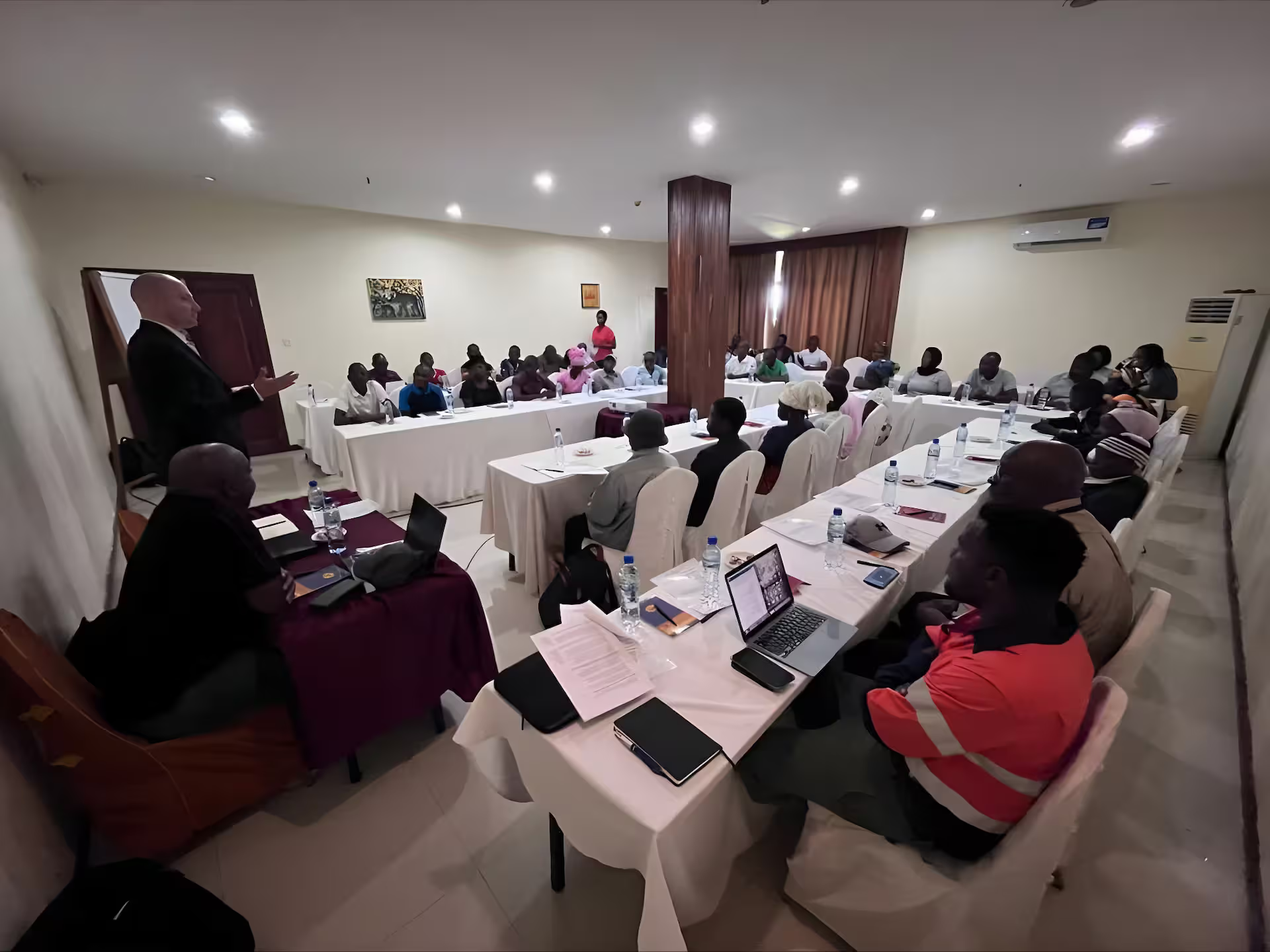
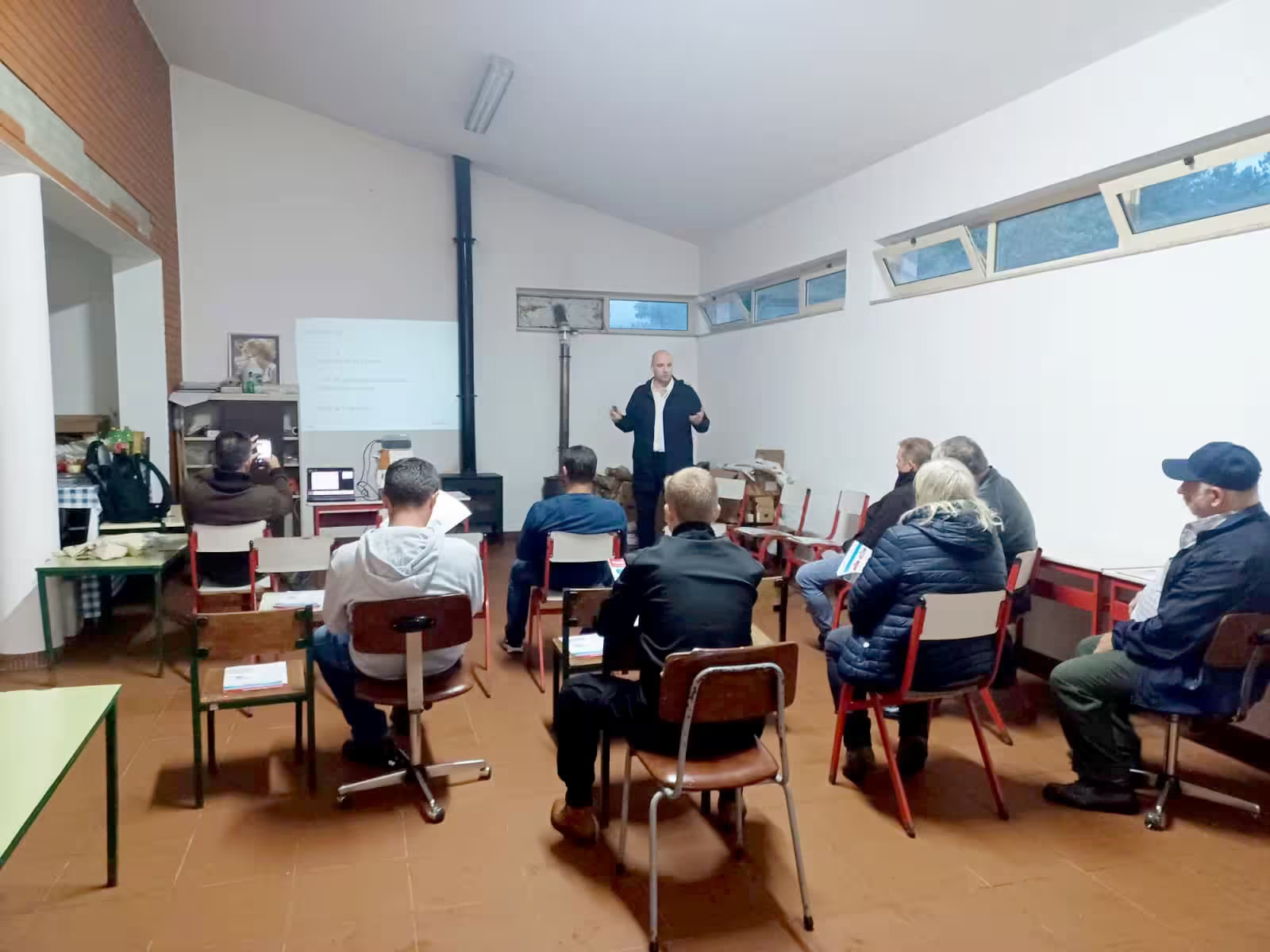
Thomas facilitating a structured dialogue session with a small group seated in a community meeting room, illustrating community mediation in practice for extractive industry projects

Services

What Community Mediation Includes

Effective mediation extends well beyond simply “getting parties in a room together.” My comprehensive service includes thorough preparation, structured facilitation, and implementation support to ensure agreements address root concerns and remain durable over time.

Audiences

Who benefits from Community Mediation

This service addresses disputes involving extractive industry operations and affected communities. All parties benefit from impartial facilitation that respects both operational realities and community concerns.

Mining, Oil & Gas, Infrastructure Companies

Your project faces community opposition that threatens permits, financing, or operations. Previous engagement attempts haven't resolved concerns. You risk litigation, regulatory intervention, or project delays.

Mediation helps you:

  • Understand community concerns accurately (not filtered through third parties)

  • Demonstrate genuine engagement to regulators and investors

  • Resolve disputes faster and less expensively than litigation

  • Preserve social license to operate

  • Establish monitoring and dispute resolution systems for ongoing relationships

You need mediation when: Conflicts escalate beyond what your community relations team can resolve internally.

Local Communities & Residents

You live near or are directly impacted by mining, oil and gas, or infrastructure projects. You have legitimate concerns about environmental impacts, health and safety, cultural heritage, land access, or broken promises. The company's consultation feels performative rather than genuine.

Mediation helps you:

  • Be heard by decision-makers in a structured, respectful setting

  • Access information needed to make informed decisions

  • Navigate technical complexity with support

  • Negotiate from a position of dignity (not powerlessness)

  • Achieve enforceable agreements with monitoring mechanisms

You need mediation when: Direct communication with the company isn’t producing results or feels unsafe.

Indigenous Peoples & First Nations

Resource extraction projects on or near your traditional territories threaten cultural sites, lands, waters, and livelihoods. You have rights to consultation, and in many jurisdictions, free prior informed consent, but operators treat this as a checkbox exercise rather than genuine engagement.

Mediation helps you:

  • Assert rights within respectful negotiation frameworks

  • Bridge cultural and communication differences

  • Ensure traditional knowledge informs decision-making

  • Negotiate benefit-sharing and impact mitigation that reflects your values

  • Establish consent and consultation protocols for project lifecycle

You need mediation when: FPIC processes break down or companies don’t honor consultation requirements.

Permitting & Regulatory Authorities

You're responsible for permitting decisions, consultation oversight, or dispute resolution between extractive operators and communities. Projects are stalled by conflicts that threaten economic development, community wellbeing, or regulatory legitimacy.

Mediation helps you:

  • Facilitate resolution without imposing decisions

  • Ensure consultation requirements are genuinely satisfied

  • Reduce regulatory burden of managing ongoing disputes

  • Support durable agreements that won't collapse after permits are granted

  • Demonstrate commitment to meaningful stakeholder engagement

You need mediation when: Your regulatory tools (hearings, compliance orders) aren’t producing resolution.

Why Extractive Industry Expertise Matters

Read our Mozambique Study

Community conflict in extractive industries is structurally different from other mediation contexts. The power asymmetry between a mining or oil company and an affected community is not incidental, it is the central dynamic the process must manage. The history of broken agreements, consultation processes that were form rather than substance, and the presence of international frameworks like FPIC create a backdrop that a generalist mediator may not be equipped to navigate.

Thomas has worked inside these dynamics in Mozambique, Zambia, the Republic of the Congo, and other contexts. He understands the operational pressures companies face and the legitimate grievances communities hold. He is not neutral on process, he holds it rigorously, but he brings no agenda on outcome. His role is to create the conditions under which parties who have good reason not to trust each other can reach agreements they both intend to keep.

Thomas demonstrates an incredible capacity of active listening.

He always finds new topics to learn and share; he has a continuous curiosity about the world and a true commitment and care for people that work with him. It has been a pleasure for me to work with Thomas in preparing and teaching two major seminars for Portuguese Law Universities, the success of which has been a lot due to his dedication, effort and commitment.

Ana Maria Maia GonçalvesFounder of ICFML

Common Questions

Questions Thomas is regularly asked about community mediation in extractive industries.

Common questions about community mediation services, process, costs, and outcomes. If your question isn’t answered here, please contact me directly.

When is mediation appropriate vs. inappropriate?

Mediation works well when: (1) all parties are willing to participate voluntarily, (2) parties have authority to make binding commitments, (3) significant power imbalances can be addressed procedurally, (4) parties have legitimate interests worth exploring, and (5) resolution would benefit all parties more than continued conflict.

Mediation is NOT appropriate when: (1) violence or intimidation makes safe participation impossible, (2) parties lack capacity or authority to negotiate meaningfully, (3) criminal matters require law enforcement involvement, (4) fundamental rights violations demand regulatory or judicial intervention, or (5) one party sees clear advantage in adversarial approaches and won’t engage in good faith.

I assess appropriateness during initial consultations before recommending mediation.

What Does Mediation Cost?

Mediation costs vary based on conflict complexity, estimated duration, and logistical requirements. After initial consultation where I assess the situation, I provide a detailed proposal with fee structure.

Typical arrangements include:

  • Fixed fees for simple, predictable mediations
  • Daily/hourly rates for more complex situations
  • Retainer structures for multi-session mediations

Costs are typically shared by parties unless one party agrees to cover full fees. Mediation costs are consistently a fraction of litigation costs, both direct legal fees and indirect costs of prolonged conflict (project delays, reputation damage, relationship deterioration).

Initial consultations are provided at no cost to assess whether mediation is appropriate and allow you to evaluate fit before committing.

What if mediation doesn't reach agreement?

Not all mediations result in full resolution—and that’s okay. Even unsuccessful mediations often produce value:

  • Parties understand each other’s perspectives more clearly
  • Some issues are resolved even if full agreement isn’t reached
  • Positions shift, creating foundation for future resolution
  • Parties know they genuinely tried collaborative resolution before adversarial approaches

If mediation concludes without agreement, parties retain all legal and regulatory options they had previously. Participating in mediation doesn’t waive rights or prejudice future actions. The experience often makes parties better prepared for alternative dispute resolution approaches or litigation.

How long does mediation typically take?

Duration varies significantly based on conflict complexity, number of parties, scope of issues, and stakeholder availability.

Simple disputes: 4-8 weeks from initial contact to agreement
Moderate complexity: 2-4 months
Complex multi-party conflicts: 6-12 months or longer

However, even lengthy mediations resolve disputes faster than litigation (which typically takes years) and preserve relationships that adversarial approaches destroy. Timeline is also flexible—mediation progresses at pace parties find comfortable rather than following court schedules.

Do you take sides or advocate for particular outcomes?

No. As mediator, I maintain strict impartiality regarding outcomes. I don’t advocate for any party’s position or judge whose perspective is “right.”

However, I’m not neutral about process—I ensure all parties can participate meaningfully, address power imbalances that prevent genuine dialogue, reality-test proposals against operational and practical constraints, and refuse to facilitate agreements I believe parties can’t or won’t implement.

My expertise in extractive industries helps me understand technical and operational realities, but this knowledge serves the mediation process—it doesn’t determine outcomes. Parties make their own decisions based on their own interests.

Is mediation confidential?

Yes, with defined parameters established in the process agreement. Standard confidentiality provisions include:

  • Mediation discussions are confidential and cannot be used in subsequent litigation
  • I cannot be called as witness in related legal proceedings
  • Information shared in private caucuses remains confidential unless party authorizes disclosure
  • Final agreements are typically not confidential (they’re implemented publicly)

However, confidentiality has limits—it doesn’t protect information about imminent harm, illegal activity, or issues parties agree should be disclosed. Specific confidentiality boundaries are established clearly before mediation begins, ensuring all parties understand what will and won’t remain confidential.

What happens after agreements are reached?

Implementation support is included in mediation services. After agreements are signed, I:

  • Facilitate initial implementation meetings to clarify next steps
  • Remain available for interpretation questions
  • Conduct scheduled check-ins (typically 30, 60, 90 days)
  • Provide rapid re-engagement if implementation challenges arise
  • Support monitoring system establishment

This implementation support ensures agreements remain living documents that adapt to changing circumstances rather than papers filed away and forgotten. Most implementation issues are minor clarifications easily addressed through brief follow-up.

Can mediation agreements be enforced?

Yes. Mediated agreements are binding contracts enforceable through normal contract law. Well-drafted mediation agreements include:

  • Clear, specific commitments with measurable outcomes
  • Implementation timelines and sequences
  • Monitoring and reporting mechanisms
  • Procedures for addressing interpretation questions
  • Dispute resolution processes for future disagreements
  • Remedies for non-compliance

Some parties choose to register mediated agreements as consent orders with courts or regulatory bodies, adding additional enforcement mechanisms. However, most mediated agreements are honored voluntarily because parties developed them collaboratively rather than having settlements imposed by external decision-makers. The negotiation process itself creates ownership and commitment.

Most mandates start with a single conversation.

A 30-minute call is enough to understand your situation and whether Thomas can help. No obligation, no generalist pitch.

Discuss Your Situation