Stakeholder Engagement Design

Consultation Process Design for Mining & Energy Projects

A consultation process that satisfies regulators but alienates communities isn’t a success, it’s a delayed conflict. I design engagement processes for extractive industry projects that do both: fulfil legal and regulatory requirements while creating the conditions for genuine dialogue, durable agreements, and social license that holds.

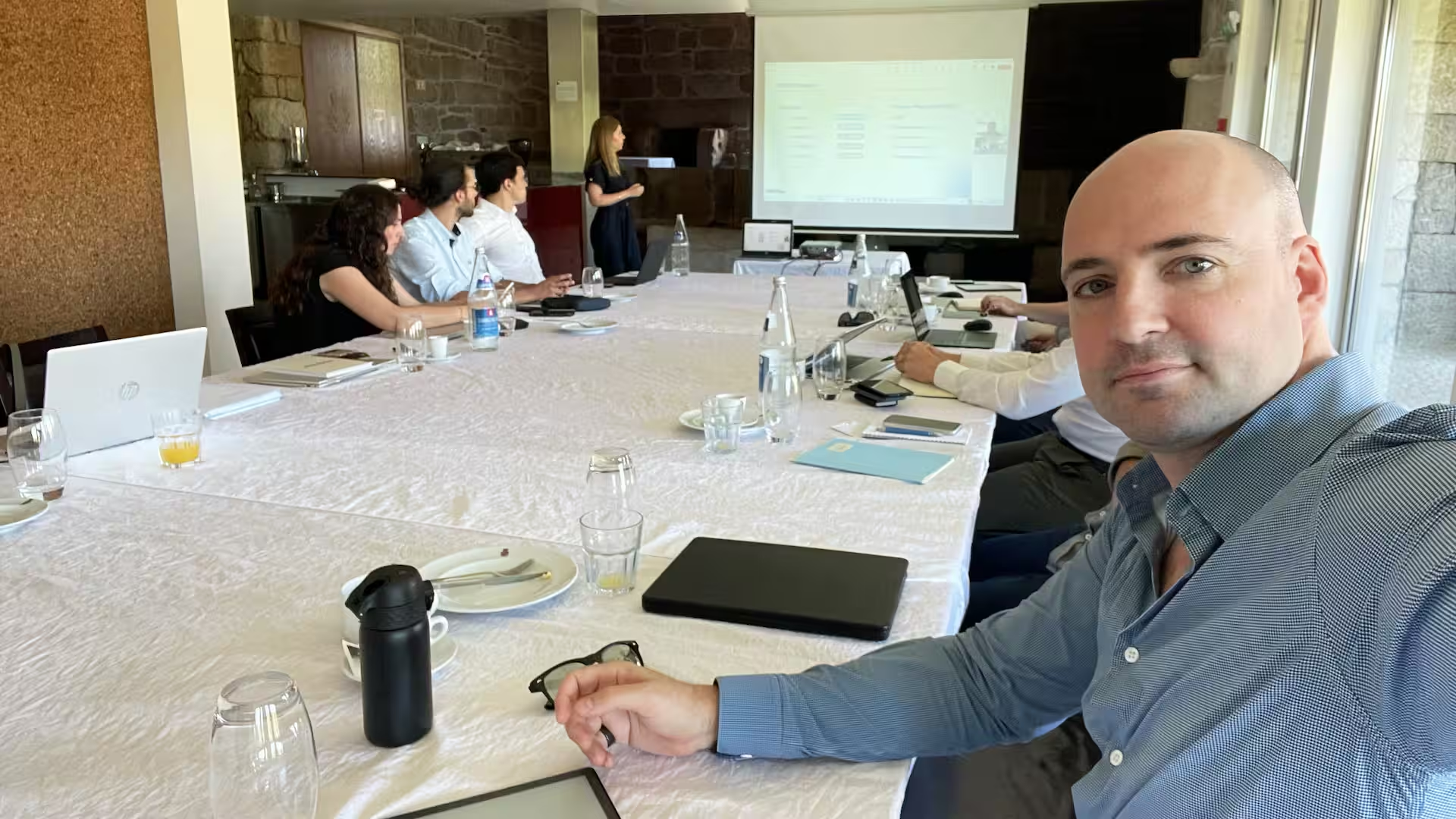
Thomas Gaultier participating in a stakeholder engagement workshop, seated at a conference table with a presenter and group of participants in the background

Services

What Stakeholder Engagement Design Includes

Effective engagement design goes well beyond writing consultation plans that satisfy regulators. My comprehensive advisory service builds engagement systems that genuinely prevent conflicts, address power imbalances, respect diverse stakeholder perspectives, and adapt to changing project phases over time.

  • Engagement Process Audit

    Assessment of existing stakeholder engagement approaches, consultation histories, relationship qualities, past conflicts, grievance mechanisms, and community relations capabilities. This audit identifies engagement gaps, missed opportunities, emerging risks, and systemic weaknesses requiring attention. Includes stakeholder perception research (where appropriate) to understand how engagement is experienced by affected parties, not just how companies believe it's working.

  • Stakeholder Mapping & Analysis

    Systematic identification and analysis of all stakeholder groups—their interests, influence, relationships, concerns, communication preferences, decision-making processes, and engagement priorities. Mapping extends beyond obvious stakeholders to include indirect parties, cultural mediators, power brokers, and vulnerable groups whose voices are easily marginalized. Analysis informs engagement strategy differentiation—different stakeholders require different engagement approaches.

  • Consultation Framework Design

    Development of consultation processes aligned with project phases, stakeholder needs, regulatory requirements, and operational realities. Framework specifies who to engage, when, about what, through which mechanisms, with what decision-making authority, and how feedback will influence decisions. Particularly important for indigenous consultation and free prior informed consent processes requiring culturally appropriate approaches that honor community decision-making traditions.

  • Grievance Mechanism Design

    Creation of accessible, trusted systems for stakeholders to raise concerns and receive timely, appropriate responses. Effective grievance mechanisms include multiple reporting channels, clear response timelines, escalation procedures, confidentiality protections, non-retaliation guarantees, tracking systems, and transparent resolution processes. Design ensures mechanisms work for diverse stakeholders, literacy levels, language differences, cultural communication preferences, and power dynamics all shape grievance mechanism accessibility.

  • Community Benefit Structure Design

    Advisory on impact and benefit agreement design, employment and procurement strategies, training programs, infrastructure investments, benefit-sharing mechanisms, and intergenerational equity considerations. Focus on creating benefit structures that genuinely address impacts, build community capacity, adapt to changing project phases, and remain sustainable through production and closure. Helps navigate tensions between community aspirations and realistic project capabilities.

  • Capacity Building & Training

    Development and delivery of training programs that build your team's stakeholder engagement capabilities. Topics include cultural competence, effective consultation techniques, grievance handling, conflict prevention and de-escalation, negotiation skills, and trust-building approaches. Training is customized to your operational context, existing capabilities, and specific challenges. Goal is building internal capacity for sustainable engagement rather than creating permanent dependence on external advisors.

Audiences

Who benefits from Engagement Design Services

Strategic engagement design helps extractive industry operators, government agencies, and development organizations build proactive stakeholder relationships that prevent conflicts and establish social license to operate.

Mining, Oil & Gas, Infrastructure Companies

Your project is in planning phases and you want to prevent the stakeholder conflicts you've seen derail other operations. Or you're operating but facing recurring community relations challenges that suggest systemic engagement weaknesses. Perhaps regulators or investors are demanding better stakeholder engagement systems.

Engagement Design helps you:

  • Build genuine social license to operate, not just regulatory compliance

  • Prevent conflicts that threaten permits, financing, and operations

  • Create engagement systems that work throughout project lifecycle

  • Demonstrate stakeholder engagement competence to regulators and investors

  • Reduce community relations costs by addressing concerns proactively

You need engagement design when: Planning new projects, facing recurring stakeholder issues, or preparing for significant project phase transitions.

ESG & Sustainability Professionals

You're responsible for social performance, ESG reporting, stakeholder engagement strategy, or sustainability commitments. You need to demonstrate genuine community engagement to investors, lenders, and other stakeholders who increasingly scrutinize social license to operate.

Engagement design helps you:

  • Design measurable stakeholder engagement systems with clear KPIs

  • Align community relations practice with ESG commitments and reporting standards

  • Identify social risk early through robust engagement infrastructure

  • Demonstrate stakeholder engagement competence in sustainability reports

  • Build internal capacity for engagement rather than reactive crisis management

You need engagement design when: Developing ESG strategies, strengthening social performance, or responding to investor/lender social risk concerns.

Regulatory & Permitting Authorities

You oversee consultation requirements, permitting processes, or conflict resolution between extractive operators and communities. You want operators to conduct genuine engagement that prevents conflicts rather than perfunctory consultations that lead to disputes requiring your intervention.

Engagement design helps you:

  • Establish clear consultation standards that produce genuine engagement

  • Review and provide feedback on operator engagement plans

  • Build capacity to assess engagement quality, not just process completion

  • Develop guidance documents and best practice frameworks

  • Support early conflict identification and intervention systems

You need engagement design when: Updating consultation requirements, reviewing operator engagement plans, or strengthening regulatory capacity.

Lenders, Investors & Development Banks

You finance extractive industry projects and need assurance that borrowers can manage stakeholder relationships effectively. Social risks—conflicts, permit challenges, reputation damage—threaten project viability and your investment returns.

Engagement design helps you:

  • Assess borrower stakeholder engagement capacity during due diligence

  • Require robust engagement systems as financing conditions

  • Monitor social risk through engagement performance indicators

  • Provide technical assistance to strengthen borrower capabilities

  • Demonstrate responsible investment through stakeholder engagement standards

You need engagement design when: Conducting social risk due diligence, establishing lending conditions, or supporting borrower capacity development.

Why Extractive Industry Engagement Expertise is Essential

Read our Mozambique Study

Generic stakeholder engagement consultants without extractive industry experience design approaches that fail in the field. The operational constraints are real: technical complexity that requires bridging expert and community knowledge, decades-long project timelines, remote locations that rule out standard engagement models, and variable workforces that make relationship continuity difficult. Designing for these realities is not optional, it determines whether an engagement system functions or collapses when confronted with actual conditions.

Specialized expertise also shapes how regulatory and cultural complexity is navigated. Extractive projects operate under layered national requirements, international financing standards, FPIC obligations, and ESG reporting frameworks that generic consultants misread or undershoot. They also engage stakeholders across radically different cultural contexts, where communication styles, decision, making processes, and trust-building norms vary in ways that matter. The difference between compliance and genuine social license is whether an engagement system is designed around these realities or imposed despite them.

Troubleshooter Gaultier must deal with people who view mining and pollution as different sides of the same coin.

Richard WachmanMining Journal (March 2024)

Common Questions

Questions companies, ESG teams, and lenders ask before commissioning a stakeholder engagement framework.

The questions below come from community relations managers, ESG leads, permitting teams, and investment due diligence processes. If yours isn’t here, the initial conversation is the right place to ask it.

When should we invest in engagement design vs. handling stakeholder relations internally?

Consider engagement design advisory when:

Planning new projects where getting engagement right from the start prevents costly mistakes and establishes positive relationships from the beginning.

Facing recurring stakeholder issues that suggest systemic engagement weaknesses rather than isolated conflicts.

Preparing for significant transitions (exploration to construction, construction to operations, operations to closure) where engagement approaches must evolve.

Responding to regulator/investor concerns about stakeholder engagement quality or social risk management.

Expanding to new contexts (new countries, indigenous territories, sensitive environments) where your existing engagement approaches may not work.

Building internal capacity where your team needs training, mentoring, and systems development to strengthen capabilities.

Internal resources handle routine engagement; advisory services build the systems and capabilities that make routine engagement effective.

How is engagement design different from developing a "stakeholder engagement plan"?

Many “stakeholder engagement plans” are compliance documents that check regulatory boxes without fundamentally strengthening engagement practice. They specify required activities (meetings, consultations, notifications) without creating systems that ensure engagement is genuine, effective, and sustainable.

Strategic engagement design goes deeper:

  • Builds operational systems (grievance mechanisms, monitoring processes, feedback loops)
  • Develops organizational capacity (training, coaching, knowledge management)
  • Creates integration with operations (not just community relations activity)
  • Establishes adaptive management (continuous improvement, not static plans)
  • Focuses on engagement quality and stakeholder trust, not just activity completion

The goal is embedding effective engagement into organizational DNA, not producing compliance documents.

What does engagement design cost?

Advisory fees vary based on project scope, complexity, timeline, and level of implementation support required.

Typical engagement structures include:

  • Fixed-fee projects for defined deliverables (e.g., grievance mechanism design, consultation framework development)
  • Retainer arrangements for ongoing advisory support during implementation
  • Time-and-materials for flexible scope engagements where needs evolve

After initial consultation where I understand your situation, I provide detailed proposal with scope, timeline, deliverables, and fee structure.

Investment in engagement design is risk management—preventing one major stakeholder conflict saves multiples of advisory costs through avoided delays, litigation, reputation damage, and relationship destruction. Clients typically view this as cost-effective prevention rather than discretionary expense.

Can you design engagement systems we'll implement internally, or do we need ongoing support?

Both models work depending on your internal capacity and preferences.

Design-only engagements deliver frameworks, systems, and training that your team implements independently. Appropriate when you have capable internal staff who need strategic guidance and system design but can handle execution.

Design with implementation support provides ongoing advisory during rollout, troubleshooting challenges, coaching staff, adapting approaches, monitoring performance. Appropriate when internal capacity is developing or when high-stakes situations warrant external expertise during critical phases.

Most clients start with design with initial implementation support, transitioning to periodic advisory as internal capabilities strengthen.

How do you handle confidentiality when working with our competitors?

Strict confidentiality protections ensure your proprietary information, strategic approaches, and sensitive stakeholder relationships remain confidential. I don’t share client-specific information across engagements.

However, general methodological expertise (best practices, framework designs, lessons learned) developed across multiple engagements benefits all clients—that accumulated expertise is why specialized advisory adds value.

If potential conflict-of-interest situations arise (simultaneously advising direct competitors in same region), I disclose proactively and establish appropriate information barriers or decline engagements to protect all parties.

Do you work directly with stakeholders or only with our internal team?

Both, depending on project needs and client preference.

Internal-only engagements focus on organizational capacity building, system design, and strategic guidance without direct stakeholder interaction. Appropriate when you want to strengthen internal capabilities and your team handles all external relationships.

Stakeholder-inclusive engagements involve direct stakeholder research (perception studies, focus groups, interviews) to understand concerns and inform engagement design. This provides richer insights but requires stakeholder willingness to participate and client comfort with external advisor access.

For indigenous consultation and FPIC processes, direct stakeholder engagement is often essential to design culturally appropriate approaches. I discuss stakeholder involvement during initial scoping.

What if stakeholders are hostile and refuse to engage?

Stakeholder hostility usually has causes—past broken promises, environmental damage, ineffective previous engagement, or legitimate grievances ignored. Engagement design addresses root causes of hostility rather than treating resistance as irrational.

Strategies include:

  • Acknowledging past failures honestly
  • Demonstrating genuine change through actions, not just promises
  • Creating safe, neutral engagement spaces
  • Building trust incrementally through small commitments consistently honored
  • Engaging trusted intermediaries who can bridge communication gaps

However, engagement design isn’t magic—it strengthens engagement systems and approaches, but can’t force unwilling stakeholders to participate. Focus shifts to ensuring genuine opportunities exist for those who choose to engage.

How do you measure engagement effectiveness?

Effective engagement measurement goes beyond activity counts (number of meetings held, consultation participants) to assess engagement quality and outcomes:

Process indicators:

  • Stakeholder satisfaction with engagement processes
  • Grievance resolution rates and timelines
  • Consultation influence on project decisions
  • Information accessibility and transparency

Relationship indicators:

  • Trust levels (assessed through perception research)
  • Stakeholder willingness to engage constructively
  • Relationship quality ratings

Outcome indicators:

  • Conflict frequency and severity trends
  • Permit approval timelines
  • Project delays due to stakeholder issues
  • Reputation metrics

I help clients develop measurement frameworks appropriate to their context with indicators that actually reflect engagement quality rather than just activity.

Every engagement process is different. Let’s talk about yours.

Stakeholder engagement design depends entirely on the project context, the industry, the geography, the history between the company and the communities involved. A 30-minute call is enough to understand your situation and whether Thomas can help structure a process that fits it.

Discuss Your Situation