Mediation & Advisory Services for Extractive Industries
Three services. One focus. The extractive sector.
Building bridges between communities and resource development projects through expert facilitation and stakeholder engagement design.
Core Serivces
Three Paths Forward
I offer three core services designed specifically for extractive industry stakeholders navigating community relations challenges:
Community Mediation
Impartial facilitation of disputes between extractive industry operators and affected communities. I specialize in multi-party conflicts involving environmental concerns, land access agreements, compensation disputes, impact management, and community benefit negotiations.
Right for: Extractive companies, project developers, community relations and ESG teams facing active conflict, grievance escalation, or a loss of social licence.
Strategic advisory services to design and strengthen stakeholder engagement processes before conflicts escalate. I help extractive companies, government agencies, and development organizations meet regulatory requirements (FPIC, IFC Performance Standards, national permitting) while building the kind of genuine trust that holds when a project gets difficult.
Right for: Project developers, community relations and ESG teams facing regulatory consultation requirements, FPIC obligations, or a history of ineffective community engagement.
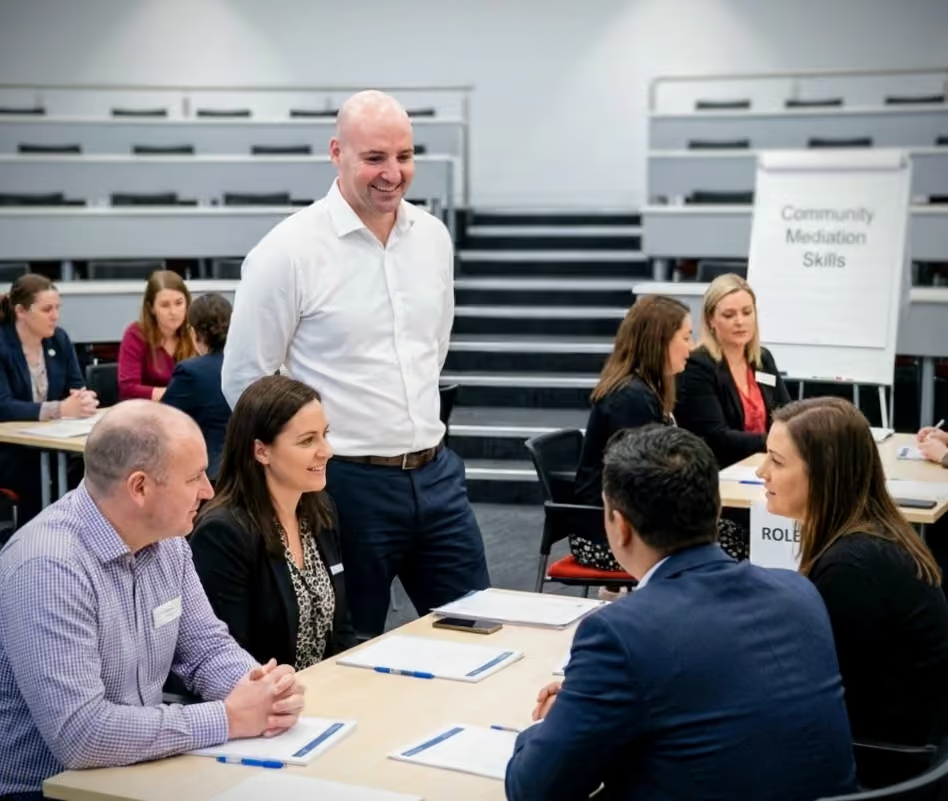
Practitioner-led training to build your team’s capacity to prevent conflicts, manage crises, and hold structured dialogue with communities. Programs cover conflict prevention and early warning, crisis dispute management, stakeholder communication, and social risk, all designed around the dynamics of extractive industry operations, not generic conflict resolution theory.
Right for: Community relations officers, social performance teams, project managers, and ESG leads in mining, oil & gas, and infrastructure companies who need their people to handle what comes before a conflict requires external intervention.
Every large-scale industrial project creates a collision. On one side, a company with timelines, investors, and regulatory obligations. On the other, communities whose land, livelihoods, and way of life sit directly in the project's path. When that collision is managed through improvisation, the result is predictable: delays, distrust, protests, and losses that compound on both sides.
The Social Accord Architecture is the discipline that replaces that cycle with a structured process.
A Field-Tested Methodology
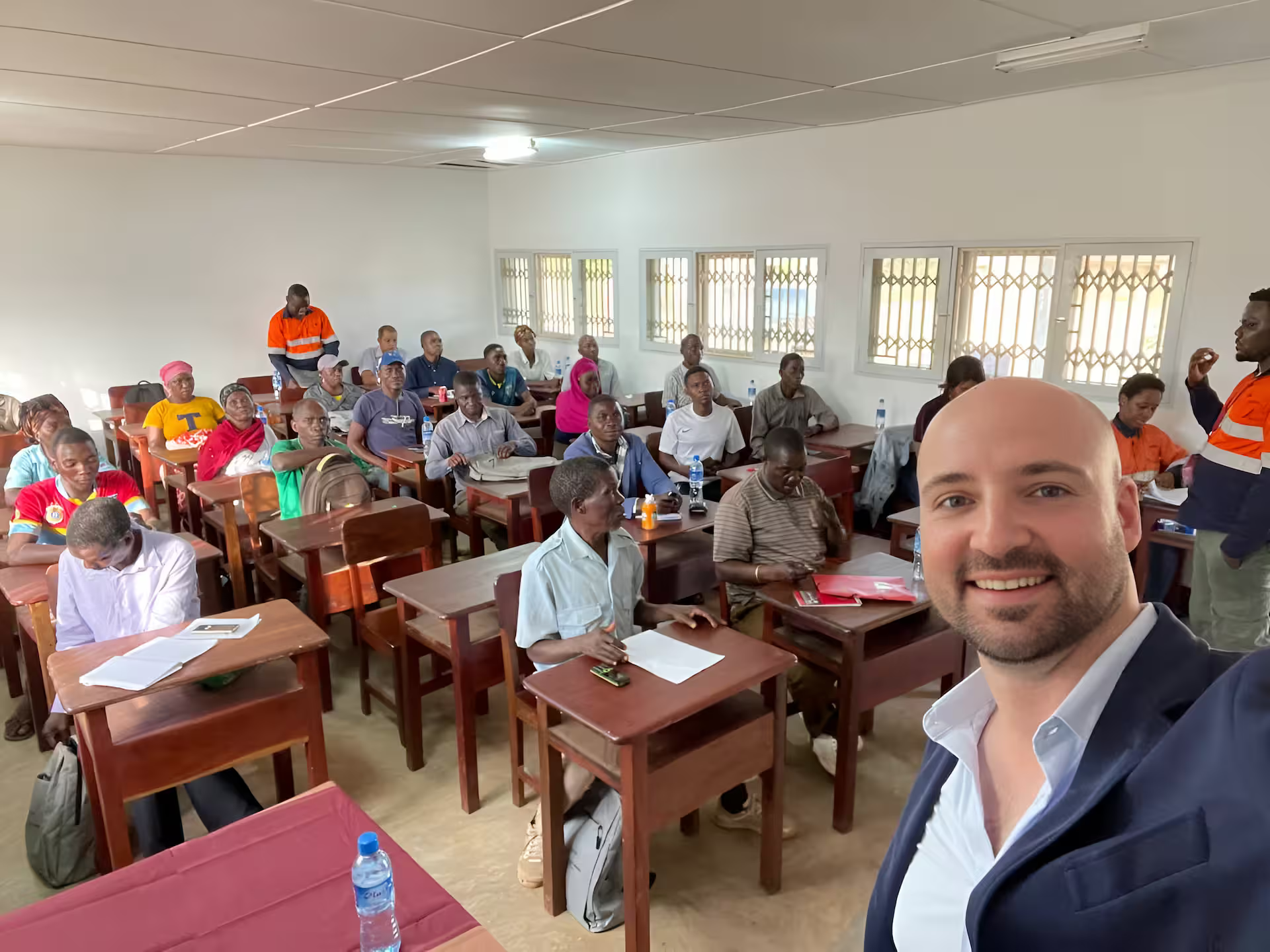
The Social Accord Architecture is not a theory. It was forged through 15 years of frontline practice in extractive industries, including the resolution of over 2,000 community claims in Mozambique. It draws on mediation science, human rights due diligence frameworks, and hard-won lessons from mine sites, infrastructure corridors, and energy projects across Sub-Saharan Africa, Europe, and Asia.
At its core, Social Accord Architecture provides all parties, from boardrooms to village halls, with a shared process and a common language for engagement. It turns unstructured confrontation into predictable, transparent steps that both sides can trust.
Why it Matters Now
The regulatory landscape has shifted. The EU Corporate Sustainability Due Diligence Directive (CSDDD), the German Supply Chain Due Diligence Act (LkSG), and evolving international standards now require companies to demonstrate systematic management of human rights and social risks. Compliance reports alone are not enough. Regulators and investors increasingly expect operational evidence that engagement is happening, that grievances are being resolved, and that communities have genuine influence over decisions that affect their lives.
At the same time, community opposition has become the single largest non-technical risk factor in mining and infrastructure. Research shows that community conflict can reduce a project's Net Present Value by 50 to 70 percent. For a project valued at $341 million, that means a potential loss of over $200 million, not from geology or engineering, but from broken relationships.
How It Works
The methodology is built on two proprietary frameworks.
GROUNDS provides the structured mediation process for active dispute resolution. When conflicts arise, GROUNDS moves parties through a defined sequence of steps, from preparation through negotiation to resolution and follow-through. It replaces personality-dependent crisis management with a process that any trained practitioner can lead consistently.
REBUILD provides a trauma-informed restorative approach for disputes arising from serious harm. It ensures that truth-telling, acknowledgment, and accountability are addressed before reconciliation, creating space for healing that communities experience as genuine rather than performative.
Together, these frameworks create an engagement architecture that is auditable, replicable, and aligned with international standards including the IFC Performance Standards, the UN Guiding Principles on Business and Human Rights, and Free, Prior and Informed Consent (FPIC) requirements.
Who It Serves
The Social Accord Architecture operates at the intersection of four audiences:
Mining and energy companies that need to protect project timelines, reduce social licence risk, and meet due diligence obligations with operational substance, not just documentation.
Community relations practitioners who carry years of field experience but lack a formal credential, a structured methodology, and a professional community that recognises the complexity of their work.
Communities and their representatives who have been through too many consultations that changed nothing, and need a process where their voice has genuine weight and transparent accountability.
Institutions and policymakers seeking evidence-based, scalable approaches to community engagement that align with existing international frameworks and can be embedded in policy, curricula, and project requirements.
The Principle Behind the Practice
The Social Accord Architecture is built on a single conviction: protecting communities and protecting investments are not opposing goals. They are the same goal, pursued through different lenses. The moment an engagement process favours one side, it loses credibility with the other.
This is what sets the Social Accord Architecture apart from corporate CSR consultancies that communities view with suspicion, and from activist-oriented organisations that companies dismiss as adversarial. It occupies the space between those poles, which is where the most valuable work happens.
I want them psychologically to come to terms with a change,
I want to get them to a point where they get to decide whether they want to be a part of the conversation.
Creating the Conditions for DialogueMining Journal (March 2024)
If community relationships in your project are under pressure, or heading there: let’s talk.
A 30-minute call costs nothing. It’s enough to understand your situation, whether you’re managing active community opposition, an FPIC process, a resettlement plan, or a dispute that hasn’t escalated yet. No obligation, no generalist pitch.
Used to distinguish new sessions and visits. This cookie is set when the GA.js javascript library is loaded and there is no existing __utmb cookie. The cookie is updated every time data is sent to the Google Analytics server.
30 minutes after last activity
__utmc
Used only with old Urchin versions of Google Analytics and not with GA.js. Was used to distinguish between new sessions and visits at the end of a session.
End of session (browser)
__utmz
Contains information about the traffic source or campaign that directed user to the website. The cookie is set when the GA.js javascript is loaded and updated when data is sent to the Google Anaytics server
6 months after last activity
__utmv
Contains custom information set by the web developer via the _setCustomVar method in Google Analytics. This cookie is updated every time new data is sent to the Google Analytics server.
2 years after last activity
__utmx
Used to determine whether a user is included in an A / B or Multivariate test.
18 months
_ga
ID used to identify users
2 years
_gali
Used by Google Analytics to determine which links on a page are being clicked
30 seconds
_ga_
ID used to identify users
2 years
_gid
ID used to identify users for 24 hours after last activity
24 hours
_gat
Used to monitor number of Google Analytics server requests when using Google Tag Manager
1 minute
_gac_
Contains information related to marketing campaigns of the user. These are shared with Google AdWords / Google Ads when the Google Ads and Google Analytics accounts are linked together.
90 days
__utma
ID used to identify users and sessions
2 years after last activity
__utmt
Used to monitor number of Google Analytics server requests