How a facilitated multi-stakeholder workshop reformed an operational grievance mechanism for a mining company in Mozambique, resolving procedural bottlenecks and establishing objective standards for assessing community claims.
The Situation
A major mining operation in Mozambique had established an operational grievance mechanism (OGM) to receive and process community claims related to human rights impacts from its activities. The mechanism included a dedicated fact-finding team, an independent panel for decision-making, a secretariat for case administration, and an appeals panel for reviewing contested decisions.
Despite this comprehensive structure, the mechanism had stalled. Several systemic problems had converged to create a crisis of functionality. Hundreds of claims were backlogged. Key stakeholders within the mechanism disagreed on fundamental procedural questions, including how to assess whether claims met evidentiary thresholds. The system for triaging and distributing cases created bottlenecks, with claims piling up before they could be investigated. A moratorium on case processing had been in effect for months.
Perhaps most critically, the relationships between the different bodies of the mechanism had deteriorated. The fact-finding team, the independent panel, the company, and the appeals panel each operated with different assumptions about process, standards, and expectations. Trust between these groups was low, and the mechanism’s credibility with the surrounding communities was at risk.
The company recognized that the situation could not be resolved through internal discussions alone. They needed an independent facilitator who could bring all parties to the table, navigate the deeply held disagreements, and help the group design practical solutions that everyone could commit to.
The Approach
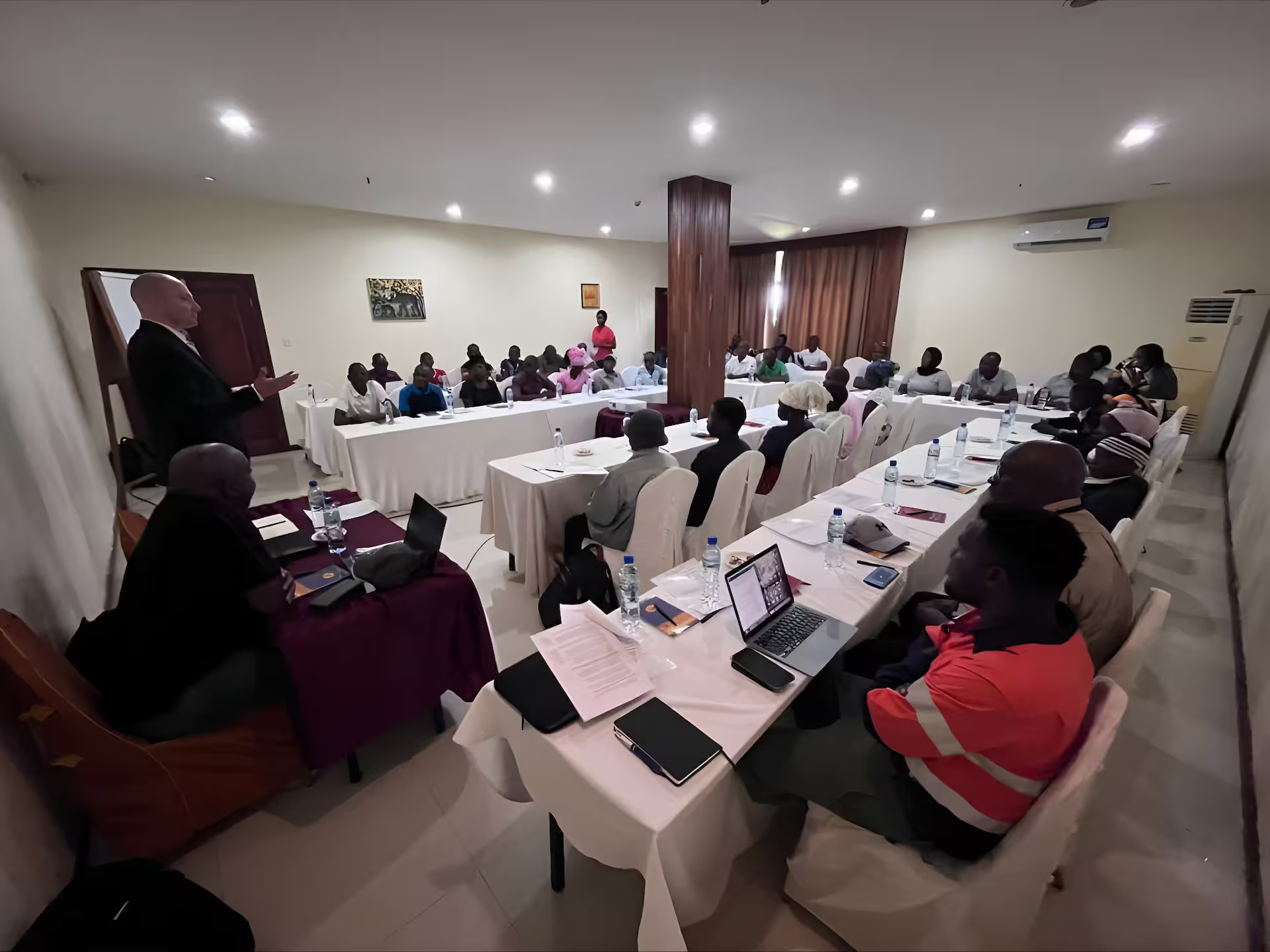
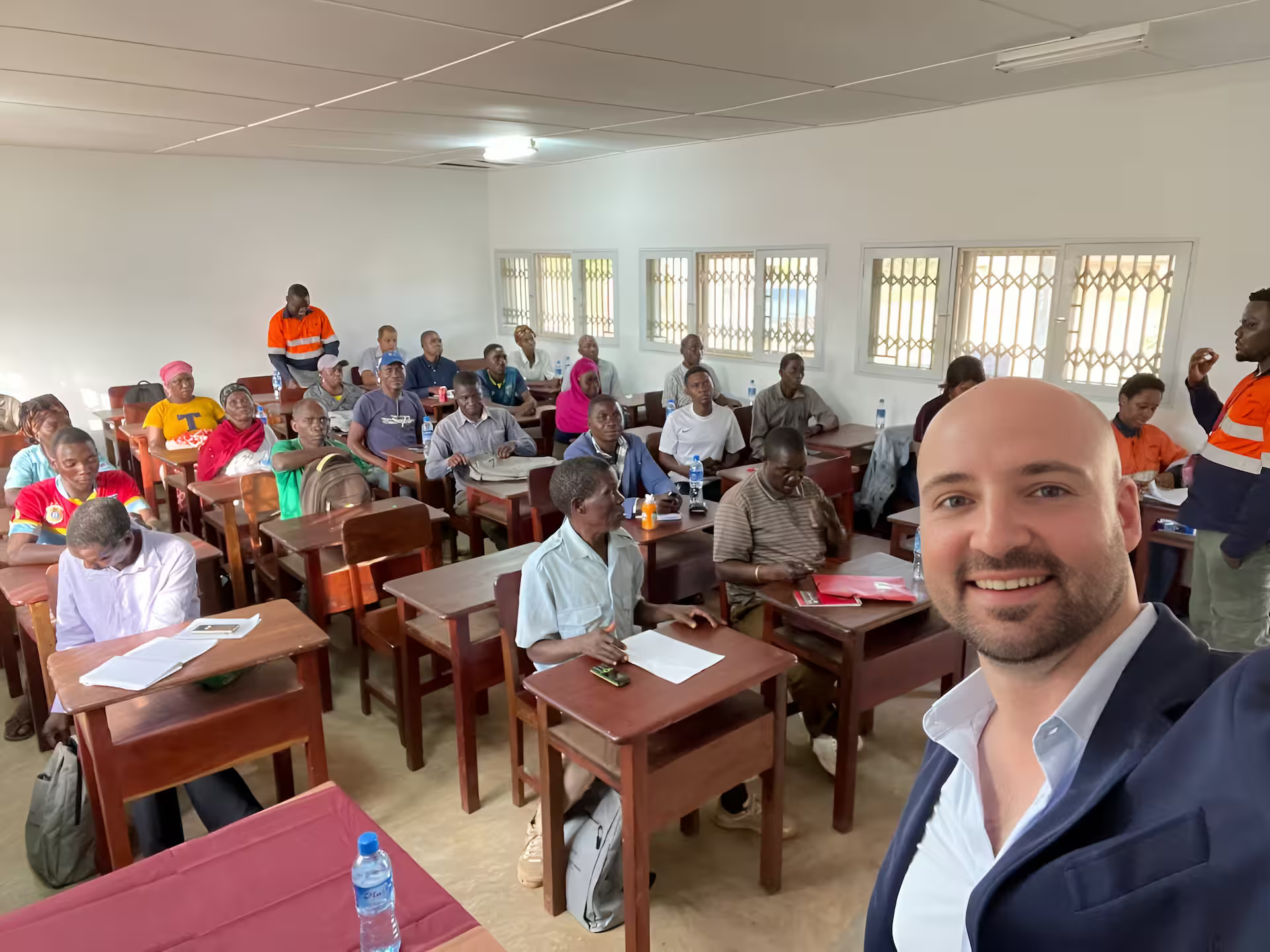
I was engaged as an independent facilitator to design and lead a three-day multi-stakeholder workshop that would bring together all the institutional actors of the grievance mechanism: the company’s grievance committee, the independent fact-finding team, the independent panel, the secretariat, and the appeals panel. This was the first time all these bodies had met face to face to discuss how the mechanism should function.
The workshop was built on four facilitation principles, drawn from the Social Accord Architecture methodology, that I communicated to all participants at the outset: the opportunity for every party to share their perspective, respect for each participant’s contributions, recognition of the multiple interests and expectations in the room, and a shared desire to make the mechanism effective.
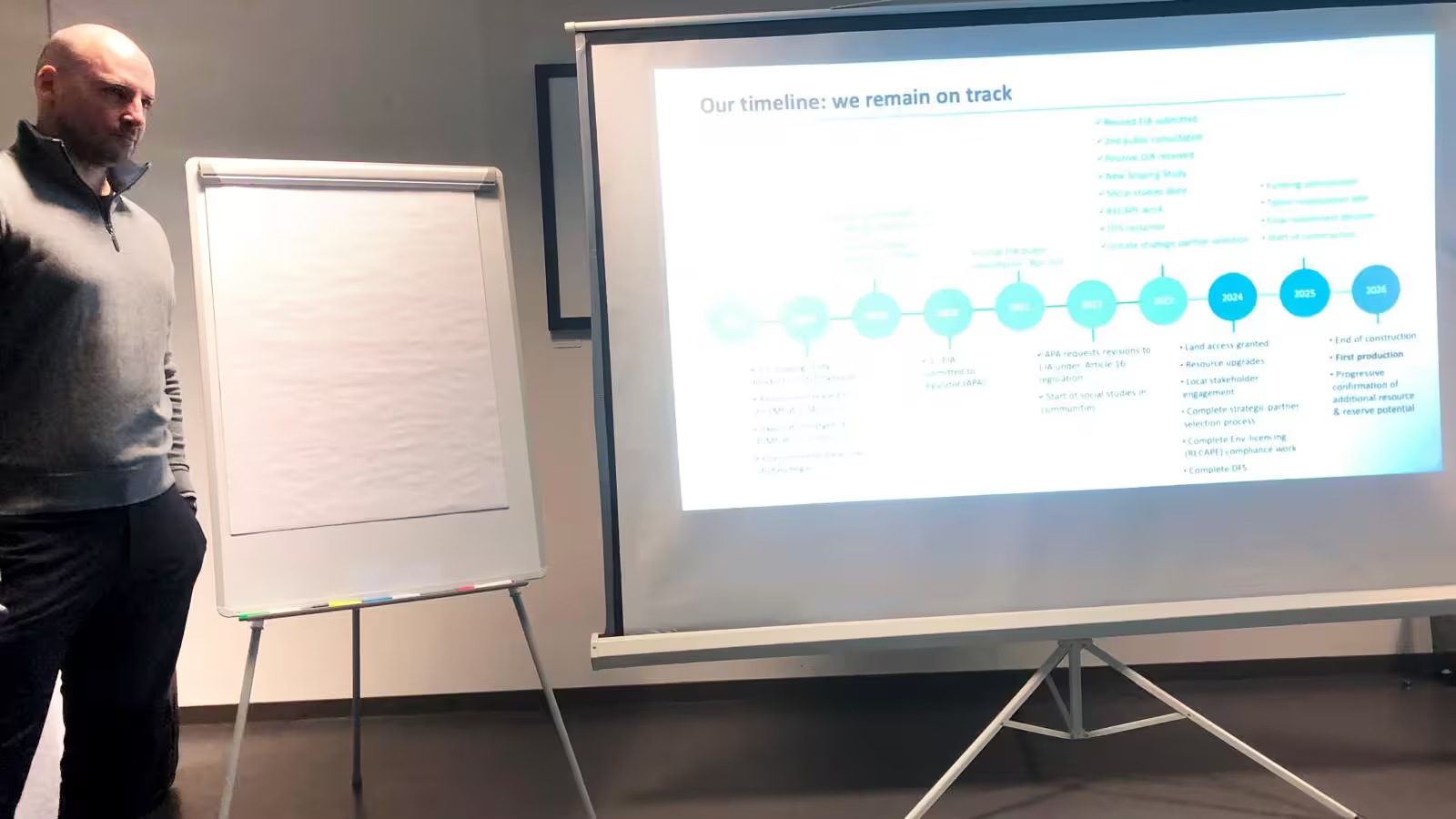 Working the agenda in the open. Nothing was pre-agreed before the session, and the sequence of issues was visible to everyone in the room.
Rather than imposing solutions, I structured the agenda to let the most contentious issues surface organically and be addressed through dialogue. The group worked through a series of interconnected challenges: how to bring objectivity to evidentiary assessments that had become too subjective, how to eliminate the bottleneck that left hundreds of claims stuck in triage, how to handle claimants who could no longer be reached, how to set fair limitations periods for historic claims, how to reform a compensation framework that no longer matched the mechanism’s standards, and how to improve coordination between institutional bodies that had never met face to face.
The Outcome
The three-day workshop produced 14 formal points of understanding, each negotiated and agreed to by all parties present. These agreements collectively reformed the operational grievance mechanism across its most critical dimensions:
A new, jointly designed evidentiary assessment instrument replaced the contested checklist, giving fact-finders, decision-makers, and the appeals body a shared framework for evaluating claims. This single change addressed the root cause of most procedural disagreements.
The claims processing workflow was restructured to eliminate the bottleneck, with clear responsibilities assigned to each body. The independent panel and fact-finding team committed to processing 5 to 10 cases per month each, with a target to clear the moratorium backlog within weeks.
Procedures were established for handling unreachable claimants, setting limitations periods for historic claims, and managing cases that fell outside the mechanism’s scope. Each procedure included safeguards to protect claimants’ rights while giving the company the operational clarity it needed.
The workshop also surfaced and addressed practical working conditions for the team members operating the mechanism, including timely salary payments and adequate equipment, recognizing that the mechanism’s credibility depends on the people who run it being properly supported.
Beyond the formal agreements, the workshop fundamentally reset the relationships between the institutional actors. Bodies that had been operating in isolation, making assumptions about each other’s intentions, left the workshop with a shared understanding of their respective roles and a commitment to meet regularly.
What This Case Illustrates
This engagement demonstrates a challenge that many extractive companies face but rarely discuss publicly: what happens when a grievance mechanism stops working. Having a mechanism in place is only the first step. Making it functional, credible, and responsive to community needs requires ongoing attention, structured dialogue among the institutional actors, and, at times, independent facilitation to resolve the procedural disputes that inevitably arise.
The work also illustrates a core principle of Social Accord Architecture: sustainable solutions emerge when all parties participate in designing them. The evidentiary instrument, the reformed workflows, and the new procedures were not imposed by any single body. They were co-created through facilitated dialogue, which is why the participants committed to implementing them.
For companies designing or operating grievance mechanisms aligned with IFC Performance Standards, the UN Guiding Principles on Business and Human Rights, or OECD Guidelines, this case shows what the difference looks like between a mechanism that exists on paper and one that actually functions in practice.
Key services demonstrated:
Grievance mechanism design, multi-stakeholder facilitation, structured dialogue, dispute resolution process reform, extractive industry mediation, operational grievance mechanism optimization
Details have been generalized where confidentiality requires it. Client
names appear only where the client has agreed to be named.