The Situation
A lithium mining company was developing what would become one of the largest spodumene lithium deposits in Europe, located in a rural region of northern Portugal. The project sat at the intersection of two powerful forces: Europe’s strategic push to secure domestic critical mineral supply chains, and the deep attachment of local communities to the agricultural landscapes and way of life that the project would affect.
The project faced opposition from a pocket of residents, several environmental groups, and local associations, who had mobilized through protests, legal challenges, and public campaigns. Concerns centered on environmental impacts to a region recognized for its agricultural heritage, the effects of open-pit mining on local livelihoods, land acquisition processes that had generated mistrust, and a perception that the company’s engagement with communities had been insufficient. Media coverage amplified these concerns both nationally and internationally, framing the project as a test case for whether Europe could develop its own critical minerals responsibly.
The company needed more than a communications strategy. It needed someone who could build a community relations function from the ground up: designing stakeholder engagement processes, managing a complex land acquisition program, establishing credible grievance handling, developing community investment initiatives, and doing all of this in the middle of active opposition and public scrutiny. The role required someone comfortable working simultaneously with company leadership, local government officials, community associations, and individual landowners whose trust had to be earned one conversation at a time.
The Approach
I joined the company as Community Relations Manager, embedded full-time in the project. This was not an advisory engagement conducted from a distance. It required a sustained, on-the-ground presence in the communities affected by the project, building relationships through consistent contact, transparent communication, and demonstrated follow-through.
The work spanned five interconnected areas:
Land acquisition and community negotiation. The project required access to land held by dozens of individual owners, families, and communal land associations. I led the voluntary land acquisition program, prioritizing fair negotiation over compulsory processes. This meant meeting landowners individually, understanding their specific concerns, whether about price, relocation, access to remaining land, or the future of their farming activities, and working toward agreements that addressed those concerns. Where disputes arose, I managed them directly, always with the goal of reaching voluntary agreements rather than forcing the issue through legal mechanisms.
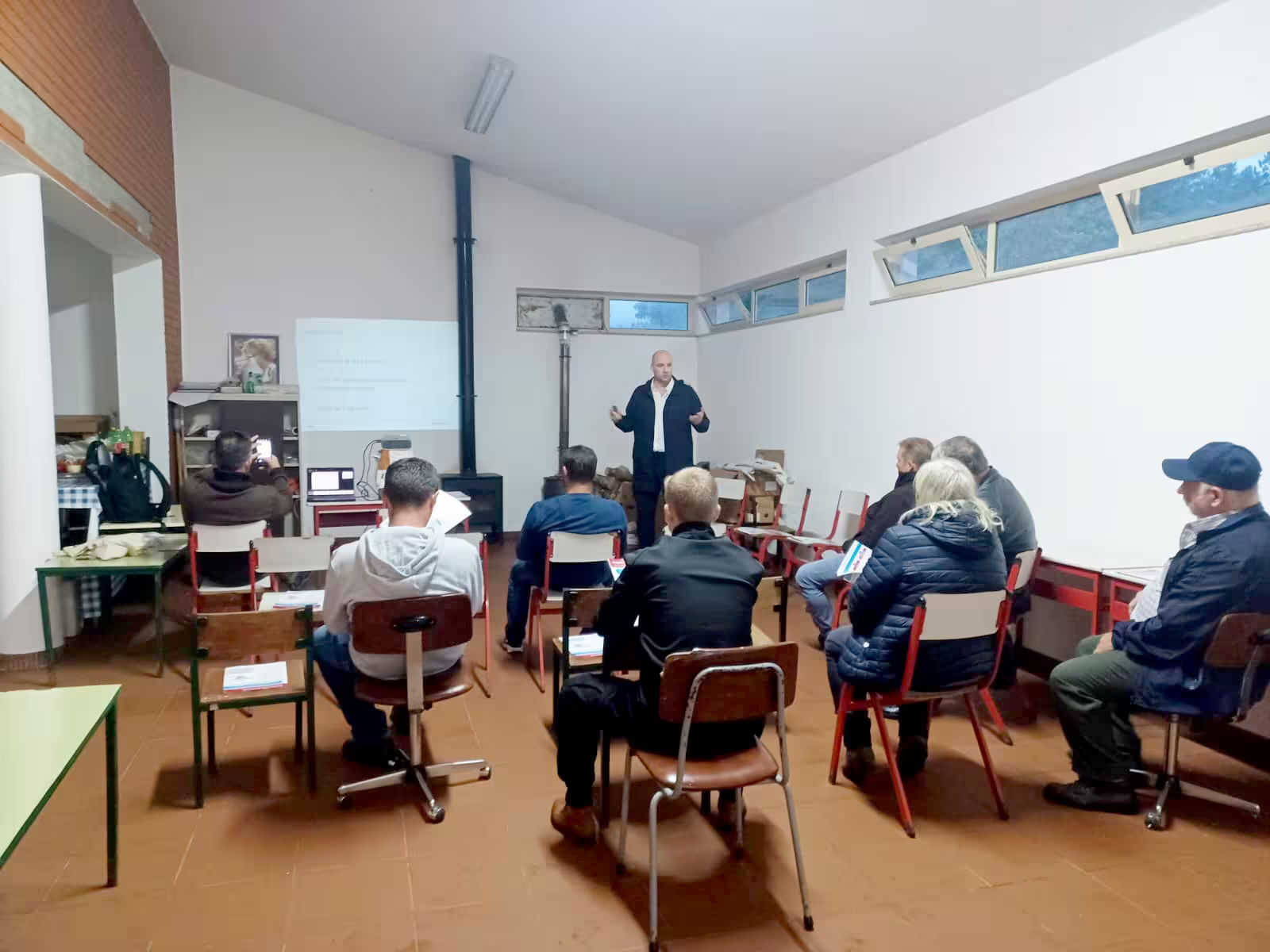
Stakeholder engagement process design. I designed and implemented a structured stakeholder engagement program that went beyond regulatory consultation requirements. This included regular community open sessions, a local information center where residents could access project information and speak with team members directly, site visits for community representatives, and targeted engagement with local government, parish councils, and community associations. The goal was to create channels where information flowed in both directions, not just from the company outward.
Managing community opposition. Opposition from a pocket of local residents and several environmental groups was a recurring reality of this project. My approach was to engage rather than avoid. I maintained open lines of communication with those who opposed the project, listened to their concerns, and worked to address those that fell within the company’s capacity to act on. Not every concern could be resolved to everyone’s satisfaction, but the commitment to listening and responding with respect was itself a form of social performance. Managing opposition in this context required patience, consistency, and the ability to represent the company’s position without dismissing legitimate community anxieties.
Grievance mechanism and complaint handling. I established a structured process for receiving, tracking, and responding to community complaints and grievances. In a context where trust was low and scrutiny was high, having a credible, transparent system for handling concerns was essential. The mechanism needed to be accessible to community members who might not be comfortable with formal processes, while also being robust enough to track issues systematically and demonstrate that the company was responding to what it heard.
Community development programs. Beyond managing the immediate challenges of the project’s development, I helped design community investment initiatives aimed at demonstrating that the project could bring tangible benefits to the region. These programs focused on areas identified through community engagement as local priorities, ensuring that investment was driven by community needs rather than corporate assumptions about what communities wanted.
The Outcome
Over the course of this engagement, the company’s community relations function evolved from a reactive, under-resourced operation into a structured, professional program capable of managing the social complexity of a major European mining project.
The voluntary land acquisition program secured access to a significant portion of the required land through negotiated agreements, reducing the need for compulsory processes. The stakeholder engagement program gave the company a credible presence in the community, even among residents who remained skeptical of the project itself. The grievance mechanism provided a documented, systematic channel for community concerns that had previously been informal and untracked.
None of this eliminated opposition entirely. In a project of this nature, in a region where communities have deep ties to the land, some degree of resistance is part of the landscape, not a problem to be solved. What the community relations function achieved was a shift from a dynamic where opposition was the only channel for community voice, to one where structured engagement existed alongside it. Residents who wanted to engage constructively had a clear path to do so. Those who chose to oppose the project through legal or public channels could do so in a context where the company’s commitment to dialogue was visible and documented.
What This Case Illustrates
This engagement illustrates what community relations looks like when it is treated as an operational function rather than a communications exercise. In the European critical minerals sector, where regulatory frameworks are robust, public scrutiny is intense, and even localized opposition can generate outsized media and legal attention, the standard corporate playbook of issuing press releases and hosting occasional information sessions is not enough.
What is required is a sustained, embedded presence: someone who knows the community, who has built relationships over time, who can manage difficult conversations about land, livelihoods, and environmental risk without retreating into corporate language, and who can design engagement processes that give communities a genuine channel to influence how a project develops.
For companies developing mining projects in Europe or other jurisdictions where social license is both legally mandated and publicly contested, this case shows the difference between having a community relations strategy on paper and having one that functions under real-world pressure.