Social performance practitioners in mining and extractive industries carry a psychological burden that the sector has never properly acknowledged. These professionals, variously titled community relations officers, stakeholder engagement managers, or external affairs coordinators, stand at the intersection of corporate operations and community survival. They absorb the anger of displaced families and the impatience of production-focused executives, often in the same day, sometimes in the same hour. They translate human suffering into risk assessments and corporate decisions into language that preserves dignity.
Yet there is almost no literature, no training, and no institutional support designed for what this work does to the people who do it. This article names the invisible toll, explains its three primary forms, and offers a practical framework for building resilience, drawn from fifteen years of frontline experience across mining operations in Mozambique, Zambia, Portugal, and beyond.
What Social Performance Practitioners Actually Do (And Why Nobody Understands It)
Social performance, in the context of extractive industries and large infrastructure projects, refers to the systematic management of a company’s relationships with communities affected by its operations. That is the textbook definition. The lived reality is different.
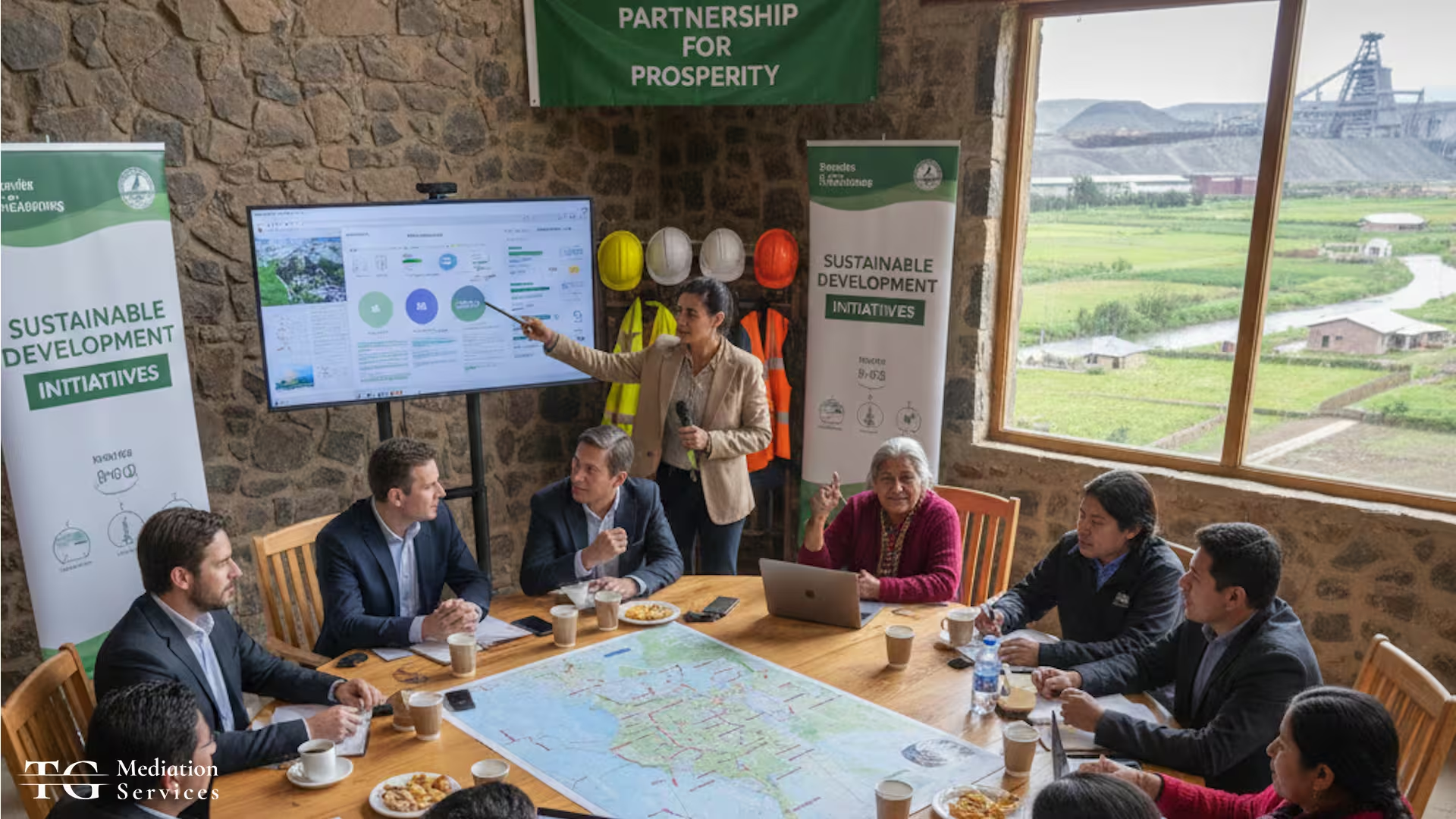
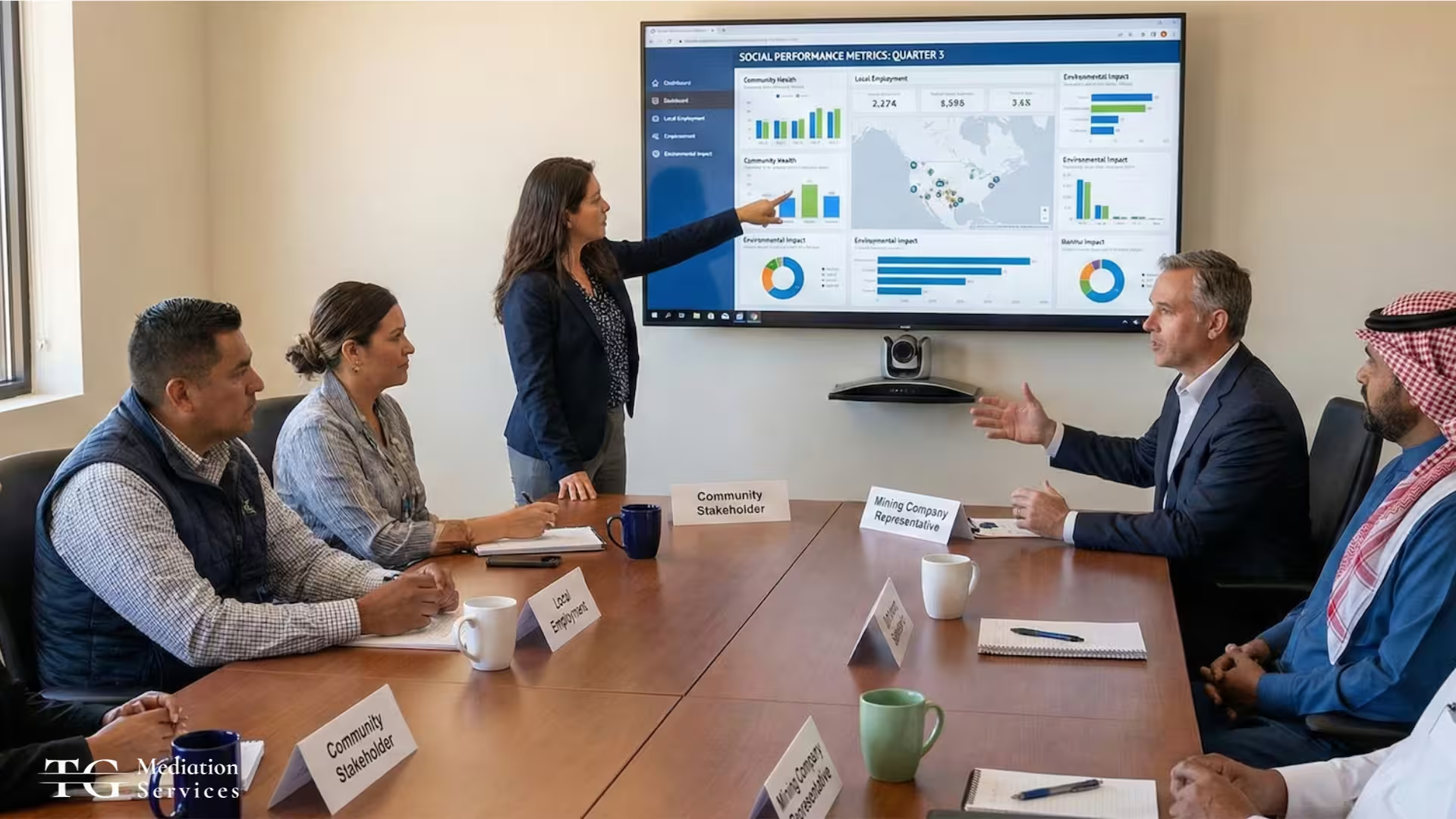
The lived reality is this: you are the human face of an entity that is often faceless. You sit across the table from people whose water has changed colour, whose grazing land has been fenced off, whose children walk past construction sites on their way to school. Your phone buzzes with a request for quarterly engagement metrics while a grandmother is waiting for you to explain why her grandson is still drinking contaminated water.
“I absorbed the elder’s grief all morning. I absorbed my colleagues’ impatience all evening. I spent the day translating between two worlds that could not seem to hear each other.”
Thomas Gaultier, The Human Shock Absorber
The IFC Performance Standards (2012) establish that companies must engage with affected communities through informed consultation and participation. What the standards do not address is what happens to the person tasked with making that engagement real, day after day, in hostile environments, with inadequate resources and conflicting mandates. As Kemp and Owen (2013) observed in their landmark paper, community relations is “core to business but not core business,” leaving practitioners structurally marginalised within the organisations that depend on them.
I have written previously about the mechanics of this work in my articles on difficult conversations in a conflict setting and mediating between facts and emotions in mining disputes. This article goes deeper: it examines what that work does to you over time.
The Human Shock Absorber: Understanding the Practitioner’s Position
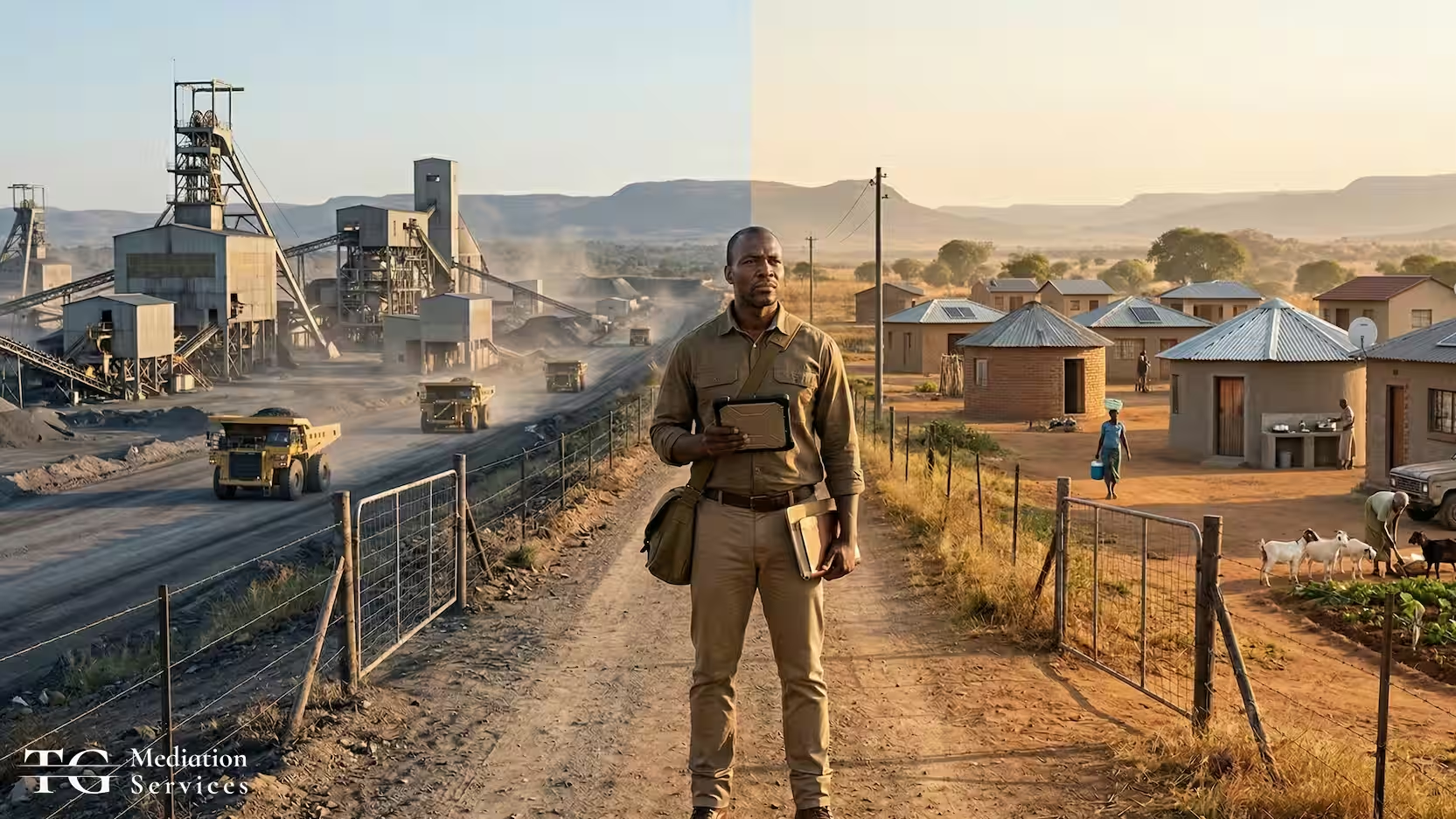
In a vehicle, a shock absorber sits between the wheels and the chassis, converting the violent force of every pothole into something the passengers can survive. Community relations practitioners perform the same function, except they absorb human emotions rather than physical force.
The absorption happens in two directions simultaneously.
From the Community Side
Communities cannot direct their frustration at a corporate logo. They need a human face. When a resettlement is botched, when compensation is delayed, when a promise is broken, the community relations officer is the person who receives the anger. In my experience resolving thousands of community claims in southern Africa, I found that communities do not differentiate between the person delivering the news and the institution that made the decision. You become the company. Its failures become your personal betrayal.
From the Corporate Side
Executives view community issues as delays. Budget meetings label community programmes “discretionary.” Decisions are made without consulting the team that will have to deliver the consequences. A scenario I have seen repeatedly: you spend three months building trust around a compensation framework, then learn in a corridor conversation that finance has changed the terms. Nobody thought to tell you before your next community meeting.
As I explored in how mediators can help mining companies avoid local escalations, the presence of a skilled intermediary can prevent conflicts that cost millions. But the intermediary pays a personal price that the cost-benefit analysis never captures.
Zandvliet and Anderson (2009) documented this dynamic extensively in Getting It Right, noting that companies routinely underestimate the complexity of the community relations role while simultaneously depending on it for operational continuity. The practitioner is structurally essential but institutionally invisible.
Three Types of Invisible Weight: Naming What the Industry Ignores
The psychological toll on social performance practitioners is not ordinary workplace stress. It is specific, cumulative, and, in its most serious forms, clinically significant. Naming these three categories is the first step toward addressing them.
1. Direct Trauma
Physical threats are more common in community relations work than the industry acknowledges. Rocks through windows during consultation sessions. Being surrounded by hostile groups. Being detained during community blockades, uncertain of the outcome. I have experienced each of these, and colleagues across Africa, Latin America, and Southeast Asia have shared similar accounts.
What these incidents have in common is what happens afterwards: almost nothing. Companies provide security briefings, occasionally counselling referrals, and the fundamental expectation that the practitioner will return to work immediately. As I discussed in resolving community protests on mining sites, frontline practitioners who manage crisis moments are rarely given the support they need once the crisis passes.
2. Vicarious Trauma
No single story breaks you. But over years, the accumulated grief of displaced families, broken promises, relocated graves, and destroyed livelihoods builds up like sediment in a riverbed, eventually restricting your capacity for joy. You begin to see suffering even in moments of success. You lose the ability to celebrate a completed resettlement because you remember every face of every person who lost something in the process.
3. Moral Injury
This is the wound caused by being the instrument of delivery for decisions you did not make and may disagree with. Your face, your voice, your relationships are used to communicate outcomes that feel like betrayals. A colleague once told me: “I went home feeling dirty. Not because I had made the decision, but because my presence had been used to make it feel acceptable.”
“If you have ever driven home from a community meeting and found yourself crying in the car, you are not weak. You are responding normally to an abnormally difficult situation.”
The Human Shock Absorber
The Translator’s Dilemma: Trusted by Neither Side
A translator must be fluent in two languages and two cultures, understanding both sides well enough to convey meaning accurately. But fluency in both worlds makes you suspect to each.
“On Monday, I was in a community meeting where a respected elder looked at me and said, ‘You work for them. You are not one of us. Why should we trust you?’ On Friday, I was in a management meeting where a senior executive said, ‘You spend too much time with those people. Whose side are you on?’ Both of them were right, in a sense.”
The Human Shock Absorber
Communities rarely see the internal battles fought on their behalf: the budget meetings where you argued against cutting the vocational training programme, the emails warning procurement about local hiring commitments, the risk assessments explaining why a proposed shortcut would generate a blockade. All the community sees is the final answer, delivered by the one person they thought was on their side.
This tension is not a flaw in the role. It is the role. As I explored in understanding and mediating community resistance to change in mining projects, communities resist not because they are irrational but because the process excluded them. The practitioner who recognises this but cannot change it carries a particular kind of weight.
A Practical Framework for Sustainable Practice
Acknowledging the toll is necessary but insufficient. Practitioners need actionable strategies. Based on fifteen years of field experience and the frameworks developed in The Human Shock Absorber, here are five practices that make the difference between surviving this work and being consumed by it.
1. Draw Your Non-Negotiable Lines Before You Need Them
Identify, in advance, the situations where you will say no regardless of professional consequences. Active deception of communities, participation in the desecration of sacred sites, covering up physical harm. Write them down. Revisit them quarterly. When the pressure comes, and it will, you need the decision already made.
2. Build a Peer Network Outside Your Organisation
The loneliest aspect of this work is that nobody inside your company fully understands what you experience. Managers have not sat in a hostile community meeting. HR does not have a framework for moral injury. Find practitioners from other companies, other projects, other countries. The International Association for Public Participation (IAP2) and networks like the Community Relations Professionals group on LinkedIn are starting points. What matters is having someone who understands the weight without needing it explained.
3. Shift from Saviour to Witness
The saviour narrative, the belief that you will rescue the community, leads to paternalism and despair. The witness narrative is more sustainable. A witness values presence over metrics: attending a funeral, sitting in silence with a grieving family, showing that a community’s pain is seen. These moments do not appear in reports, but they are the foundation of trust. As I discussed in mediation as a strategic tool for social license to operate, the companies that earn durable community support are the ones whose practitioners show up with genuine respect, not just engagement plans.
4. Insist on Institutional Support
Advocate within your organisation for three structural changes: inclusion of community relations in decision-making before announcements (not after), access to professional psychological support tailored to field-based work (not generic employee assistance programmes), and formal debriefing protocols after critical incidents. These are not luxuries. They are risk management measures for the company’s most exposed asset: you.
5. Cultivate the Core Qualities That Sustain You
The practitioners who thrive over decades share specific qualities: emotional intelligence that allows them to hold others’ pain without being consumed by it, cultural humility that resists the temptation to impose solutions, and the patience to accept incremental progress. I explored these in depth in born or trained: the 7 core qualities of exceptional mediators. These are not personality traits you either have or lack. They are skills that can be developed, and their development is the most important investment you can make in your career longevity.
What Keeps Us Going: Finding Meaning in the Middle
“If you have ever questioned whether you are part of the problem, whether your work makes things better or just makes harm more palatable, you are not being disloyal. You are engaging honestly with the complexity of your position.”
The Human Shock Absorber
Success in this field is almost never a clean victory. It is a series of difficult trade-offs. You may never achieve a perfect outcome. But your presence can ensure that a community maintains its dignity in the face of change. That a resettlement happens with consultation rather than coercion. That a grievance mechanism resolves complaints rather than just recording them, something I explored in you have a grievance mechanism, but do you have mediation?
The person you become in this work matters as much as the outcomes you achieve. Whether you choose to stay in the gap or eventually move to a different path, make it a choice, not a drift.
“There are thousands of us around the world. We work in mining, oil and gas, renewable energy, infrastructure, and large-scale agriculture. We operate on every continent and work in dozens of languages. Yet there is almost no literature that speaks to the human experience of doing this work. This isolation is dangerous.”
The Human Shock Absorber
This article, and the book it draws from, exist to break that isolation. A blown shock absorber protects no one. Taking care of yourself is not a luxury. It is a professional necessity.
Download the free chapter of The Human Shock Absorber and see whether the story feels familiar. If you manage a social performance team and want to build resilience into your operation, schedule a consultation to discuss mediation training and practitioner support frameworks.
Sources
- International Finance Corporation (2012). Performance Standards on Environmental and Social Sustainability. World Bank Group.
- Kemp, D. & Owen, J. (2013). “Community Relations in Mining: Core to Business but Not Core Business.” Resources Policy, 38(4), 523-531.
- Zandvliet, L. & Anderson, M. (2009). Getting It Right: Making Corporate-Community Relations Work. Greenleaf Publishing.