Thomas Gaultier
Menu

Serious games

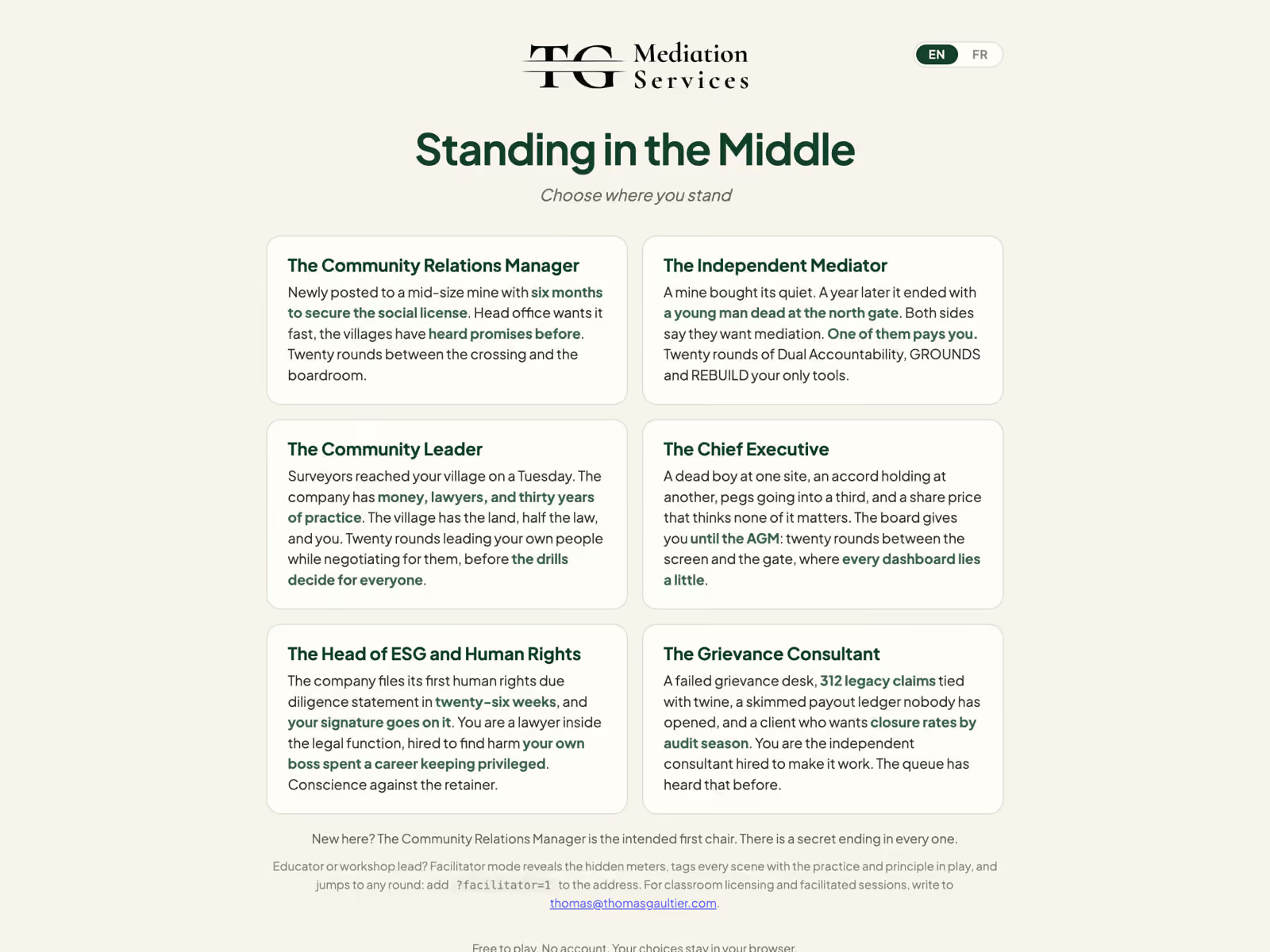
Two games about deciding when the power is all on one side

You can tell a room that one side of a company-community negotiation holds the money, the information and the clock. Nobody disagrees, and nothing changes on Monday. Both of these hand someone a chair instead. Both can be played alone and free, and both work with a group. They are separate games with separate projects, and neither is a smaller version of the other.

Choosing

They answer different questions

Alone, both do the same basic thing: they put you in a chair and make you live with a decision. The difference is what happens after that. Standing in the Middle is free to play: all six chairs, as many times as you like, and it stays that way. The Accord Game is free to try: one solo game, which is enough to know whether you want the room to have it.

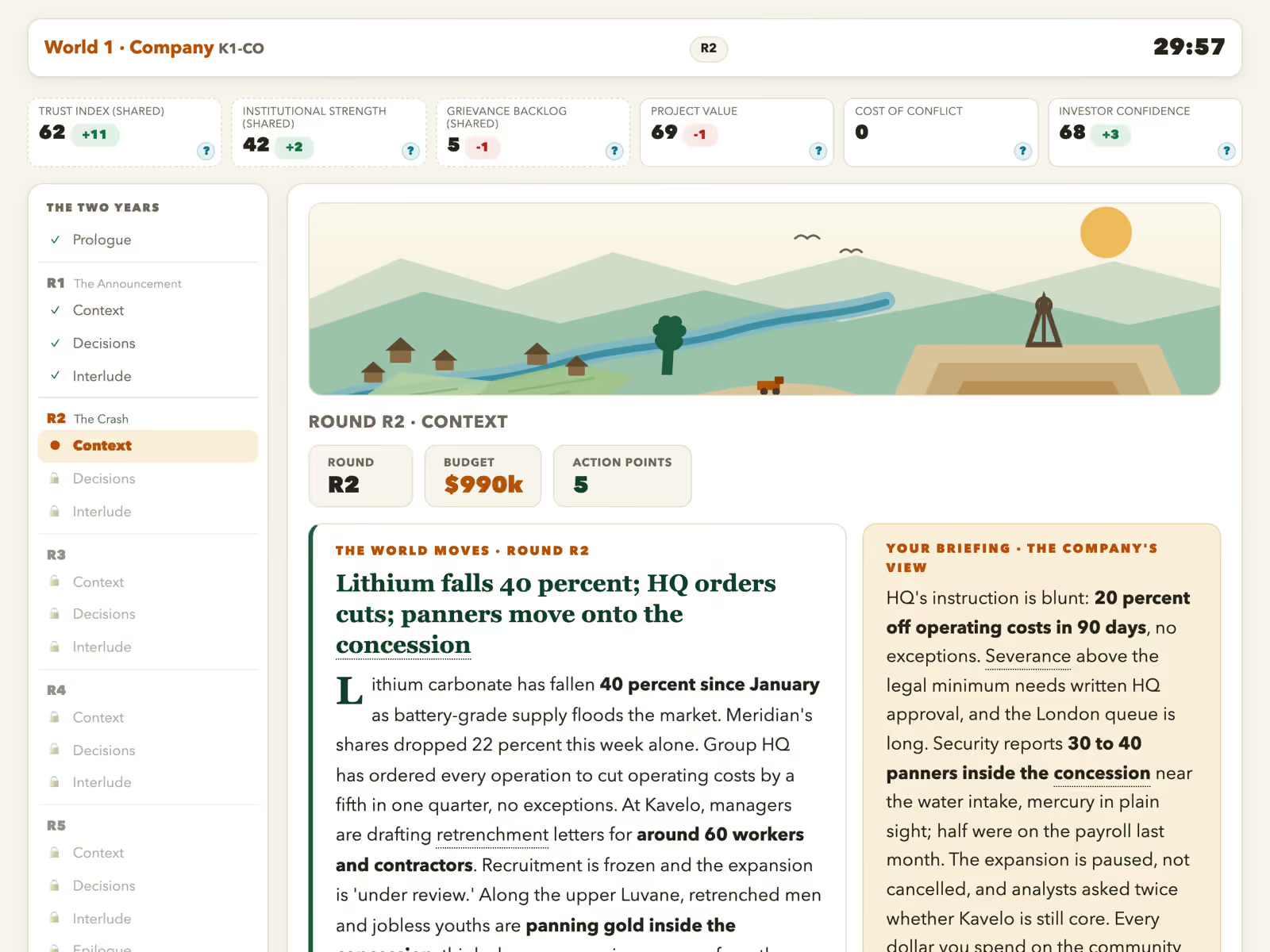
With a group they diverge, and that is where the choice actually sits. The Accord Game runs company tables and community tables through the same world in parallel, then reports on what happened: decision and behavioral dynamics per table and per world, laid over what each side believed was going on at the time. It is built for rooms that want evidence of how they decide under pressure, not just the experience of having decided.

Standing in the Middle asks less of the room and something different of the people in it. Everyone takes a different seat on the same story, plays it through, and then the group talks: what you chose, what it cost, and what looked obvious from your chair and impossible from the one next to you. No facilitator, no slot in a program, no scheduling.

Run one before the other and they compound. People who arrive at a facilitated session having already sat in a chair arrive knowing that the other one has reasons, which is most of what the first hour usually has to establish.

Straight to it

Free to play. Standing in the Middle, all of it, on your own or across a group, with nothing to book and nothing to pay.

Free to try. The Accord Game gives you one solo game. The facilitated version, with the parallel tables and the analytics, is the paid product.

Not sure which one your room needs?

Tell me who will be in it, how long you have, and what you want them arguing about afterwards. Sometimes the answer is the free one, sent round a week early, and nothing else.

Every first conversation is confidential.

Cover of Legacy Grievances and Historical Claims by Thomas Gaultier

New release, and the last one

Legacy Grievances and Historical Claims

The tenth and final volume completes the library. It is the field guide to harm that outlived the operation: transitional justice adapted to corporate disputes, successor liability when the asset changes hands, and the pathway behind more than two thousand resolved claims.