Thomas Gaultier
Menu

Free tools

Find out where you actually stand

These come out of the same frameworks I use on mandate. They will not replace an assessment, but they will tell you within ten minutes which part of your process is going to fail first, which is usually enough to start a useful argument internally.

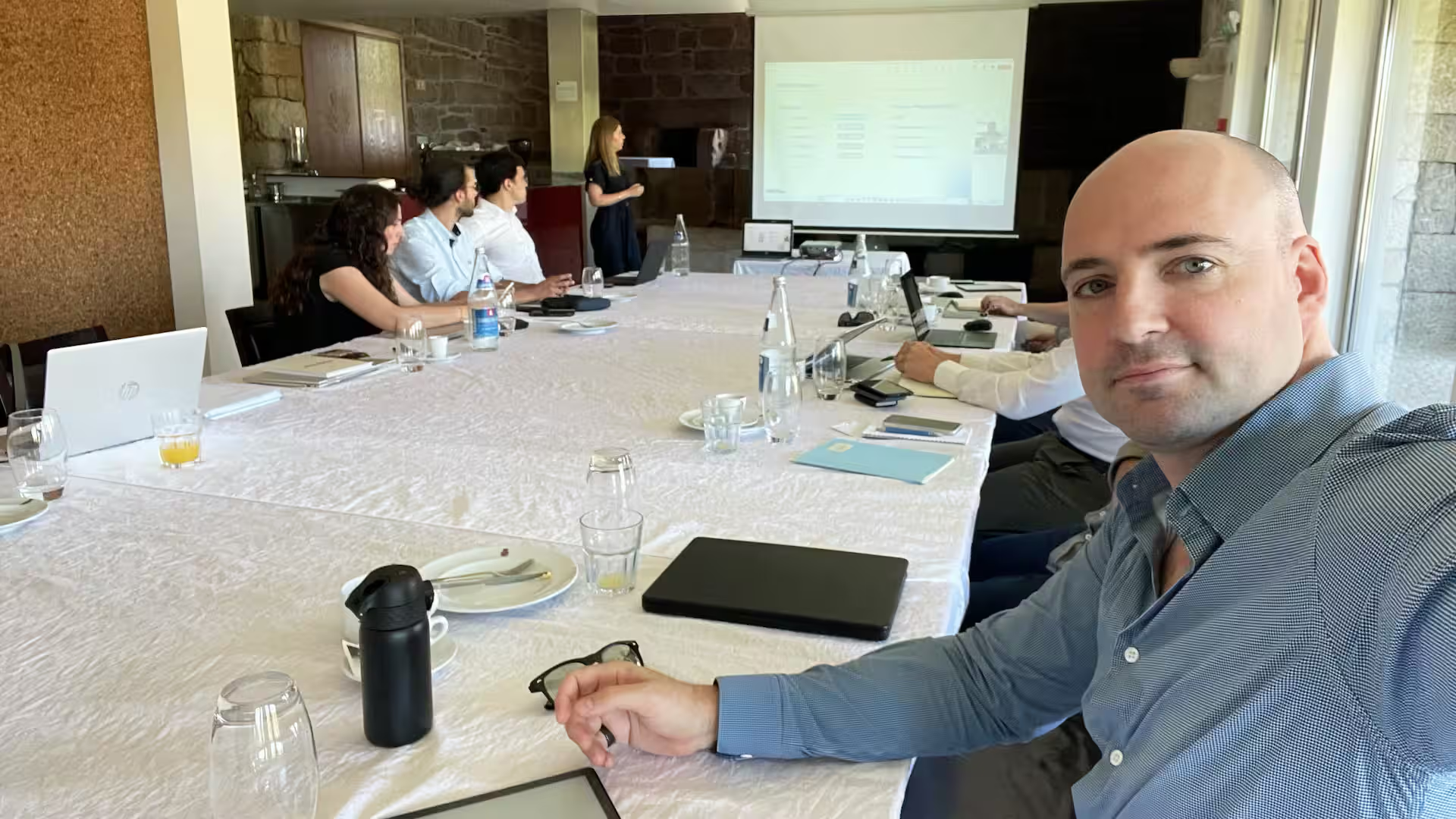
Thomas Gaultier at a working session table with a project team
Each of these started as a worksheet I was using in rooms like this one.

For operators and social performance teams

Grievance mechanism diagnostic

Score your operational grievance mechanism against the effectiveness criteria in the UN Guiding Principles.

Most mechanisms pass on paper and fail in the village. This walks through accessibility, predictability, transparency, rights compatibility and the rest, and tells you which of them your mechanism would actually survive being tested on.

For ESG, legal and compliance leads

Human rights due diligence diagnostic

Check your due diligence process against what the CSDDD and comparable regimes now expect to see.

Identification, prevention, mitigation, tracking and communication, assessed as an operating process rather than a policy statement. It ends with the gaps a regulator or a lender would find first.

For communities and their advisors

Community readiness diagnostic

Find out how prepared your community is to negotiate with a company that has been preparing for years.

Organization, mandate, information, advisors, leverage and unity. It is built from the same material as When the Mine Arrives, and it is written to be used before the next meeting rather than after it.

Updated every Monday

Community tension map

A weekly read on where company-community tension is rising across mining and oil and gas, scored by signal strength.

Compiled from public reporting and refreshed every Monday. It is a prompt to look into something, not a finding about a company.

How to read it honestly

A high score means several independent sources are reporting friction around a project. It does not mean the company has done something wrong, and a low score does not mean nothing is happening. Plenty of serious conflict never reaches the press at all, which is its own kind of signal.

Named entries are reviewed before publication rather than added automatically.

The library

The checklists behind the articles

Separate from the diagnostics above: every checklist, template and assessment tool built alongside the writing, in one searchable place. Land access, FPIC, closure, community benefit agreements, grievance registers, stakeholder mapping. Pick one and it arrives by email.

Search the library

What happens to your answers

Your progress is saved in your own browser so you can finish later. Nothing is sent anywhere unless you ask for the report by email, and each tool has a control to clear what it has stored.

Privacy and storage

Play it out instead

Standing in the Middle puts you in one of six roles on the same project and makes you live with the consequences. Free, in English and French.

Play the game

Put a number on it

The Social Risk Quantifier estimates what social conflict is costing a specific project. In development, launching from getsocialaccord.com.

Join the launch list

Ran a diagnostic and did not like the result?

That is the useful outcome. Send me the score and the two lowest sections, and I will tell you whether it is a design problem, a capability problem, or a dispute that needs handling before anything else can be fixed.

Every first conversation is confidential.

Cover of Legacy Grievances and Historical Claims by Thomas Gaultier

New release, and the last one

Legacy Grievances and Historical Claims

The tenth and final volume completes the library. It is the field guide to harm that outlived the operation: transitional justice adapted to corporate disputes, successor liability when the asset changes hands, and the pathway behind more than two thousand resolved claims.