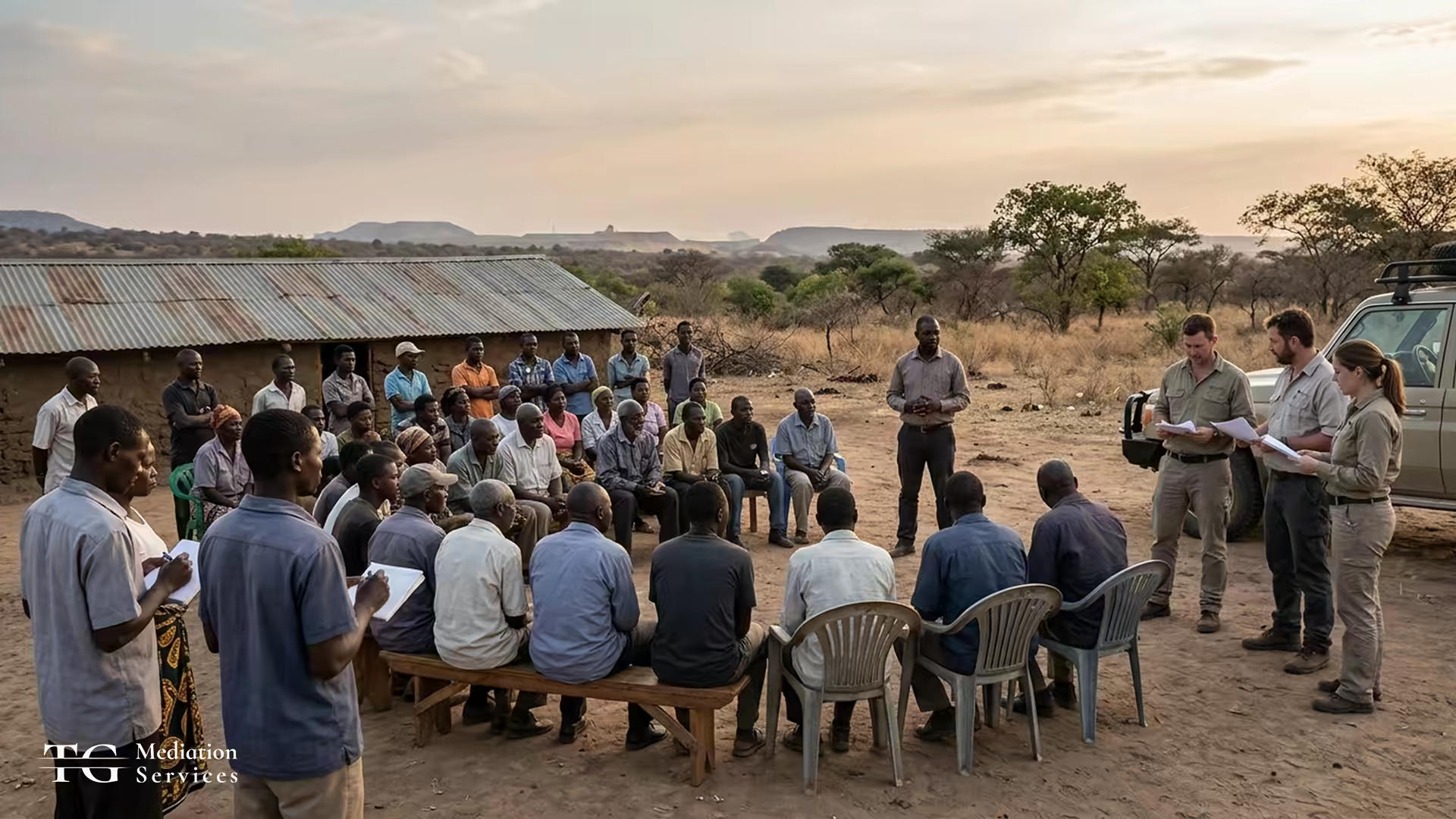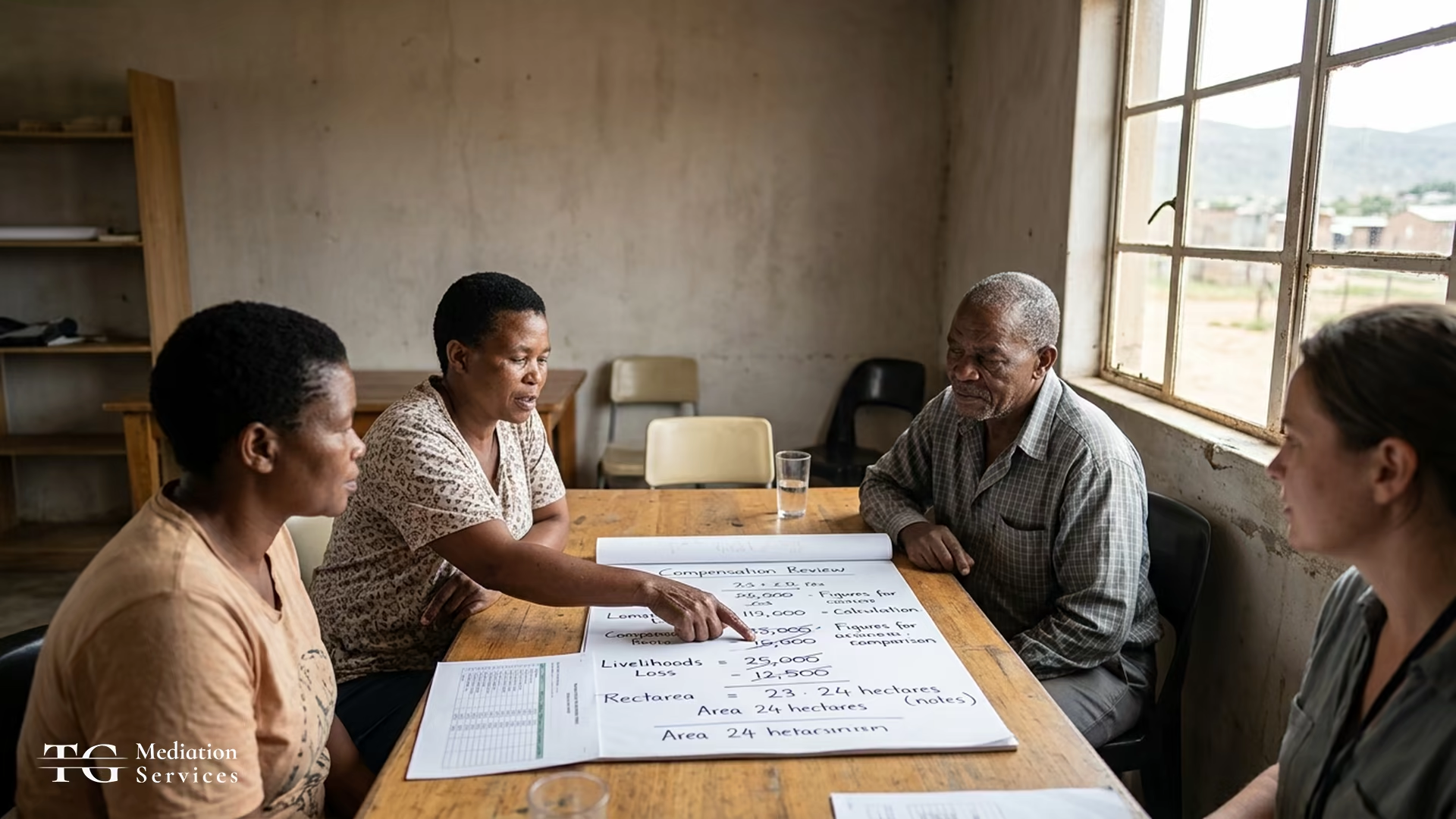
A water dispute in a copper-mining district taught me how fast a wrong cultural reading can sink a mediation. I had read the community’s demand as a price negotiation. The company had offered boreholes and trucked water. The community kept refusing, and I assumed the number was simply too low. For two sessions I pushed both sides toward a figure. Neither moved. I was managing the wrong conflict.
What saved the process was an offhand remark from an elder during a break, away from the table. The contested water was tied to an ancestor whose protection the community linked to that specific source. The fight was never about volume or price. It was about a relationship the company did not know it had entered. I had almost mediated the parties into a deeper rupture. That near-miss is the reason I now treat cultural reading as the first technical task of any African mining mediation, not the soft preface to it.
The reading you get wrong is usually about authority, time, or land
Western mediation training travels poorly into rural African mining settings, and it does so in predictable ways. The training presents itself as culturally neutral. It is not. It carries assumptions that can quietly insult the people you most need to bring along.
The first assumption is that mediation is a technical process separable from relationship. You are taught to keep emotional distance and steer parties toward objective problem-solving. In many of the communities I have worked with, that distance reads as indifference. People conclude you are not invested in repairing what the conflict tore. So they do not extend you their trust. Trust, not technique, is what carries a mediated agreement. The empirical work of Moffat and Zhang on the paths to social licence to operate supports the point. Procedural fairness and the quality of contact predict trust far more than the substance of any single offer. That finding should change how you sequence a mediation. You earn standing through how you conduct the process long before any number reaches the table.
The second assumption is that direct dialogue between parties is always progress. Western practice prizes getting people to speak frankly to each other. In settings organised by seniority, a younger person openly contesting an elder, or a woman publicly contradicting a man, may be heard not as candour but as disrespect. When you push for that exchange anyway, you are not opening communication. You are forcing people to choose between your process and their standing. The work on cross-cultural communication names this plainly. Hofstede’s power distance dimension describes how much a setting accepts unequal authority. Edward Hall’s high-context cultures convey meaning through tone, relationship, and setting rather than blunt words. Meaning often travels indirectly, through who speaks, in what order, and where. None of this makes a community traditional or fixed. Authority within any community is contested and changing. Your reading has to stay current rather than rely on a textbook map. Treat these frameworks as questions to ask, not labels to apply.
The third assumption is the most expensive. Western mediation treats an agreement as time-bound and final. You sign, you leave. Many communities I have worked with treat the same signature as the opening of a long relationship with continuing obligations on both sides. The company reads the document as a closed list. The community reads it as a standing commitment. The mediator who leaves at signature never sees the gap, then hears months later that a dispute has reopened over language everyone thought was clear.
Protocols that hold up in the field
The corrections are concrete and learnable. They are not sensitivity. They are process design.
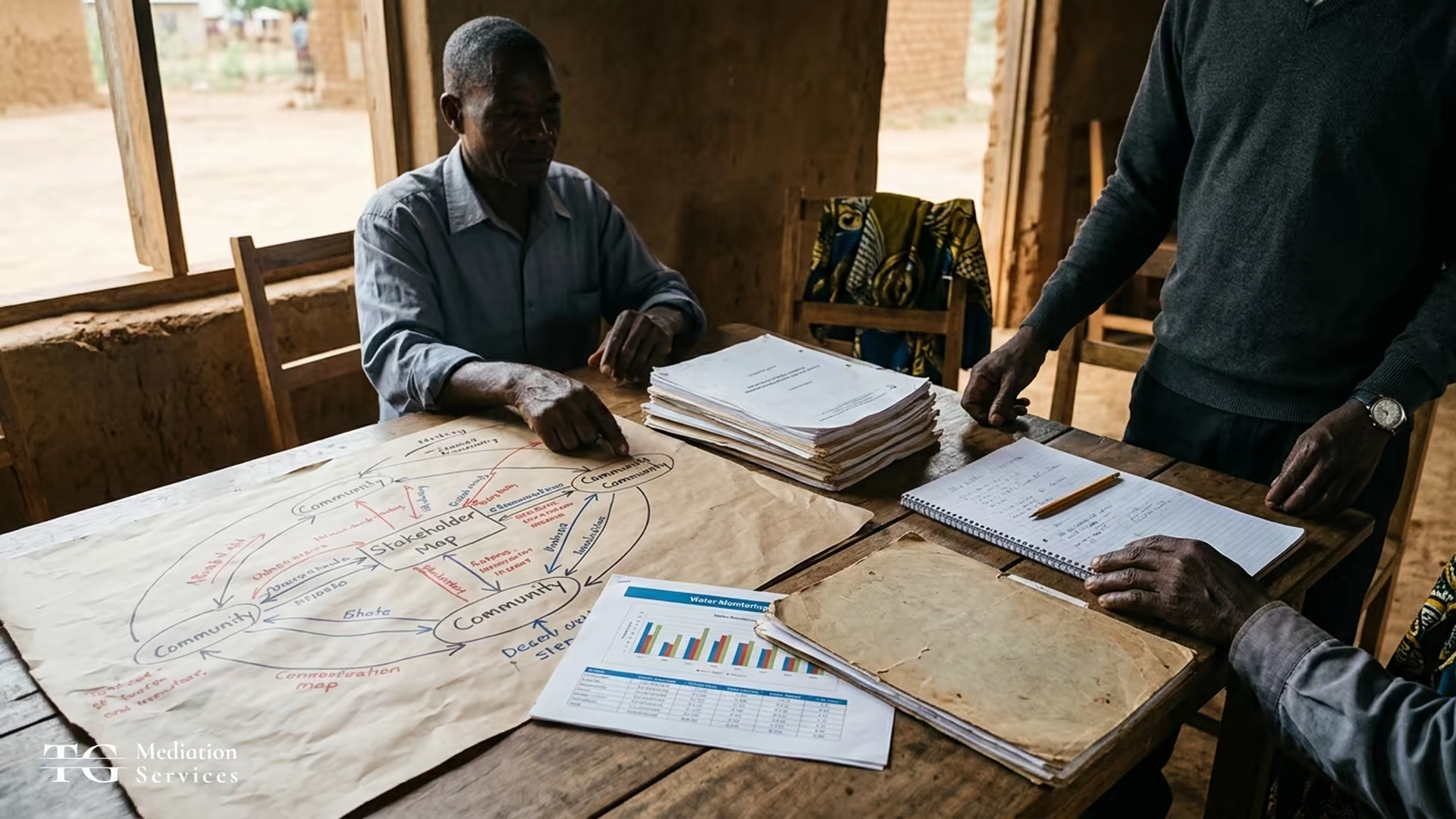
Work through the authority structures that already exist. Treating every voice as interchangeable in an open negotiation tends to sideline the people who actually decide. Map who holds authority over land, who speaks for the community externally, and whose endorsement makes an agreement legitimate. That structure differs sharply from place to place, so verify it locally rather than assume it. Meet those groups separately before any joint session, so each arrives able to represent its own interests. The community will reach its decision through its own channels regardless of the room you set up. Build the room around those channels.
Introduce indirect communication where direct exchange carries a cost. Pushing a mining company representative and a community into face-to-face bargaining can harden an adversarial frame. A standing committee of community representatives, receiving the company’s positions and formulating responses internally, often moves faster and protects relationships. A trusted intermediary, a respected civil society figure or a religious leader known to both sides, can carry messages and soften phrasing that would otherwise offend. This is close to shuttle diplomacy, and it outperforms forced directness wherever confrontation is costly. The same craft instincts I describe in the core qualities that separate strong mediators from weak ones apply here, recalibrated for the setting.
Ground the agreement in continuing obligation, not a one-time exchange. A contract that lists payments, jobs, and environmental commitments as discrete items reads to many communities as transactional, which they experience as the company holding the relationship at arm’s length. Build a framework for ongoing dialogue instead. A joint committee meeting on a fixed schedule signals that the company sees the relationship as live. Pair it with an explicit mechanism to revisit terms when circumstances shift. This is also where emotion and fact have to be held together rather than separated. That discipline is the one I set out in reading the difference between facts and emotions in mining disputes. The spiritual or relational stake is the fact you most need to surface, not a feeling to manage away.
A scenario that shows the pattern
Consider a scenario drawn from patterns across copper-district disputes. A mid-tier operator faces escalating conflict with a community downstream of a tailings impoundment. Seepage is degrading a seasonal water source the community uses for drinking and irrigation, though below regulatory triggers. The community demands an alternative disposal method. The company, constrained by capital and engineering, offers boreholes and trucked supply. The community refuses. The company raises the money. The community grows firmer. Eight months pass before anyone brings in a mediator.
The mediator’s first move is not to negotiate. It is to understand. Quiet meetings with community figures surface what the offers missed. The water source is bound to an ancestor whose protection the community links to that site. Boreholes carry no such connection. For the company the issue is water quality. For the community it is spiritual integrity. Once that is on the table, the shape of a settlement changes. The parties commission an elder to prepare a new collection site serving the same function. The company funds its preparation and upkeep. The company also adjusts tailings management to cut seepage. Community elders and company technicians monitor water quality together. Each of these moves answers a stake the original cash offer never touched.
The agreement also establishes a permanent joint committee meeting monthly. When drought later reduces the new source, the community treats it as a shared problem rather than a company failure. The committee meets, agrees on temporary trucking and site modifications, and the arrangement holds. It holds because it was built around maintaining a relationship, not closing a transaction.
Four dimensions to read before you sit down
Across African mining settings, four dimensions of difference shape how a community approaches conflict and agreement. Read each one for the specific community in front of you, never by region or ethnicity.
Authority and hierarchy. Some communities decide through broad consensus across stakeholder groups. Others concentrate decisions in a paramount figure who consults but does not seek consensus. Get this backward and the agreement is illegitimate. A leader who was not genuinely consulted will not enforce it. Members who feel their own authority was bypassed will not comply.
Time orientation. Some communities weigh precedent heavily, asking how relationships of this kind were handled before. Others focus on present conditions or on long-term security. Most blend all three in different proportions. Argue future sustainability to a community asking whether you have honoured past commitments, and you talk past the people you need.
The nature of agreement. Some treat a deal as binding regardless of changed conditions. Others treat it as binding only while the triggering circumstances last. A water commitment tied to contamination may be read as ending when the contamination ends, or as permanent. Surface that question and settle it explicitly before signing, because it reflects a real difference in what a promise means.
Land and territory. Where land is held as inalienable, framing the deal as purchase or lease is incoherent. A community cannot sell what it holds in trust for ancestors and descendants. Reframe toward use rights, defined duration, and restoration. International practice already accommodates this. IFC Performance Standard 5 extends to customary and informal land use rights, not only formal title, and the African Mining Vision commits member states to free, prior and informed consent. These dynamics also surface as rights questions, which I take up in human rights mediation in mining zones.
Five practices that carry the reading into the room
Reading the dimensions is preparation. These five practices turn the reading into a process that holds.
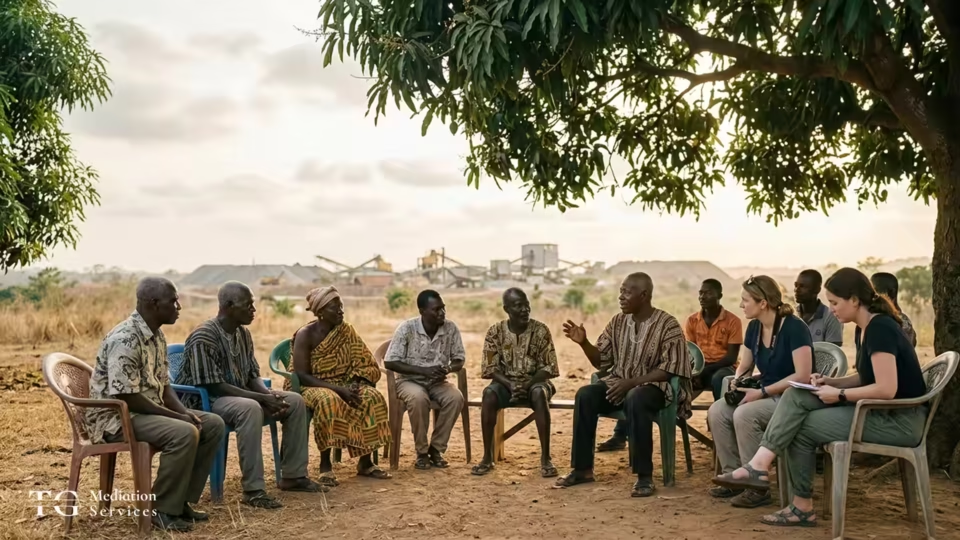
Invest in deep understanding before any formal session. Sit informally with community members. Learn how decisions are actually made and what the conflict means in the community’s own terms. This is not lost time. It is the preparation that prevents the resistance and misreading that derail later sessions. My own near-failure traced directly to skipping it.
Use spaces and formats the community recognises. A corporate boardroom or a government office tilts power toward the company before anyone speaks. Meeting in a community space, on the community’s terms for timing and hospitality, signals respect. Some of the most important exchanges happen informally, in small groups, outside the formal structure entirely.
Work through informal leadership as well as formal titles. The official chief or government officer is not always the most influential voice. Respected elders, religious figures, successful farmers, and community organisers often carry more weight. Map the real influence structure and engage across it, not only at the top.
Check that the agreement reflects the wider community’s understanding. A signature from leaders does not mean the community grasps or supports the terms. Build a process for the agreement to be explained and discussed broadly, with room to raise concerns and revise before it is final. This is slow. It prevents the discovery, years later, that consent was never genuine.
Build standing structures for relationship maintenance. In these settings the process matters less than what it leaves behind. Joint monitoring committees, regular dialogue forums, and clear renegotiation triggers are what sustain an agreement through changed conditions. Design them in from the start rather than bolting them on at the end.
Ask the community, do not assume the culture
The companion tool is the Cross-Cultural Readiness Checklist for African Mining Mediation, a checklist of roughly 16 checkpoints across five sections. It opens with “Authority and Decision-Making”, where you establish whether this specific community decides by consensus, through a paramount authority, or through its elders, and the later sections put the same discipline to how it reads time, how it understands an agreement, and how it holds land. Every prompt is written as a question to ask of the community in front of you, never a label to pin on by ethnicity or region. Score each item In place, Partial, or Absent, and where Partial and Absent answers cluster, you have found the exact readings you still need to confirm before you convene. Working the list turns the near-miss I opened with, mistaking a spiritual claim for a price, into a question you ask on purpose. Download the Cross-Cultural Readiness Checklist for African Mining Mediation.
Why mediation, and why a structured one
The default alternatives are worse. Litigation forces relational, multi-generational claims into a transactional frame the community does not recognise. It also leaves no structure standing once the judgment lands. Direct company-community bargaining, without a skilled neutral, tends to harden into an adversarial posture. That posture drives cost and delay. Franks and colleagues documented the mechanism, showing how community conflict converts environmental and social risk into business cost. An independent third party who reads authority, time, and land correctly can hold both sides in a process. That holding lasts long enough for a durable settlement to form. It is the move from confrontation to joint problem-solving I describe in shifting mining conflict from adversarial to collaborative.
Reading culture well is necessary but not sufficient. You also need a method that turns the reading into an agreement that survives drought, leadership change, and shifting mine plans. That is the work of the Social Accord Architecture. The Social Accord Architecture, or SAA, treats an agreement as a living relationship to be governed, not a document to be filed. It builds in the joint structures, the renegotiation triggers, and the dual accountability that cross-cultural settings demand. The cultural reading you got right at the table is then carried into how the relationship is run for years afterward. That continuity is what separates a settlement that holds from one that quietly reopens.
The one thing to do differently
Before your next African mining mediation, spend real time in informal understanding before you convene a single formal session. Sit with community members. Learn how decisions are actually made and who carries weight beyond the official titles. Find out what the conflict means to people in their own terms, not in the categories your training supplied. My own near-failure came from skipping this and assuming a water fight was a price fight. The preparation is not a courtesy. It is the part of the work that decides whether everything after it holds. If you want to talk through a specific cross-cultural mediation, reach me at thomas@thomasgaultier.com.