Pick the format on purpose
The format of a mediation is a decision that shapes the outcome. Treat it that way. After mining operations moved dispute resolution online during the pandemic, many companies kept the habit because it was cheaper and faster. They learned something useful and something costly at the same time. Online mediation resolves some disputes well. It quietly fails others, and it fails them in ways that do not show up until the agreement collapses a year later.
The question is no longer whether online mediation works. It works for the right dispute, with the right parties, at the right stage. The real question is which conflicts belong online, which demand physical presence, and which call for a hybrid sequence that uses both. The criteria that follow come from field practice across remote mining contexts where both formats have been tested under pressure. The wrong choice is rarely obvious in the moment. It becomes obvious only when trust never forms and the settlement does not hold.
Where online mediation genuinely earns its place
Online mediation is not a compromise. For certain disputes it outperforms the in-person alternative. The advantages are concrete, and understanding them keeps you from dismissing a format that often serves communities better than a long, costly journey to a distant city.
Start with access. Mining affects remote communities where travel to a session can swallow days. A community leader may need eight hours by vehicle to reach a town with a meeting room. An external mediator may cross several time zones to attend in person. Online sessions remove that friction. The mediator joins from one country, the company representative from another, and the community leader from the affected area, all present at once. This matters most in early-stage disputes, when parties are still testing whether mediation deserves their time at all.
Online formats also let you bring in expertise without dragging everyone to one room. Mining disputes often turn on technical questions. A water quality conflict may need a hydrogeologist. A contamination dispute may need an environmental health specialist. In-person sessions force every participant into the same place for the same duration, which is wasteful when expert input is brief and episodic. An expert can join one online session, present findings, answer questions, and leave. The technical record improves because real specialists address the science instead of a generalist mediator paraphrasing it.
Documentation is the third advantage. Online platforms record, transcribe, and log by default. Statements, agreed facts, and concessions sit in a verifiable record. In-person sessions require someone to take notes and the parties to confirm those notes are accurate. That extra step invites later disagreement about what was actually decided. Many mining disputes erupt precisely because two parties remember an old commitment differently. A clean record reduces that risk.
Scheduling rounds out the case. Mining companies with international ownership scatter decision-makers across continents. An executive in one region must approve community agreements. An advisory organization may sit in another. Online formats allow flexible, sometimes asynchronous, coordination that no single physical location can match. The International Mediation Institute now maintains dedicated competency guidance for online practice, a sign that the discipline treats virtual work as a real skill rather than an emergency substitute.
Where online mediation fails in mining contexts
Be just as honest about the limits. These are not technical glitches. They are human failures rooted in the nature of mining disputes and the role physical presence plays in rebuilding trust. Field experience shows the pattern is systematic, not occasional.
Trust deficits come first. Mining disputes usually surface after the relationship has already broken. The community doubts the company’s good faith. The company is defensive about damage or weak consultation. In that climate, presence carries information. You read body language, watch how someone receives a hard point, and offer small gestures of respect that a screen flattens. Work on online dispute resolution points to the same reality. Katsh and Rabinovich-Einy’s study of how technology reshapes dispute resolution found that when distrust runs deep, the cues that build sincerity are harder to transmit through video. Rebuilding a broken relationship through a screen is slower and less reliable than doing it in a room. That tension between sincerity and suspicion sits at the heart of every hard case. It is why the way mediators handle facts and emotions in mining disputes decides whether a process recovers or stalls.
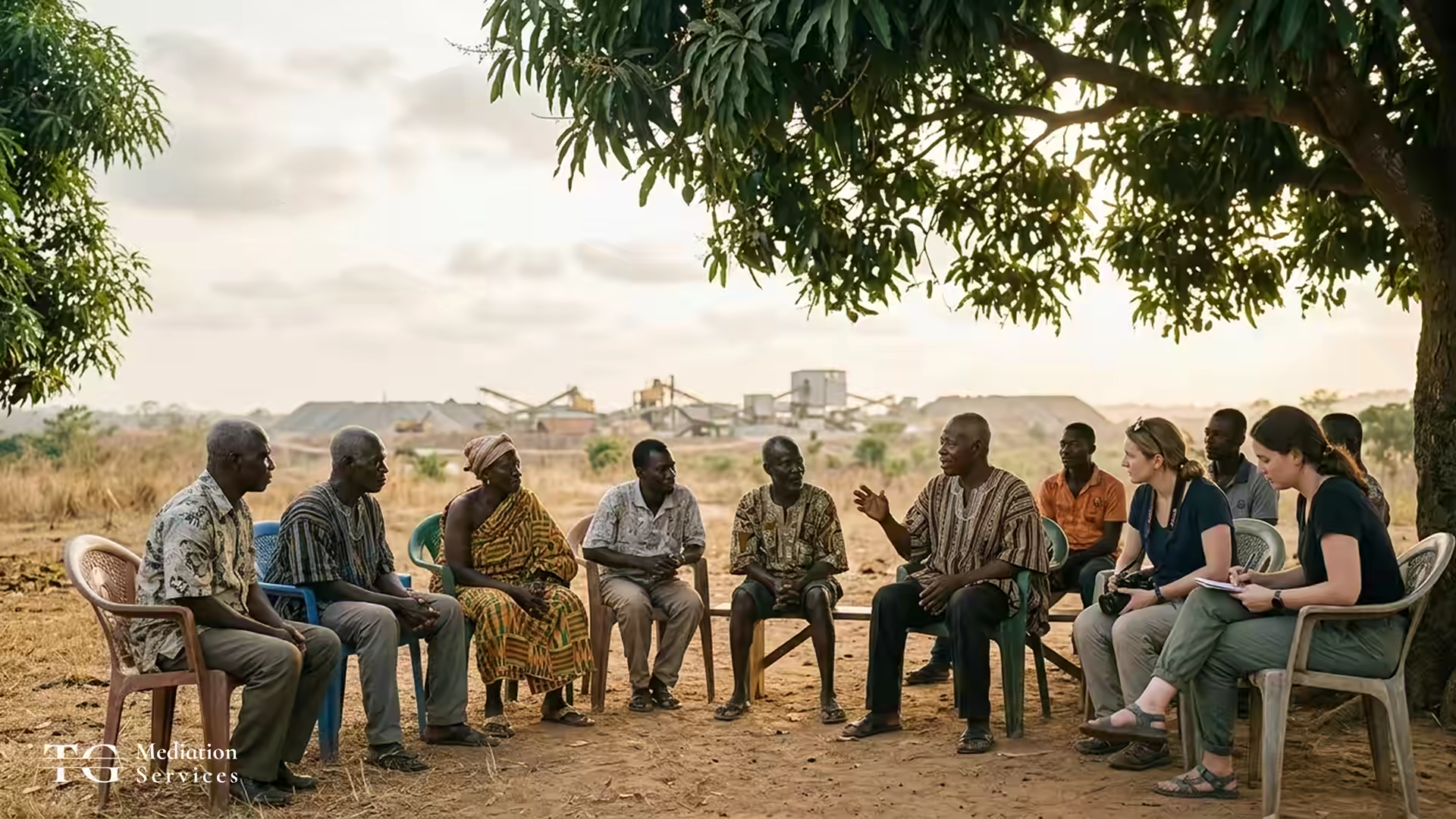
Cultural protocol is the second limit. Many affected communities make decisions through traditional processes. Some require elders to gather in a specific arrangement that honors authority. Some involve consultation at a place that holds meaning. Online formats can flex on small things. They cannot reproduce a process that depends on physical gathering. Force such a process online and one of two things happens. The community bends its protocol to fit the software, which hollows out its legitimacy. Or it runs a parallel decision the mediation never sees, which produces an agreement the community later disowns.
Relationship-building is the third. Mining disputes are not one-off transactions. The company and the community stay in relationship for decades. The strength of that bond depends on what gets built during the dispute. In-person work lets people recognize each other as more than a position on a screen. Online sessions stay episodic and narrow. When the calls end, there is no relationship left to carry compliance or absorb the next dispute, and one always arrives. Communities that settle in person tend to keep agreements even when conditions shift. Communities that settle only online often describe the result as an imposed settlement rather than an accord they own. Moving a stuck conflict toward that ownership is the work described in the shift from adversarial posturing to collaborative problem-solving. It rarely completes itself on video alone.
Power, bandwidth, and who gets left out
Online mediation hides power. A multinational arrives with lawyers, engineers, and consultants. A rural community has little independent expertise. In a room, you see the imbalance. You notice community members shrinking before a wall of company staff, and you can rebalance the table, ask the company to reduce its presence, or change the seating. On screen, the tiles look equal while the reality is not. One party sits in a conference suite with professional audio. The other sits alone in the affected area on a weak connection. The technical gap maps onto the power gap and deepens it, invisibly. Managing that imbalance is a craft skill, and it is one of the core qualities that separate exceptional mediators from competent ones.
Access is not evenly distributed either. The advantage of cost and reach applies only where digital infrastructure actually exists. Many mining-affected regions lack consistent electricity, let alone stable bandwidth. A community may have a signal that drops every few minutes, which turns a serious negotiation into a series of frozen frames and repeated questions.
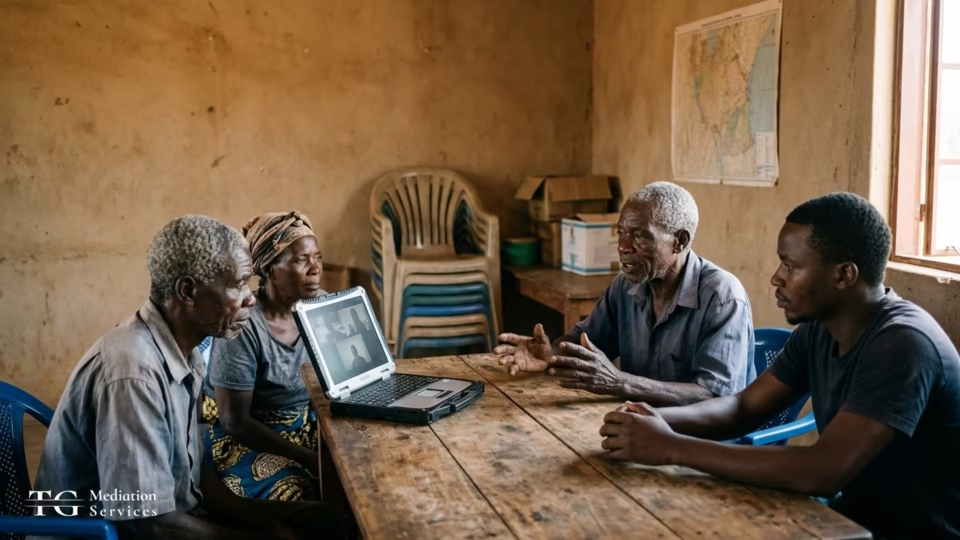
Digital comfort is the quieter exclusion. Online sessions ask participants to manage interfaces, microphones, cameras, and settings. Younger participants often adapt fast. Elders who hold the real decision-making authority may struggle, and the struggle either pushes them out or makes their presence frustrating. A mediation where senior elders watch on a phone from home because they cannot work the platform is not including them. So test access honestly before you choose a format. A community that says it prefers online may simply be avoiding a cost it cannot bear. Offering in-person sessions is sometimes the only way to include everyone who must consent.
A field scenario: choosing the format as you go
Consider a scenario drawn from patterns across pastoral land disputes in remote mining contexts. A mid-tier company wants to explore land that a pastoral community has used for seasonal grazing across generations. The company calls the use temporary and offers an alternative corridor. The community calls the alternative inadequate and reads the move as a permanent loss of ancestral land.
The company proposed full online mediation to keep costs down. The first three video sessions went badly. Elders stayed guarded, the company sounded defensive, and the talks slid into accusation and denial. The mediator stopped and recommended a hybrid sequence instead.
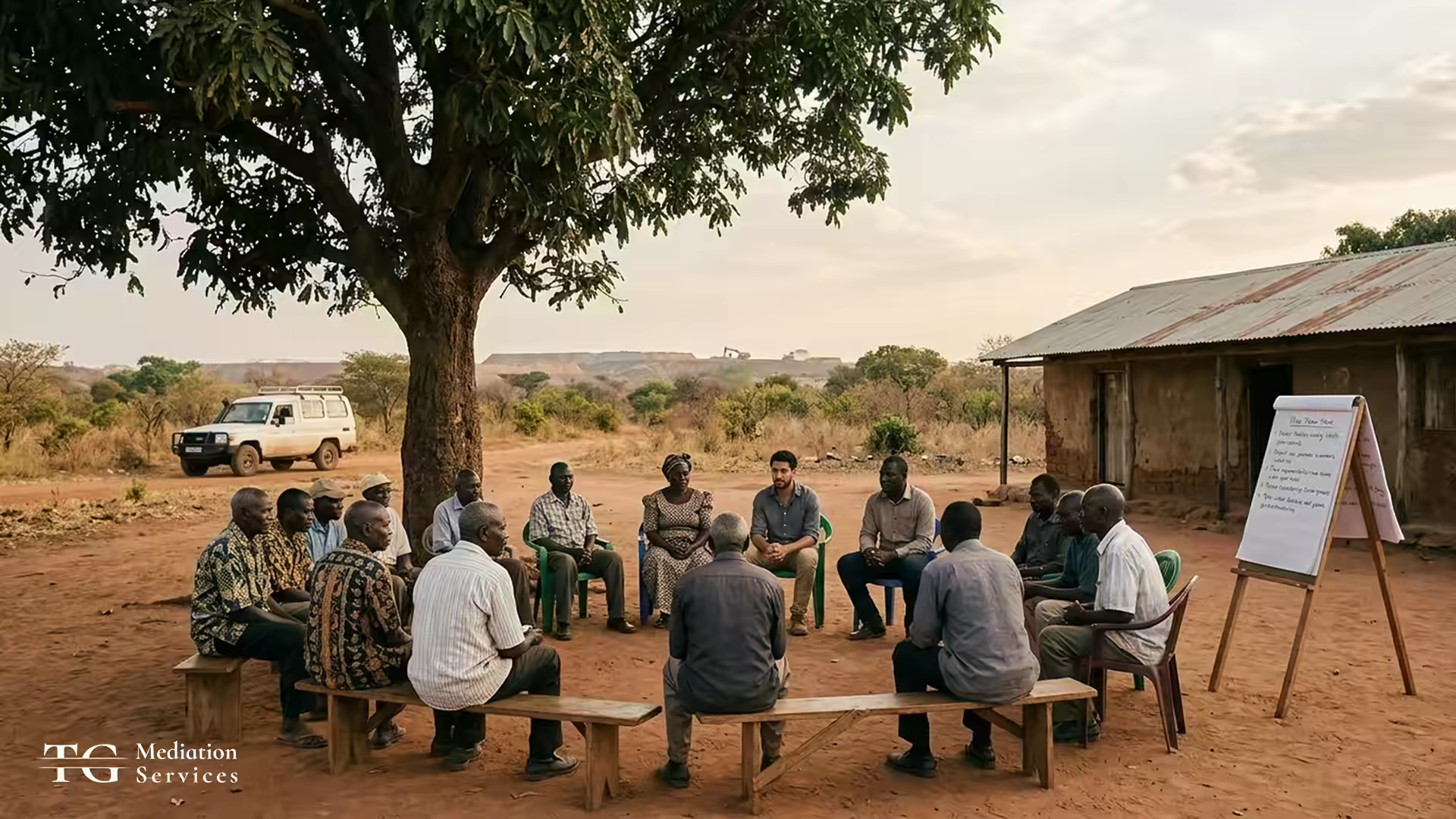
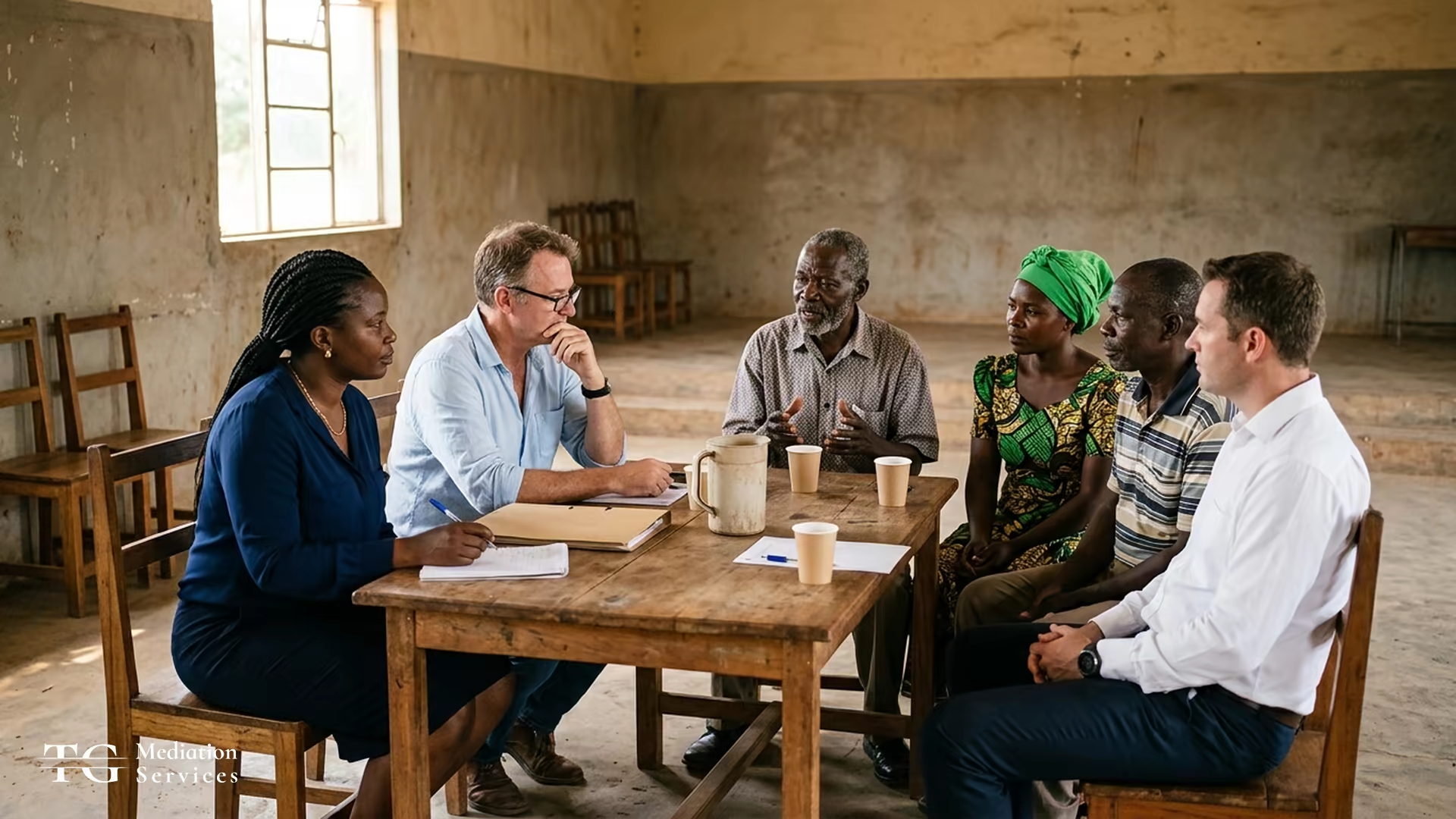
The parties met in person in a small town inside the pastoral territory. The company’s willingness to travel signaled commitment before anyone spoke. Elders could read the company team directly and judge sincerity. The site manager acknowledged, in the room, that the company had underestimated what the grazing areas meant, that the land carried ancestral weight beyond its practical use. That acknowledgment, delivered face to face, changed the emotional temperature of the whole process.
Then the work moved back online, and online served it well. A hydrological expert presented data on whether alternative corridors held enough seasonal water. A land-use specialist mapped grazing zones against exploration zones. These technical sessions ran efficiently because the trust foundation already existed. Six weeks in, the parties met again in person to finalize. They agreed a detailed land management plan, seasonal grazing zones, a commitment to pause exploration when herds occupied priority corridors, and a revenue-sharing mechanism. The agreement has held for three years. Pure online work would have failed. Pure in-person work would have cost too much. The sequence delivered both trust and efficiency.
Weigh trust and access before convenience
The companion tool is the Online vs In-Person Mediation Format Decision Checklist, a checklist of roughly 17 checkpoints across five sections. It opens with “Trust and Conflict Readiness”, the section that tends to decide the format on its own, and moves through access, cultural, and stakeholder conditions so you rate each one before budget enters the conversation. Score each item In place, Partial, or Absent. The reading rule is the one the pastoral case turned on: when trust and cultural items point to a room and convenience points to a screen, let trust and inclusion decide. Running the list is how you catch the elder who cannot work the platform, or the protocol that needs a physical gathering, before the choice is made rather than after three video sessions have already curdled. Download the Online vs In-Person Mediation Format Decision Checklist.
The case for a mediated, structured approach
When format keeps shifting and power runs uneven, parties drift toward the adversarial default. They escalate, lawyer up, or freeze. That path is slow, expensive, and corrosive to a relationship that has to last decades. Mediation offers a different route. An independent third party reads the room the parties cannot read for themselves, balances a table that tilts on its own, and selects the format each phase actually needs. A good mediator does not pick online or in-person on reflex. They diagnose the dispute, test access and trust, and design a sequence, often using physical presence to build trust and online sessions to process technical detail. That diagnosis is also why knowing when to bring in a mediator rather than relying on your own team matters before the format question even arises.
This is the discipline behind the Social Accord Architecture, the methodology I use to turn fragile settlements into durable accords. The Social Accord Architecture, or SAA, treats format as one deliberate design choice among several. It sits alongside sequencing, trust-building, and the handover that keeps an agreement alive after the mediator leaves. It does not assume online is cheaper-so-better, and it does not romanticize the table. It asks what this dispute, these parties, and this place require, then builds the process around the answer. Get the format right and you give the agreement a foundation. Get it wrong and you get a technical solution to a human conflict, which holds only until the next dispute exposes that the relationship was never repaired.
Decide before you convene
Run the format decision before the first session, not after the first failure. Map four things. Assess the trust level between the parties, because deep distrust calls for in-person work to start. Check digital access and digital comfort honestly, including whether senior decision-makers can actually participate. Identify any cultural or traditional protocols that require physical gathering. Then weigh cost and logistics last, not first, so budget does not quietly override inclusion.
For most serious mining disputes, the strongest design is a hybrid one. Open in person to build trust and surface what the conflict is really about. Move technical and follow-up work online to control cost and bring in expertise. Return in person to finalize, so the agreement carries the weight of a relationship rather than the thinness of a video call. Structure that assessment with your team first and, where possible, with the community itself.
If you are weighing format for a live dispute and want a second view on whether online, in-person, or hybrid fits, reach me at thomas@thomasgaultier.com.