
The cornerstone of the library
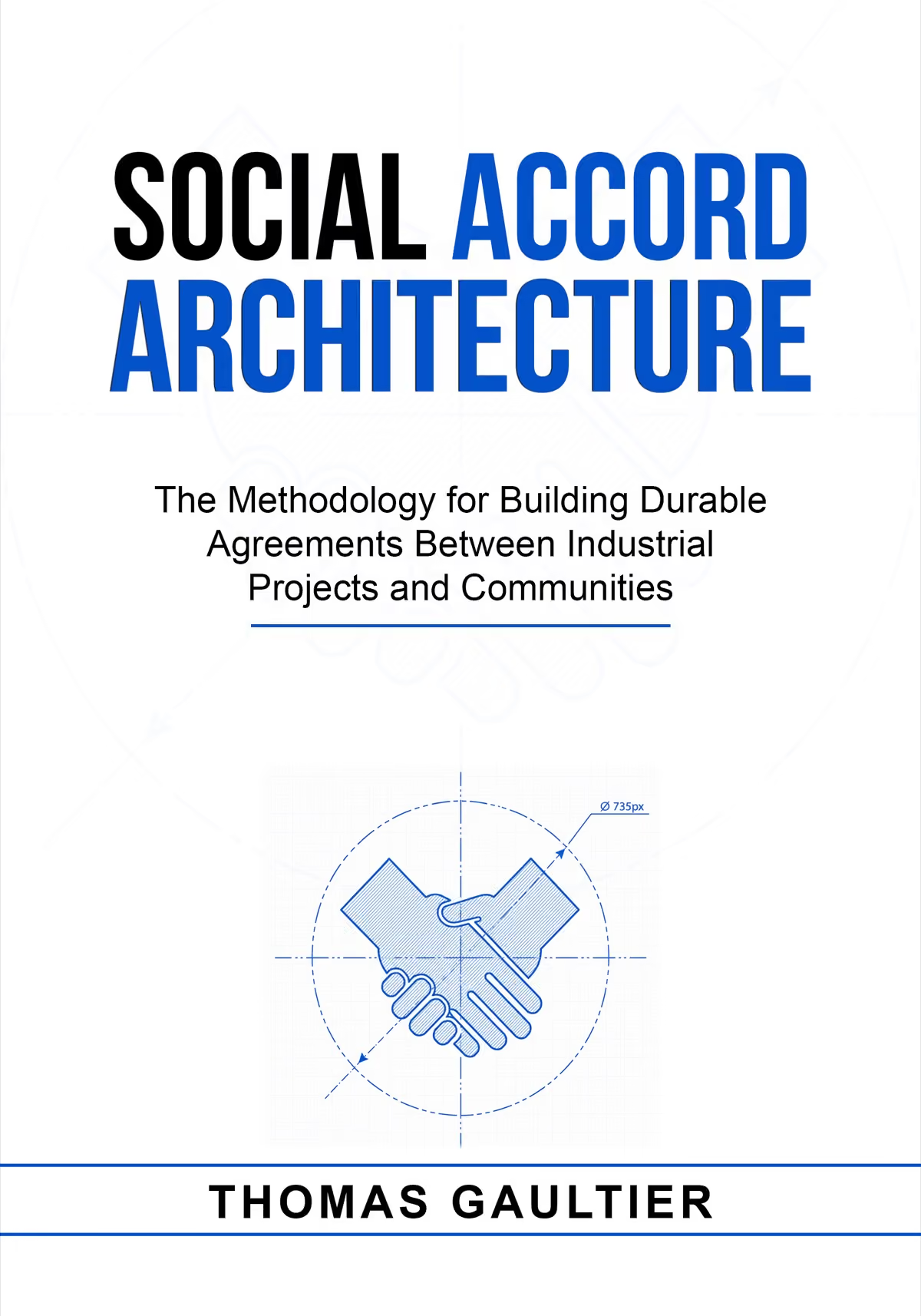
Social Accord Architecture
The Methodology for Building Durable Agreements Between Industrial Projects and Communities
- 241 pages
- 16 chapters in 5 parts
- 24 figures, 37 tables
Community opposition is now the most common cause of delay and cancellation for major industrial projects worldwide. The reason is not bad luck or bad people. It is the absence of a discipline.
Social Accord Architecture is the founding text of that discipline. It treats the capacity for durable agreement between an industrial project and the community it lives beside as buildable infrastructure: something that can be designed, constructed, maintained, certified and handed over, exactly like the road, the pit or the plant.
For a generation the industry has answered conflict with the same three tools: a community relations function that is structurally compromised, a mediation profession built for different wars, and a compliance regime that mandates mechanisms without producing competence. This book replaces improvisation with a method. Every instrument in it was built in the field, under load, across fifteen years and more than two thousand resolved claims.
The other volumes in this library each write part of the discipline for one reader. This is the trunk they grow from.
What is inside
The five principles
The constitution of the discipline, the boundaries of what Social Accord Architecture is and is not, and the test that decides whether work can carry the name.
The four-phase framework
Diagnostic Mapping, Blueprinting, Assembly, and Stewardship and Scaling, each taught to execution level with its own numbered instruments.
The stress-test before the signature
The Relational Stress-Test, so weak agreements fail on paper instead of on site, and the Impact Load-Bearing scale, which tells you what weight a relationship can actually carry.
Two mediation pathways
GROUNDS for standard disputes and REBUILD for trauma, with the logic for knowing which one the situation in front of you demands.
The actors of the accord
Community, company, the state, the financiers and the practitioner, taken seat by seat, with the governance conditions that make the work hold.
One accord, walked end to end
A composite accord followed from first contact to handover, an adoption roadmap, and a back matter built as a working reference: standards crosswalk to IFC, the UN Guiding Principles, ICMM, the OECD Guidance and the CSDDD, glossary, quick-reference cards, template skeletons and a failure modes index.
Who it is for
- Social performance and community relations leaders
- Mediators and dispute resolution professionals
- ESG and sustainability heads, mining and energy executives and directors
- Investors, lenders and the advocates who hold all of them to account
Part of the same library
Every volume is built on Social Accord Architecture, written for a different side of the table.
- Mediating Extractive Conflicts
Mediators and social performance practitioners
- The Human Shock Absorber
Community relations and social performance teams
- When the Mine Arrives
Communities, their leaders and their advisors
- Rebuild Grounds
Mediators running extractive disputes
- Social Risk for Boards
Directors and C-suite executives
The opening chapter
Read it before you buy it
Chapter one, in full, as a PDF. Give me an address and it arrives as a link you can open on any device. I send the chapter and nothing else unless you ask for it on the second box.
If the relationship around a project is under pressure, or heading there, let us talk.
A 30-minute call is enough for me to understand the situation and tell you honestly whether I can help. Active opposition, a social license problem, an FPIC process that needs an independent facilitator, a negotiation a community has to prepare for, or a conflict that is not public yet but will be. It makes no difference which side of the table you are on. No obligation, no generalist pitch.
Every first conversation is confidential.