
Directors and C-suite executives
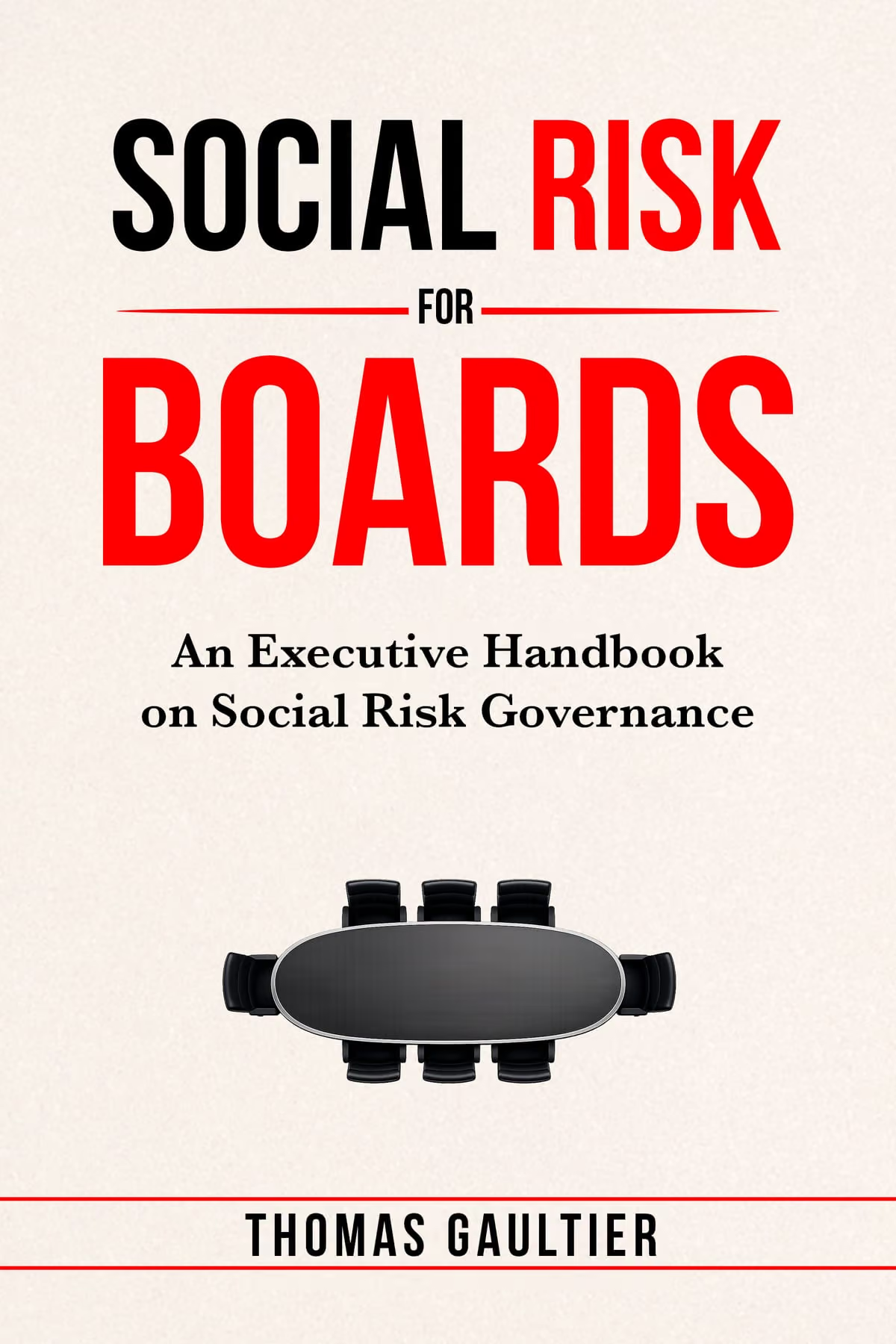
Social Risk for Boards
An Executive Handbook on Social Risk Governance
- 11 chapters
- 4 appendices
- Board templates included
The board reviews the financials, the capital plan, the safety numbers. Then, forty-five minutes before close, a video of protestors blocking the access road to the flagship mine reaches two million views. The directors who approved that expansion six months ago are hearing the community’s grievances for the first time.
That gap, between what the boardroom receives and what the ground contains, is what this handbook exists to close.
I have spent years on both sides of it: reading the polished reports that reach headquarters, then meeting the very different reality waiting in the field. This book is built for the time-constrained executive who needs line of sight without operational noise.
What is inside
Understand the new accountability
Why social license became a legal and financial dependency, and where personal director liability now begins.
Learn from collapse
A forensic reading of the Juukan Gorge destruction and the five governance failures that erased a decades-old relationship in minutes.
Map the hard law
The EU CSDDD, UK Companies Act Section 172 and the Delaware duty of oversight, translated into the liability context directors actually manage.
Quantify the intangible
How to price social conflict into valuation, and how to prove to a CFO that community friction is measurable and material.
Read the right signals
Leading against lagging indicators, a social performance dashboard, and the red flags that surface latent risk without practitioner expertise.
Govern in practice
Board agenda templates, committee structures, an annual governance calendar and a phased implementation roadmap.
Who it is for
- Board directors and C-suite executives in mining, energy and infrastructure
- Governance, risk and audit committee members
- Investors and lenders assessing social risk exposure
Part of the same library
Every volume is built on Social Accord Architecture, written for a different side of the table.
- Social Accord Architecture
The cornerstone of the library
- Mediating Extractive Conflicts
Mediators and social performance practitioners
- The Human Shock Absorber
Community relations and social performance teams
- When the Mine Arrives
Communities, their leaders and their advisors
- Rebuild Grounds
Mediators running extractive disputes
- Standing in the Middle
The field companion of the library
- Navigating Human Rights Due Diligence
Compliance, legal and sustainability teams
- Grievance Mechanisms That Work
Grievance and social performance teams
- Legacy Grievances and Historical Claims
Deal teams, counsel, closure and remedy practitioners
The opening chapter
Read it before you buy it
Chapter one, in full, as a PDF. Give me an address and it arrives as a link you can open on any device. I send the chapter and nothing else unless you ask for it on the second box.
If the relationship around a project is under pressure, or heading there, let us talk.
A 30-minute call is enough for me to understand the situation and tell you honestly whether I can help. Active opposition, a social license problem, an FPIC process that needs an independent facilitator, a negotiation a community has to prepare for, or a conflict that is not public yet but will be. It makes no difference which side of the table you are on. No obligation, no generalist pitch.
Every first conversation is confidential.