
Grievance and social performance teams
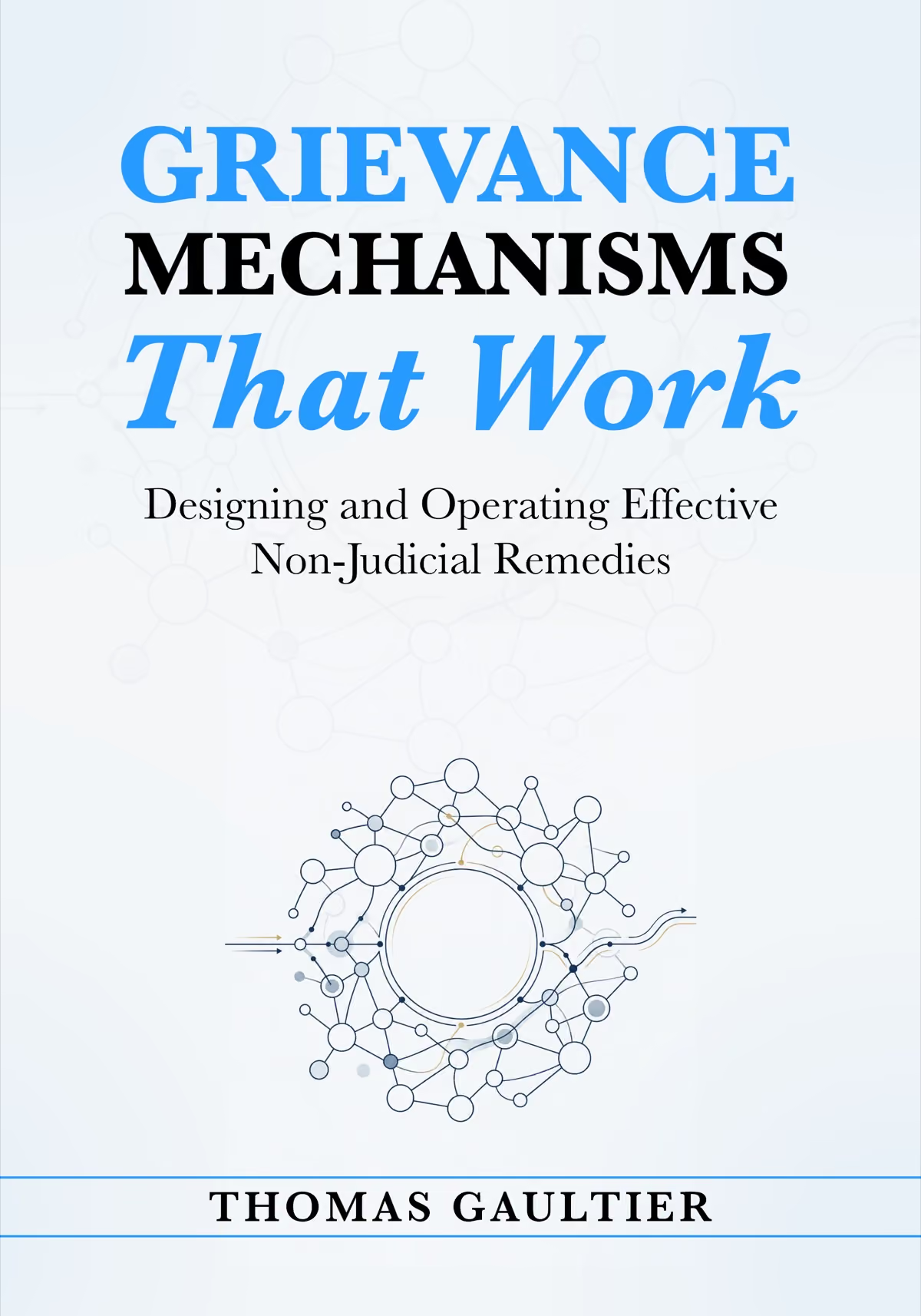
Grievance Mechanisms That Work
Designing and Operating Effective Non-Judicial Remedies
- 187 pages
- 10 chapters in 5 parts
- 6 appendices
- 13 figures
- ISBN 978-989-49072-7-5
A man once showed me a receipt his project’s grievance office had issued fourteen months earlier, folded and refolded until the reference number was barely legible. His crop-damage claim had been received, logged and rated for severity. No one had ever gone to look at the damage. The system had given him everything except a remedy.
That is the remedy gap, and it is expensive. Chapter 2 contains the full accounting of a three-week access-road blockade triggered by water grievances that sat in the system, acknowledged and unresolved: one week of it cost more than a decade of operating the mechanism that would have prevented it.
This book is the operational answer. It walks through co-design with the communities the mechanism serves, intake that reaches people who cannot read or will not enter an office, the 6-Step Process from registration to verified close-out, the protections that keep complainants safe, and mediation as the priority pathway when negotiation fails.
It is built on the UNGP Principle 31 effectiveness criteria, the standard lenders, auditors and certification schemes now test against, and on more than two thousand claims I have worked through mechanisms that had to earn their communities’ trust back first.
What is inside
The standard and the business case
The UNGP effectiveness criteria and the rising compliance floor, plus the Cost of Conflict arithmetic that turns a mechanism budget conversation into a risk conversation.
Co-design and accessibility
Building legitimacy at the design table with the communities the mechanism serves, and intake channels that work for people without literacy, connectivity or the standing to walk into a project office.
The 6-Step Grievance Process
Receive, assess, acknowledge, investigate, remedy, close out: each step with its timelines, severity levels and the dialogue that separates a system from a complaints box.
Protecting the process
Confidentiality, non-retaliation and independence, treated as operating conditions rather than policy statements.
Mediation first
The priority pathway for cases negotiation cannot settle, and how to build a standing mediation option into the mechanism before the case that needs it arrives.
Measurement, learning and hard cases
KPIs that measure resolution rather than throughput, a learning culture that feeds grievance data back into operations, and the surge, protest and special contexts that test the system. Six appendices carry the working documents, from the registration form to the Grievance Mechanism Health Check.
Who it is for
- Grievance officers and the teams who run mechanisms day to day
- Social performance and community relations leads
- ESG, sustainability and compliance functions answering lenders and auditors
- Mediators and consultants who design or review mechanisms
Part of the same library
Every volume is built on Social Accord Architecture, written for a different side of the table.
- Social Accord Architecture
The cornerstone of the library
- Mediating Extractive Conflicts
Mediators and social performance practitioners
- The Human Shock Absorber
Community relations and social performance teams
- When the Mine Arrives
Communities, their leaders and their advisors
- Rebuild Grounds
Mediators running extractive disputes
- Social Risk for Boards
Directors and C-suite executives
- Standing in the Middle
The field companion of the library
- Navigating Human Rights Due Diligence
Compliance, legal and sustainability teams
The opening chapter
Read it before you buy it
Chapter one, in full, as a PDF. Give me an address and it arrives as a link you can open on any device. I send the chapter and nothing else unless you ask for it on the second box.
If the relationship around a project is under pressure, or heading there, let us talk.
A 30-minute call is enough for me to understand the situation and tell you honestly whether I can help. Active opposition, a social license problem, an FPIC process that needs an independent facilitator, a negotiation a community has to prepare for, or a conflict that is not public yet but will be. It makes no difference which side of the table you are on. No obligation, no generalist pitch.
Every first conversation is confidential.